
Transparent Optical and Lighting Aggregator
Release time:2026-09-20
For the PC PMMA lens, the light drive and the light shield, control cleanness, optical defects, internal stress and yellow change. This paper gives recommendations for actionable abbreviators in terms of material properties, temperature, speed, pressure, cooling and common defects.
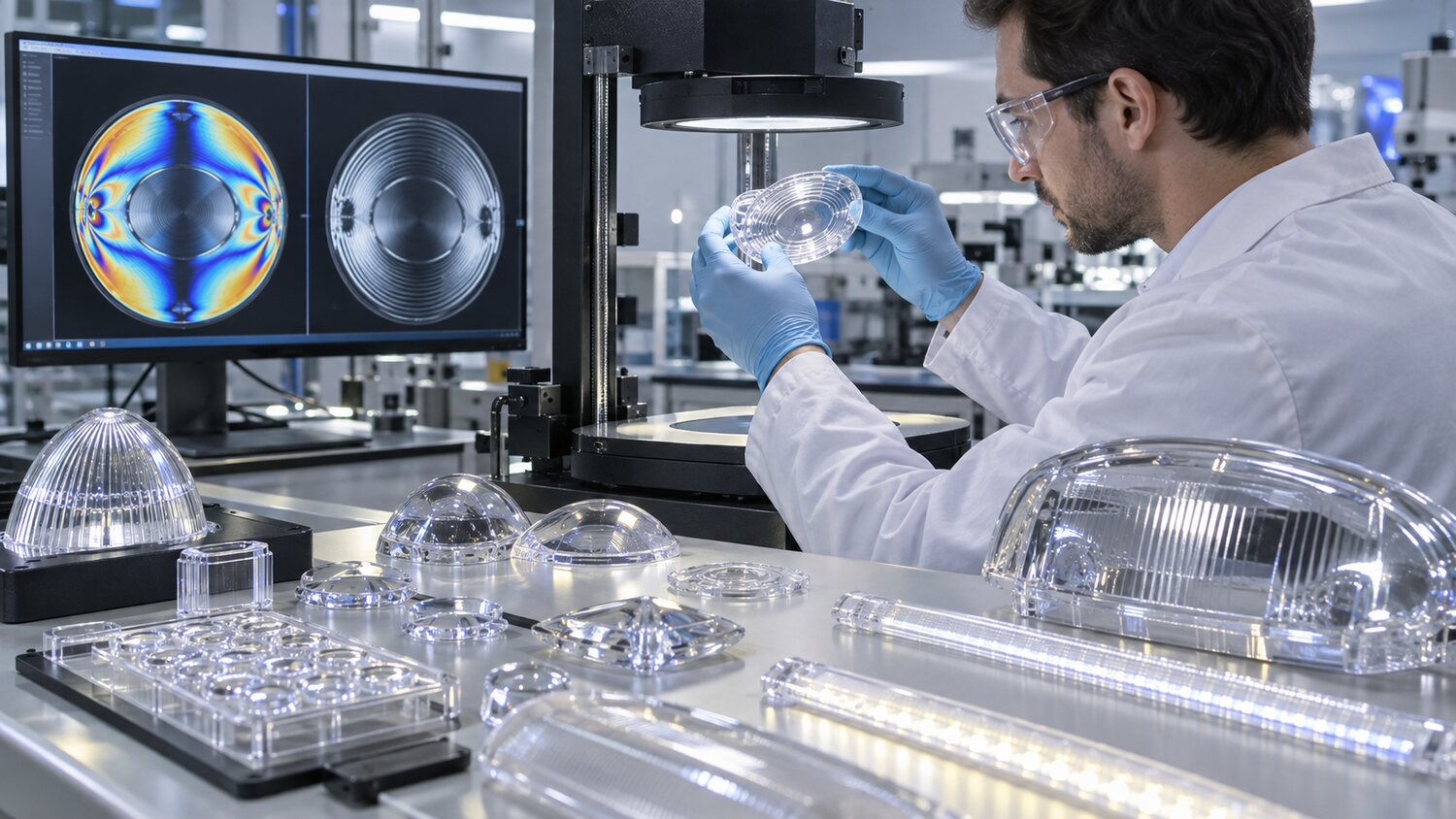
Transparent lenses, guidance devices, lamps and windows often use optical-grade PCs or PMMAs, and may also use specialized co-assembly materials. In addition to its size and appearance, products meet the requirements for light, fog, refraction, light distribution and tolerance. Small moisture, dust, black spots, colour differentials and fluid lines affect performance, so raw materials storage, drying, closed transport and equipment cleaning are part of the switch. General feedback, mix or unidentified clean-up should not enter high-grade optical products.
In formation, a balance should be struck between sufficient mobility and avoiding degradation. Higher mosaic temperatures are conducive to replicating the optical surface and reducing the melting line, but can prolong cooling; higher temperatures reduce viscosity but increase the risk of yellowing. A drum matching the volume of the spray should be selected, using a lower to medium screw rotation and a moderate back pressure, so that the plastic is even and not overcuted. The first simulators after the start-up, refuelling and shutdown are to be separated as required until the colour, black spot and melting state are stable.
The injection rate shall be kept smooth along the front line of the melting. It is easy to form ejections, white fogs and local orientations at a very high speed through small watering, and can be followed by flow marks and melting lines. It can be set by watering mouth, main optical surface and end-end exhaust segment, and position determined by short-shot. The pressure is used to control the condensation and optical face, but over-pressure increases double-reflection and residual stress. Optical, optical or actual light testing should be used to verify, and the fact that the naked eye looks transparent does not mean that internal stress and light distribution is satisfactory.
Modular polishing cannot be scratched with inappropriate tools, and the exhaust and top-out systems should be kept clean. If random black spots persist, the source of raw materials, drying equipment, drums, thermal fluids and moulds should be examined separately. The screws and the trajectories of the circuits should be smooth, and surface damage or carbon accumulation would constantly contaminate transparent material. The volume production also controls cooling evenly, demodified deformed and packaging injuries. The final process card shall contain drying, maximum stop time, machine clean-up, light-testing and stress determination to align optical performance with appearance during long periods of production.