
Automotive retrofit and low odor control advice
Release time:2026-09-20
Designing a switch scheme for the dashboards, for the parts of the doors and for the functional casings, for the appearance of the warp, for the smell and assembly requirements. This paper gives recommendations for actionable abbreviators in terms of material properties, temperature, speed, pressure, cooling and common defects.
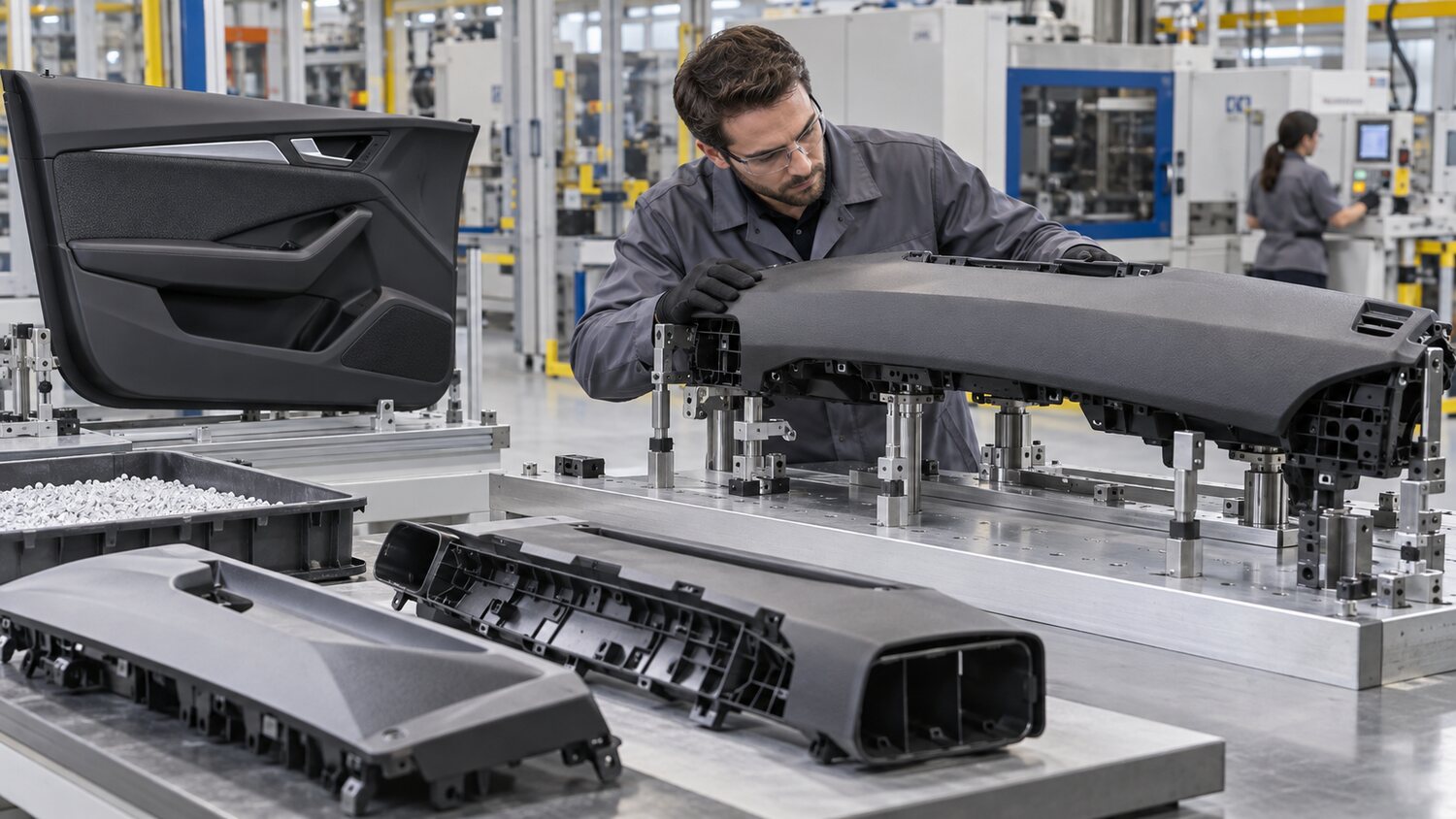
Common materials for internal packaging in cars include PP and its mineral fillings or bottling enhancements, ABS, PC ABS alloys and TPE packages. The product is usually large, broad-banded, high-faced, and meets the requirements of smell, volatilizer, durability and assembly size. The switchboard shall be preceded by identification of the material plate number, filling ratio, colour, surface texture and subsequent spray or welding process. Similar materials from different suppliers may differ in terms of flow, contraction and scent, and cannot reproduce parameters based solely on the name of the material. Respiratory use must be in accordance with project specifications and avoid contamination with colour differences and volatilities.
Large inner packagings should first be short-shotd to confirm the order in which each refill is filled. Thermal flow of the sequence valve requires the setting of valve opening time in conjunction with the front line of the melt to avoid the creation of unacceptable melting lines and pressure marks in the main exterior. The main flow phase can maintain a stable medium and high-speed, secure the front temperature of the melting body as it passes through thin walls, grids and long-flow areas, and reduce the speed near the end of the exhaust or encirclement structure and reduce the caloric burns. In the event of a chronic shortage of material in one region, the balance of water, exhaust and local wall thickness should be examined and other regions should not be allowed to fly sideways with overall high pressure.
The gap between the warp and the assembly is the core of the inside of the car. The contraction of mineral fillings with PP and bottling boosters is directional, with retrofitting of watering positions, flow orientation, motion modulus and local waterways. The results of the tri-coordinate or calibration shall be analysed in relation to the formative parameters and cannot be judged only by the naked eye at the beginning of the mold. The bond segment is to cover the time of effective recharge, but over-pressure increases the internal stress, caps deformation and reassembly. The cooling time shall ensure that mechanical hand-held items and stacks do not continue to undergo significant deformation.
Low-temporal and low-volatile requirements also relate to the drying of materials, the duration of stay, the cleaning of drums and the use of demodels. Excessive temperatures, long-term high back pressure plasticization and accelerants of screws add to the decomposition. The recoloring or shutdown should require the clean-up of materials to avoid long-term carbonation of used materials. For high filling materials, screws and reversible rings must be resistant to grinding and maintain stable plasticization; the return flow caused by wear and tear causes a gradual shift in weight and size. Volume recognition shall include both appearance, colour differentials, odour, critical dimensions, carp assembly and environmental cycling.