
Thermal solid material retrofit spiral programme: short screw and temperature control
Release time:2025-08-07
The thermo-condensed material retrofitted screw program? The key is to shorten unnecessary stopovers, contain shears and stabilize measurements, and the screw structure and temperature control windows must be validated around material solidification properties. This paper combines information on star-friend screw stations to organize selection, process and validation elements.
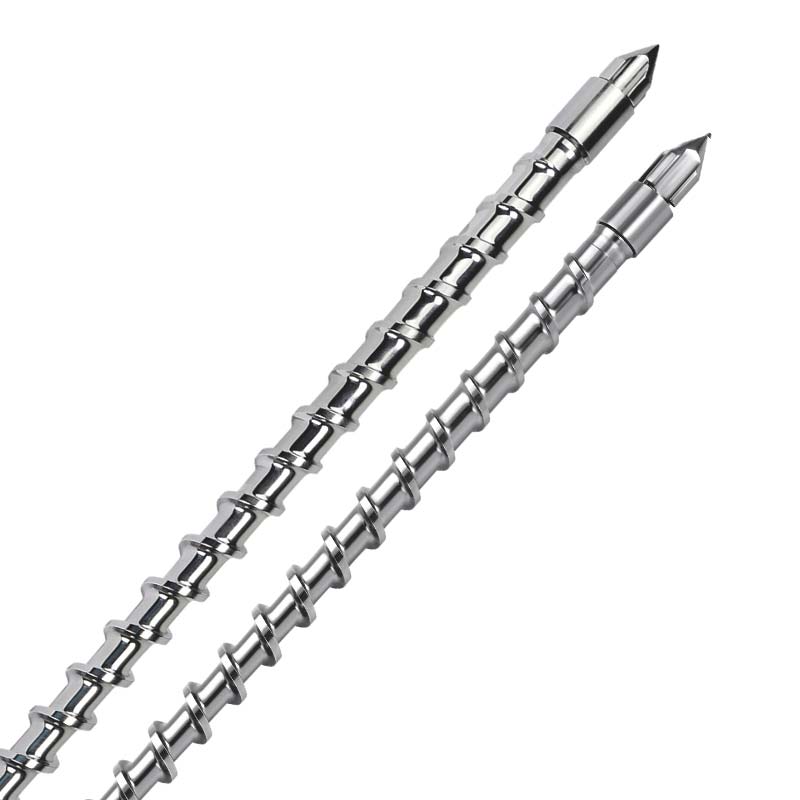
The core conclusion of the thermo-consolidated material retrofits the screws.
The key is to shorten unnecessary stopovers, contain shears and stabilize measurements, and the screw structure and temperature control windows must be validated around material solidification properties.
Thermal solid material formation breakthrough: special short-acting screws and high-speed injection system solutions
In the field of thermal solid material products, materials such as BMC (comparable plastics), phenolose, UF (slubber) are widely used in the areas of electrical components, car parts, and ablution accessories, by virtue of their high temperature resistance, insulation and size stability. However, three main challenges remain in the formization of this type of material: the waste of raw materials due to early solidification, the loss of stoppages due to plugs in retrospect screws, and the lack of performance of products due to uneven gel. According to industry statistics, when general equipment is used, the stymied material is often less than 70 per cent qualified, with early solidification resulting in up to 25 per cent of waste and retrofitting for up to 8-12 hours per week. This paper will analyse the process properties of thermal solid materials in the context of specific data, and describe how specially designed short-acting screws and high-speed retrofitting systems target production pain sites.
Core pain points and technology needs for the production of thermo-condensed materials
The chemical properties of thermal solid materials determine the speciality of their formation processes, which are irreversibly interconnected under heating conditions. They not only lose mobility once they are established prematurely (i.e., “early maturity”), but they are bound to the surface of the plume to form hard blocks that eventually lead to congestion. In the case of phenol materials, for example, the gel time (from heating to loss of mobility) is only 30-60 seconds, and the probability of early ripening increases to more than 90 per cent if the length of stay in the plume is more than 40 seconds; BMC materials have a narrower form temperature range (150-170°C) and when the temperature exceeds 180°C, they are fully stabilized within 10 seconds, leading to the death of the plume.
In terms of product quality requirements, the solidification of thermal solidity product needs to be more than 95 per cent and the cross-section gel homogeneity deviation should not exceed 5 per cent, otherwise there will be problems such as reduced power performance (e.g., a 30 per cent reduction in the intensity of the shock) and unsatisfactory insulation. The excessive length of the compressed area of the general plume screw (40-50 per cent of the total length of the plume) results in material staying in the plume for more than 60 seconds, well beyond the safe processing window for thermal solid materials, which is the central cause of the uneven and early solidification of gel.
Technical parameters and performance advantages of short-acting screws for thermal solid materials
In order to meet the need for “short-term processing” of thermal solid materials, three major innovations were made in the design of the structure and selection of materials by specially designed short-acting screws. Designed in length and compression areas, the total length of a plume screw is 30-40 per cent shorter than the normal plume (in the case of a plume pole with a diameter of 50 mm, the total length is reduced from 1,500 mm to 900-1050 mm). Condensed area lengths only 15-20% of the total length, so that the material stays within the plume screws within 20-30 seconds, well below the critical stabilization time for phenol resin (40 seconds) and BMC (35 seconds). The empirical data show that the design will reduce the early solidification rate from 25 per cent to 3.2 per cent and the waste rate from 87 per cent.
In terms of material selection, the plating screws use special high-temperature alloys (e.g. GH4169 high-temperature alloys) that can work at temperatures above 250°C, and the hard (HRC) retention rate remains above 90% after a 1,000 hour high-temperature aging test, much better than the average 38CrMoAl steel (a 40% drop in hard at high temperatures). The surface is treated with ceramic coating (50-80 m thick) and the friction coefficient is reduced to 0.12, reducing the binding of solid residues by 70%. Combining an easy-to-clean design (up to R5mm at the bottom of a screwdriver and easier to wash than R2mm at the normal plume) the cleaning time after each stoppage is reduced from the original two hours to 30 minutes.
Designed 20 per cent larger than the normal piping screw length according to a delivery-deductible reductive retrofit screw length, the feed volume was increased to 150 g/s (the piping screw was 80 g/s) to avoid local temperature rises due to over-compression (the temperature differential in the measured compression area is within ±2 °C and the normal piping screw was ±5 °C) and reduce the risk of early sulphide at source.
Technical indicators and synergies of high-speed injection systems
The collaboration of high-speed injection systems with specialized short-acting plastic screws is key to achieving “quick formation” of thermal solid materials. The system can inject up to 300-500 mm/s, which is 5-6 times the average injection system (50-100 mm/s), to ensure that materials are filled quickly before the combined reaction (i.e., during the gel period). In the case of BMC bathing fittings, the high-speed system was given only 0.8 seconds at a volume of 200 cm, compared with 4.5 seconds for the normal system. The high-speed system reduced the probability of material being securitized at an early stage within the mould from 35 per cent to 2.1 per cent.
The system is equipped with real-time pressure feedback devices (responding velocity of 10 ms) to accurately control the injection pressure within 80-120 MPa and to avoid the material cut-off and thermal heat caused by excessive pressure (which is controlled at 5°C). At the same time, the "detachment temperature control" technique is used to control temperature deviations of the various parts of the plume screws within ±1 °C (the normal system is ±3 °C). Of these, the temperature of the additional period (60-80°C) is lower than the glassing transformation temperature of the material to prevent premature softening; the temperature of the injection period (120-140°C) is accurately matched with the active temperature of the material, while ensuring mobility, avoiding early solidification.
Validation of effects in practical application
Production data from an electrical component enterprise show that the BMC insulation success rate increased from 68 per cent to 96.5 per cent with the introduction of short-insulation screws and high-speed injection systems for thermal solid materials. Specifically, the waste rate due to early solidification decreased from 25 per cent to 2.8 per cent, the number of plugs in retrospect screws decreased from five times a week to one per month, and the loss of shut-off was reduced by 90 per cent; the product gel imbalance was reduced from 12 per cent to 3.5 per cent, and the impact intensity was increased from 12 kJ/m2 to 18kJ/m2 to fully meet the IEC 60670 electrical insulation standard.
In terms of economic efficiency, the material utilization rate has increased from 72 per cent to 95 per cent, resulting in annual savings of about $4.5 million in raw materials, based on production of 1 million BMC products per year, and an increase of 15 per cent in efficient equipment production time, 30 per cent in capacity and 22 per cent in combined production costs.
The combination of short-acting screws and high-speed injection systems for thermal solid materials has fundamentally addressed the industrial challenges of early solidification, plugging and gel imbalance by reducing processing time, optimizing temperature accuracy and improving cleaning efficiency. With the surge in demand for thermal solid products in new energy, high-end manufacturing areas, the professional solution will become the core of the enterprise's efficiency-enhancing options, driving the upgrading of thermal solid material formation technology to “efficient, stable, low-consumption”.
Data to be recorded before implementation
- Material integrity number, filling ratio, flame-retarding system, refill ratio and dry condition.
- Note plastics brand, model, screw diameter, voltage, back pressure, turn speed and current screw structure.
- Indicators of product size, wall thickness, appearance or strength, and current adverse phenomena and frequency of occurrence.
- Continuous production cycle, refuelling frequency, machine clean-up method, wear and tear record and planned useful life.
How to validate the adjustment results
It is recommended that the current process baseline be established, followed by a single-variant test model. Each round records the measurement of time, melting temperature, product weight, formation cycle and bad rate, avoiding multiple parameters being changed at the same time to determine the cause. The parameters in the text are used to illustrate design thinking and should not replace material supplier data and on-site safety protocols.
What kind of support is a star-friend screw?
The Starmate Mechanical Equipment Co. Ltd. in Dongqing City (Starfung) can provide materials and situational assessments, screw structural recommendations, base materials and surface treatment options, non-spectrum-size customization, and a reset of test problems around thermal solid materials. The submission of information on raw materials, equipment and products could lead to more targeted programmes.
Ask for customized screws immediately, or check firstNote plastic screw productwithNote Plastic SolutionsI don't know.