
The system check method for ventilating and burning.
Release time:2026-09-20
Distinguishing exhaust deficiency Overfilled and material decomposition, gradually restoring exhaust capacity to the position of defect. This paper gives recommendations for actionable abbreviators in terms of material properties, temperature, speed, pressure, cooling and common defects.
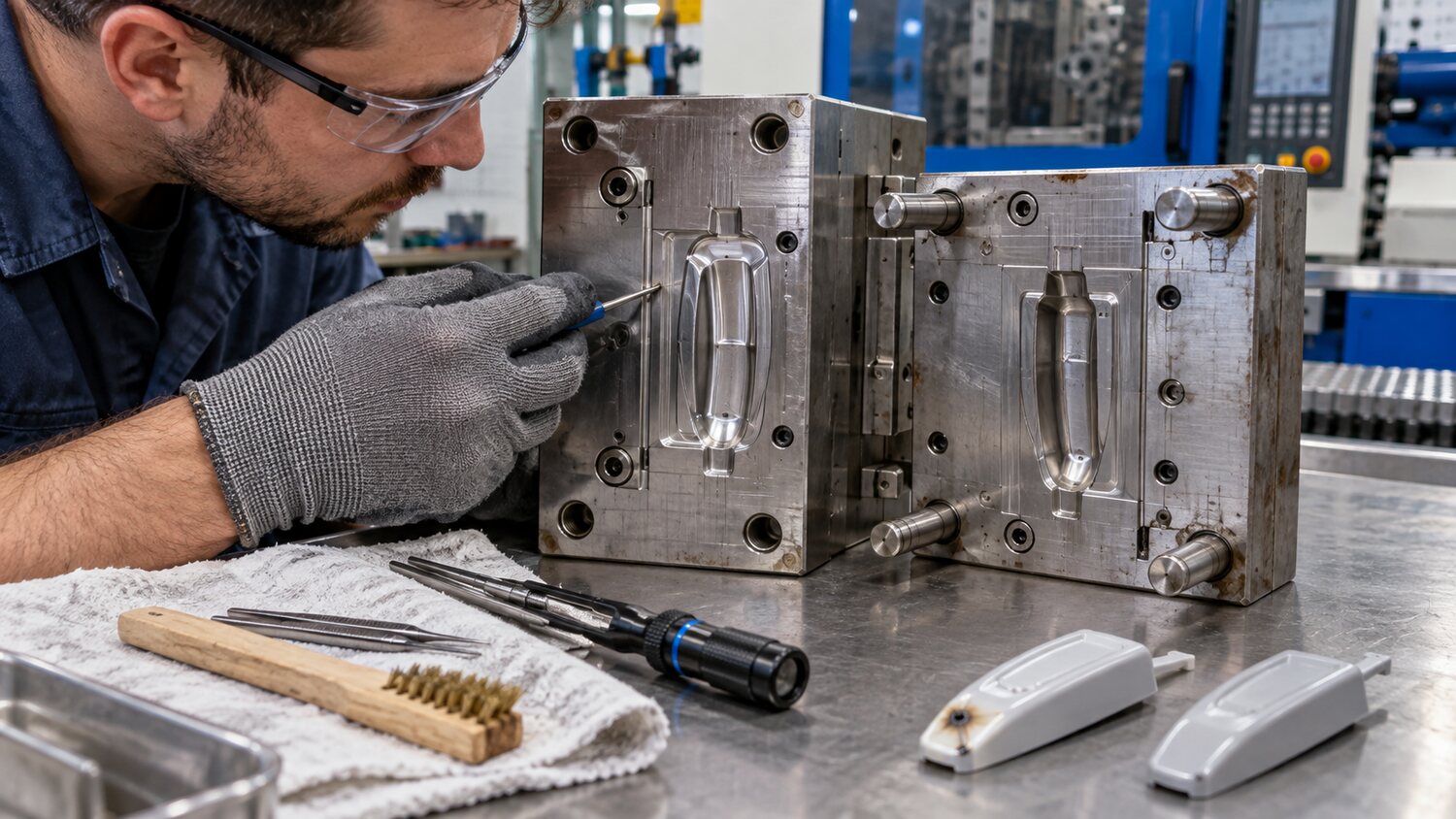
Burning, lack of materials, local white hair and the fragility of the melting line in the plume are often associated with the inability of the aerobics to release in time. The air rises rapidly when it is compressed by a high-speed melting body, which may leave a black stain on the end of the flow, the finer, the blind or the final filling area. The determination is made by observing whether the position of the defect is fixed and then by means of a short-shot sample to confirm whether the site is a current or a terminal. If the burning is always in the same position, priority is given to the examination of the vents, pins, sutures and vacuum vents, rather than a significant reduction in temperature. If the position of the defect changes at random, the contamination of the material, its long stay and the heaviness of the spiral are also checked.
The first step at the modulation level is to reduce the rate of injection near the end of the flow, allowing time for air to travel through the vents, while avoiding late-to-late stress peaks. Division speed is usually more effective than overall reduction, as sufficient melting temperature is maintained in the preceding part, with only a terminal slowdown. Reduced burning after lower end velocity but short-shots can increase the temperature of the molten body, or the temperature of the simulator, improve the draught and check whether actual injection pressure is limited. A simple increase in the power of the lock can temporarily crush the edge of the flight, but will make it more difficult to exhaust the stylist, further exacerbating the stress.
The vents require regular cleaning, especially for materials that contain more flame retardants, fibres, powders or volatilizers, and the sediment will gradually seal the vents after some time of production. The vent depth must be designed for resin fluidity, with no surface air, and too deep, with flying edges. For long-panding, gels, embedding and multi-caving moulds, venting can be supplemented by a needle, squirt, air-traffic steel or vacuum system. If one type of cavity is short-shot for a long period and the other type is normal, the cavity flow balance and local exhaust should be checked and the other type of cavity overfilled by increased total injection pressure alone.
Burning may also come from material decomposition. When there is an irritant odour, inverted colour, random black spot or air-cleaning, there is an unusual flue gas, the temperature of the drum, the time of stay, the screw speed, the back pressure and the material compatibility shall be immediately checked and processed in accordance with safety procedures. Legs, reversible rings and nozzles will be long-lived in resins, followed by carbon afterward. For equipment that regularly processes heat-sensitive or high-temperature resins, the spiral flowway should be smooth and non-observed demurrage areas, and material and surface treatment should match corrosion and wear requirements. The problem of venting can only be avoided by combining the structure of the mold, the speed of injection and the state of plasticization.