
Proposal for large swing tank trays and industrial packagings
Release time:2026-09-20
Optimizing the filling balance of large, thin blends of HDPE and PP Warp Shrink and long-cycle plasticization. This paper gives recommendations for actionable abbreviators in terms of material properties, temperature, speed, pressure, cooling and common defects.
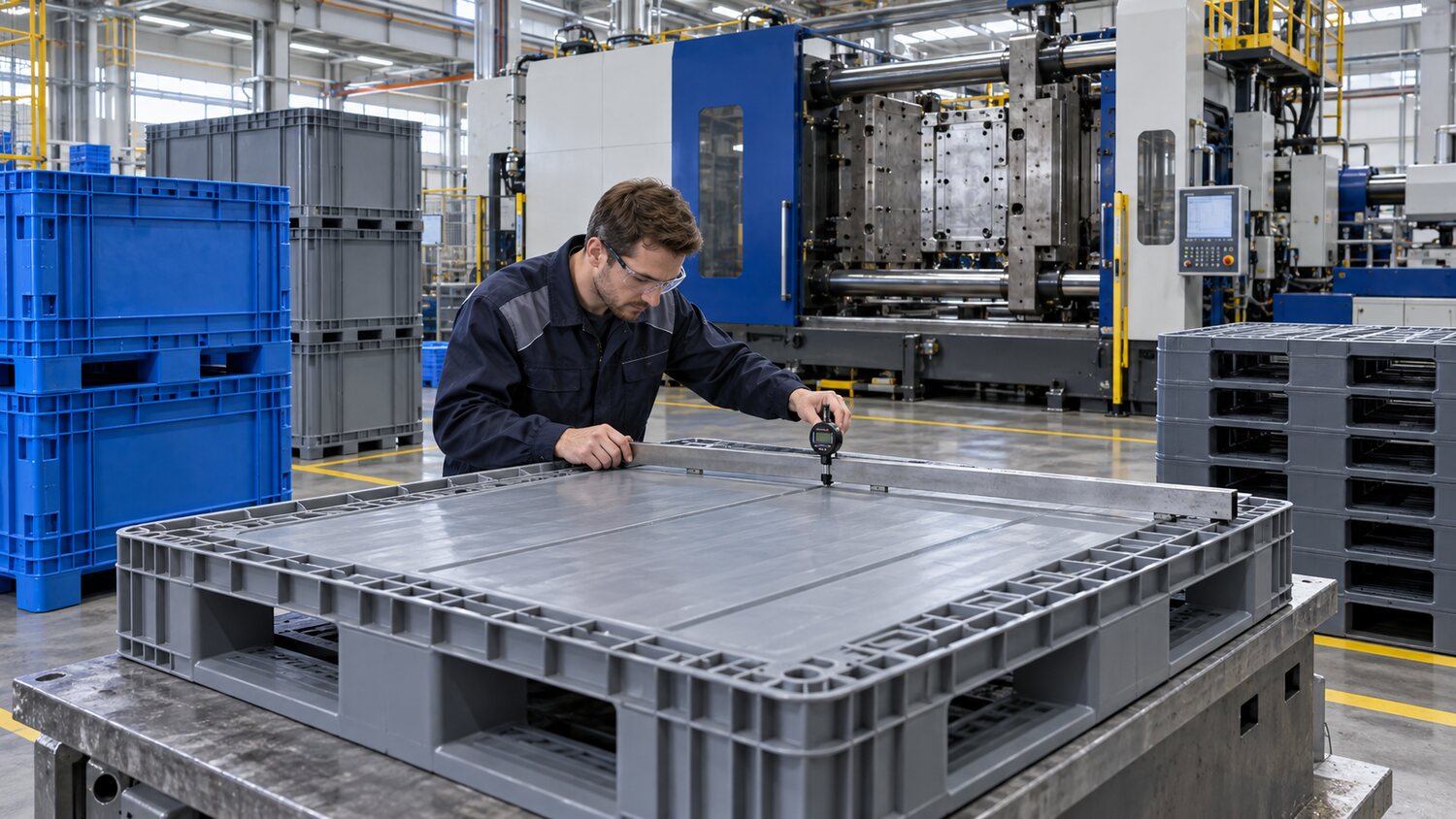
The use of HDPE, PP co-polymers or regeneratives is greater for logistics swing tanks, pallets, trash cans and industrial containers. The product is of high volatility, long process length and enhanced strength, both in terms of appearance and size and through stacking, drop and load testing. The fusion rate, the shock level, the regenerative ratio and the colour system should be confirmed prior to the transfer. Refuelling sources and heat-historic fluctuations change viscosity, contraction and odour, and must be controlled through the management of raw materials and mixes, and cannot be fully compensated by platform parameters.
The large package should first confirm whether the equipment's gel, plasticization and lock-molecular capabilities match. Filling sequences with short-shot observations to ensure synchronisation of regions to the end. The main flow phase can be used to reduce cooling and freezing more rapidly, but to slow down near the large segmented surface and the end of the exhaust, avoiding congested air burns and flying edges. If the actual rate of injection is restricted by pressure, the fluids, watering, heating and equipment capacity should be examined; an increase in the set speed will not solve the underlying problem.
It is easy to shrink at the confluence of reinforced bands and thick walls, and the bottom and long sides of the box are easily warped. The pressure shall cover the effective recharge period of the edifice, but the pressure transfer distance of the large piece is long, and the long end of the water shrink may require adjustment of the edifice position, cross-section or wall thickness. Modified water temperature differentials, thin core dissipation and top-out times change the direction of the transformation. The size of the model, cooling and stacking should be measured to avoid the product continuing to deform under code pressure. Water flows and hot spots should be identified before additional cooling times, otherwise the cycle will only be extended.
Large-jet and short-cycles require a high capacity for screw plasticization. Measuring the condition of the next smelt is volatile if it covers the entire cooling phase for a long period; excessive screw velocity increases temperature rises and wears. A spiral diameter, long-range ratio and condensation structure suitable for polyolefin and target production should be selected, and measurement time, melting homogeneity and inverse sealing should be monitored. The Quantification Standard shall include a single mass, critical size, stacking, drop and load test. Only when equipment, screws, molds and materials capabilities are matched can they be accompanied by stable cycles and low waste rates.