
Why is the screw's surface velocity more accurate than a single turn?
Release time:2026-09-20
The same per minute rotation on a different diameter spiral produces different circular surface velocity. The working principles, selection conditions, common risks and validation methods explain why the screw surface velocity is more accurate than the single-viewed velocity, helping to stabilize plasticization and reduce the full-life cost of the screw drums in a pyrotechnic plant.
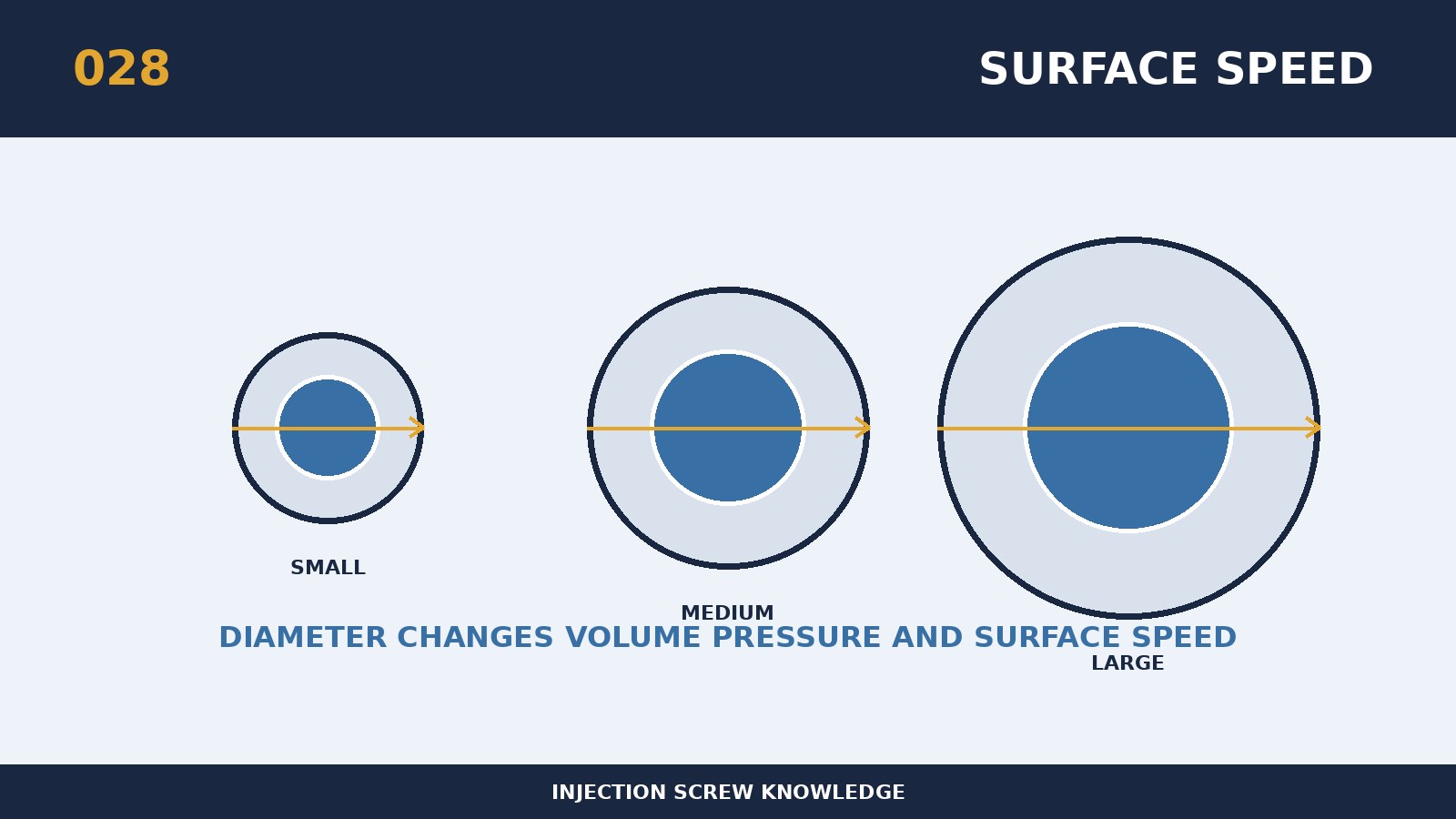
In a screw selection or failure analysis, why a screw surface velocity is often simplified as a specification more accurately than a single turn-off, but in practice needs to be explained in conjunction with the full performance. The core is the same per minute rotation on a different diameter spiral, which produces different circular surface velocity. Line speeds are closer to the actual scale at which the material is cut, and therefore the cross-platform reproduction process should not be limited to replicating the rate values. The choice of diameter involves both reductive resolution, pressure capacity, plasticization, stop time and driver load and cannot be judged by product weight alone. Parameter decision-making can be based on a failure push: short-shot, black spot, product fluctuations and overloading are listed first, and then the geometrics are identified to block the failure chain. Nominal specifications are therefore only the starting point, and the final conclusions must serve the actual resin, product and volume rhythm.
When customizing around "Why is the surface speed of the screw more accurate than the single-viewed speed" the equipment model, the original screw and the material drum are collected first, the actual dimensions, the driving capacity, the resin plate number and the filling system, the single mass, the cycle and the existing defects. The specific selection principle for this topic is that, when moving from a small to a large machine, the surface velocity shall be converted to a diameter, taking into account screws, back pressure and material flow. The same mass and the same cooling time should be used for the test to record the amount of plasticization and energy consumption at a low, medium and high three-stage rotation, respectively. The technical agreement should include quantifiable provisions for size benchmarks, key communications, material status and acceptance methods so that new, old and subsequent restorations can be compared under the same criteria.
The most needed failure to protect the subject is that neglecting the diameter would result in higher cuttings at the same rotation, resulting in overheating, fibrous destruction or degradation. The screening begins with a determination of whether the anomaly occurs suddenly or increases slowly with production; the former is mostly related to carcasses, alien or process changes, while the latter is more like wear and tear. For on-site processing, only one main variable is changed each time and the measurement time, twist, melting temperature, mat, injection pressure and product weight are aligned to the same pattern. If production is to be sustained by excessive temperature, turn speed or back pressure, the use of parameters to mask structures, wear or collage should be discontinued.
This replicable option can be used to verify “how the screw surface velocity is more accurate than the single velocity”: to compare the converted line velocity, actual melting temperature, measurement time, twist and product performance, and to establish a material-permissible window. Both the supply and demand parties shall agree on an end-point of life prior to manufacture, such as gap, weight fluctuations, black point rate or energy consumption per unit of production, avoiding delivery and determining different calibres. Inquiries to suppliers should also be accompanied by information on resins and fillings, risk of flame retardation or corrosion, total weight of products and fluids, photographs of available screws and equipment curves. The programme is considered to have a stable engineering value when the detection data, the good product rate, the timing of the switch and the unit cost of the eligible goods are improved.