
Electronic thin-hulled screws: high-speed plasticization and size stabilization
Release time:2025-08-07
The electron-shell-to-sculptor scheme? Electronic thin-hulled plastic screws need to match both the plastic properties, the specifications of the retrospectors and the product quality targets, and to confirm temperature rise, metrology, mixing and wear and tear performance through trial modelling data. This paper combines information on star-friend screw stations to organize selection, process and validation elements.
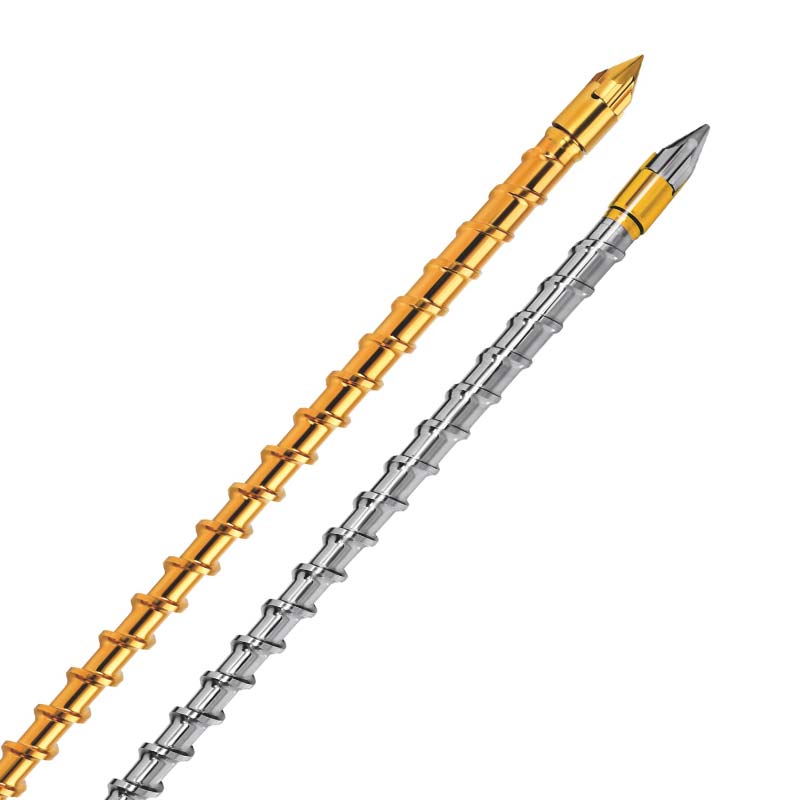
The core conclusion of the electron thin-hulled screw.
Electronic thin-hulled plastic screws need to match both the plastic properties, the specifications of the retrospectors and the product quality targets, and to confirm temperature rise, metrology, mixing and wear and tear performance through trial modelling data.
Accurate solutions for the formation of electronic thin-shells: medium-cut universal and custom-made high-speed plume screws
In the field of electronic crust production, products such as mobile shell, battery shell, small electrical shell, etc. require extremely strict size accuracy and skin quality. These products, which are usually only 0.5-2 mm wall thickness, require a public difference of 0.05 mm and a flatness of 0.1 mm/m, with no visible texture on the surface. Currently, the waste rate due to deformation, inappropriate sizes, texture, etc., is often as high as 20 per cent in the production of conventional equipment, with a greater 15 per cent difference in the size of cell phones, which seriously affects assembly efficiency and product quality. This paper will analyse the processing properties of commonly used materials such as PA, PC, ABS, in conjunction with specific data, and will describe how medium cutting of the generic plume screw and customized high-speed plume.
Core mass pain points and technology needs for electronic crust production
The three high-quality pain points in the electronic crust are closely linked to material flow characteristics and injection stability. According to industry standards, the length of the smartphone shell is to be kept within ±0.03 mm, the flatness of the battery shell is to be ≤0.08 mm/m, and the presence of a texture will result in a decrease in surface glossy by more than 30 per cent.
The mechanisms behind these pain points vary: PA materials are crystallized at a high rate and are prone to internal stress if the melting temperature is uneven and cooling results in a deformation rate of more than 5 per cent; PC smelting is more visceral, and when the flow of high-speed injections fluctuates by more than 5 per cent, they are filled in an uneven manner and form a line of material; ABS multi-phase structures are sensitive to shearing, and the unstable cut-off of ordinary plume screws results in an uneven distribution of the molecular chain, resulting in a size deviation of more than 0.08 mm, with a high flow rate (±8 per cent) of common plume and a low level of smelting (70 per cent of the composite index) that does not meet the precision-form requirements of electronic thin crusts.
Technical advantages of cutting generic piping screws
To meet the processing needs of materials such as PA, ABS and others, three major breakthroughs were achieved through structural optimization of the mid-cut generic plume:
Stabilized voltage control: using a progressive compression ratio (2.5 - 3.0) and an increase of 15% in the depth of the snails compared to the normal screw, to keep the pressure of the measuring segment within > 3%. The test showed that high-speed (150 mm/s) down-flow fluctuations in the processing of ABS mobile phone shells were reduced from 8% to 2.5% of the normal screw and from 15% to 3.2% of the excess size.
High smelting homogeneity: The medium segment sets a smelting block, increasing the smelting level to 92 per cent (75 per cent of the normal screw), data on PA shell production: the incidence of incomplete filling is reduced from 12 per cent to 1.8 per cent, and the rate of deformation due to uneven melting is reduced from 5 per cent to 1.5 per cent.
Material adaptation: Using 38 CrMoAl materials, nitrogenization (surface hard HV9000), compatible with a variety of materials such as PA, PC, ABS and other materials, after 5,000 successive recycles with a loss of <0.01 mm) to ensure long-term stability in the elastic accuracy.
Customize high-speed structural retrofit screw upgrades
To meet the high-speed formation demand for high-temperature, viscosity materials such as PC, high-speed structural retrofit screws have been optimized in the following areas:
High-speed stability: The use of short-condensed segment designs (15% of the total length of the screw) coupled with a large-guided screw (guide/diameter ratio 1.8) has kept flow fluctuations within ±2% of the injection rate up to 300 mm/s. In the processing of small PC electric casings, the incidence of texture decreased from 20 per cent to 2.1 per cent, and surface swath increased to 90 GU (75 GU for the normal screw).
Low pressure control: by reducing the shearing rate (80-120s-1) and the directional order of the molecular chain, the internal stress value of the PC shell was reduced from 25 MPa of the normal screw to 12 MPa, and the deformation rate was reduced from 4 per cent to 0.8 per cent.
High-efficiency dissipation heat: Add cooling waterways to the core of the screw to keep the temperature of the molten body within ± 1 °C and 10 hours of continuous production, PC Melting temperature deviations of 0.8 °C, avoiding size fluctuations due to temperature drift.
Validation of effects in practical application
The production data of an electronic component enterprise show that:
The ABS cell phone shell success rate increased from 82 per cent to 98.5 per cent after the use of a medium cutting of the all-embracing screw, with a stable public differential of ±0.02 mm and a flatness of 0.06 mm/m.
With the use of customized high-speed structures to retrofit screws, the success rate of the PC shell was increased from 78 per cent to 99.1 per cent, and the material defects rate was reduced from 22 per cent to 1.5 per cent and production efficiency improved by 40 per cent.
In terms of cost-effectiveness, both options have increased the material utilization rate from 85 per cent to 97 per cent, resulting in annual savings of about $6 million in raw materials at an annual production rate of 10 million; and a 25 per cent increase in the operation of equipment and an 18 per cent reduction in the combined production cost.
Medium-cut generic and customized high-speed structural retrospect screws, which, by precisely controlling the glucose stability and the melting homogeneity, have fundamentally addressed the deformation of the electronic thin shell products, the insular size, and the fabric line. With the 3C product's pursuit of lightweight and high-precision, such a professional solution would become the core option for electronic shell production and drive the industry towards “zero defects” manufacturing.
Data to be recorded before implementation
- Material integrity number, filling ratio, flame-retarding system, refill ratio and dry condition.
- Note plastics brand, model, screw diameter, voltage, back pressure, turn speed and current screw structure.
- Indicators of product size, wall thickness, appearance or strength, and current adverse phenomena and frequency of occurrence.
- Continuous production cycle, refuelling frequency, machine clean-up method, wear and tear record and planned useful life.
How to validate the adjustment results
It is recommended that the current process baseline be established, followed by a single-variant test model. Each round records the measurement of time, melting temperature, product weight, formation cycle and bad rate, avoiding multiple parameters being changed at the same time to determine the cause. The parameters in the text are used to illustrate design thinking and should not replace material supplier data and on-site safety protocols.
What kind of support is a star-friend screw?
Starfleet Mechanical Equipment Co. Ltd. (Starfing) provides a reset of materials and work evaluation, screw structure recommendations, base and surface treatment options, non-spectrometric customization, and trial modelling issues around electronic thin-shell plumes. The submission of information on raw materials, equipment and products could lead to more targeted programmes.
Ask for customized screws immediately, or check firstNote plastic screw productwithNote Plastic SolutionsI don't know.