
Optical assembly retrofit screws: low cut and fine plasticization
Release time:2025-08-07
Optical retrofits? The core is to reduce the risks of cutting overheating and demurrage, while ensuring the polishing, measuring stability and cleaning of materials of the screws; the specific structures need to be determined in conjunction with optical indicators of materials and products such as PC, PMMA, PPSU, etc. This paper combines information on star-friend screw stations to organize selection, process and validation elements.
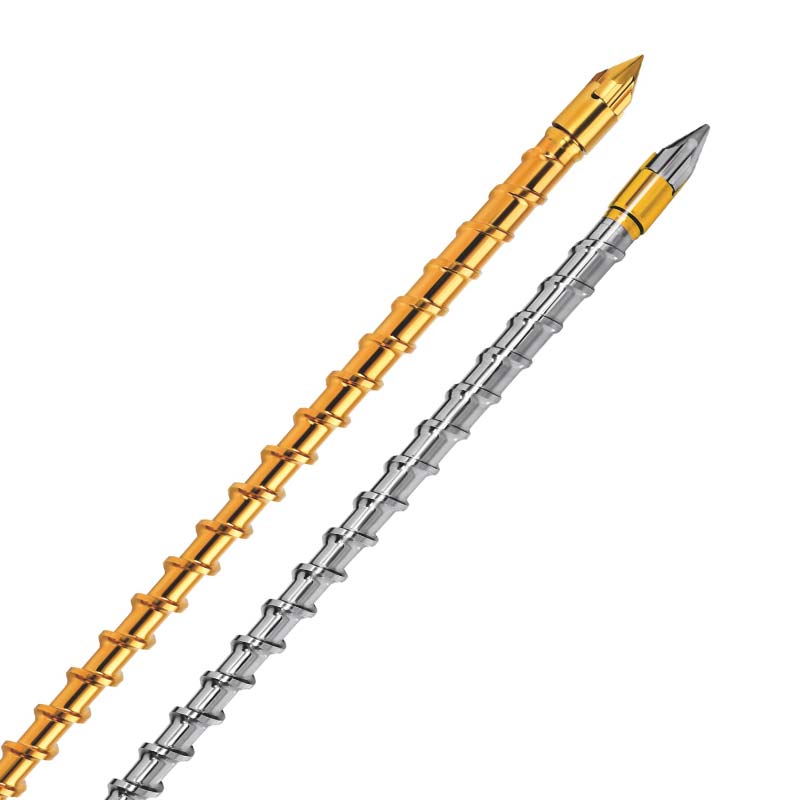
The core conclusion of optical components to the plastic screw.
The core is to reduce the risks of cutting overheating and demurrage, while ensuring the polishing, measuring stability and cleaning of materials of the screws; the specific structures need to be determined in conjunction with optical indicators of materials and products such as PC, PMMA, PPSU, etc.
Accuracy assurance for the formation of optical components: three stages of low shearing optical
Special Plug Snail Solutions
In the field of optical component production, products such as lenses, carlight masks, LED lenses, etc. are extremely stringent in terms of perforation, surface photopurity, size stability, etc. These products require over 90 per cent light penetration and must not suffer from visible defects such as flow marks, silver prints, bubbles, etc. Optical deformations must be contained within 0.01 mm/m, otherwise they will seriously affect optical performance. For example, the flow marks on the LEDs can cause deviations in light refractions, endangering driving safety, and the bubbles in the LED lens can cause loss of light fluxes of more than 15 per cent. Currently, optical components are produced using general equipment, often with a success rate of less than 75 per cent, while waste due to flow marks and silver prints is as high as 30 per cent. This paper will analyse the process properties of optical materials in the context of specific data and will focus on how to improve the performance of optical components by increasing their processing accuracy.Level 3 low-cut optics specializing in plastic screwsTargeted treatment of pain sites provides precision for the formation of optical parts.
Core mass pain points and technology needs for optical component production
Quality defects in optical components are directly related to their optical properties. Fluid marks, silver stripes, bubbles, optical deformations are known as the “four killers” that affect optical performance. In terms of industry standards, high-end optical lenses require a radiance rate of 92 per cent, mist of 1 per cent, with no more than one bubble per square centimetre cylindrical cylindrical diameter of 0.05 mm, and carlight optics of 0.005 mm/m, otherwise the angle deviation of beam exposure will exceed ±1.5°.
The creation of these mass pain spots is closely related to material characteristics, processing methods, etc.: An optical-grade PC with a cut-off rate of more than 50s-1 results in a directional chain that creates flow marks; PMMA fluctuates at a processing temperature of more than ± At 1°C, silver texture is easily produced by local overheating; much of the bubble is caused by degradation gases from the vapour or shearing of trace moisture in the material; When the melting temperature exceeds the material degradation temperature of 5 °C, the amount of gas produced increases by a sharp three-fold. The inability to meet the precision processing requirements of optical parts due to the high shearing power (which often reaches 100-200s-1) and the high compression ratio (mostly 3.0-3.5) is the central cause of the frequency of quality defects.
Technical parameters and performance advantages of the 3rd level low-cut optic retrofit
In response to the problem of processing optical parts,Level 3 low-cut optics specializing in plastic screwsThe full range of breakthroughs in structural design, material selection, performance control, etc., have been achieved as the core solution to the problem of optical component quality pains.
Low shears design prevents material degradation and flow marks
The cut-off rate of the plating screw is strictly controlled at 20-40s-1 and only 1/3-1/5 of the plume. By optimising the depth of the snail (25-30 per cent deeper than the normal plume) a significant reduction in the shearing of the molten during transport. Tests of PC material indicate a reduction of 80 per cent in the molecular chain orientation and a decrease in the incidence of flow marks from 28 per cent to 2.1 per cent of the general plating screw. At the same time, low cutting effectively avoids material degradation. The optic-grade PC molecular retention rate is more than 98 per cent, and the perforation rate is between 3 and 5 per cent higher than that of products processed by ordinary plywood.
Low compression ratio structure, reduced cut heat Gather
The piping length of the plume is 15 per cent of the total length of the plume and is much less than 30-40 per cent of the plume. This design reduces the accumulation of shearing by 60 per cent and the temperature of the molten body is controlled at >0.5°C. According to empirical data, when PMMA was processed, the incidence of silver stripes was reduced from 22 per cent to 1.8 per cent of the general plume screw and the material degradation rate due to temperature fluctuations was reduced from 5 per cent to 0.3 per cent.
High liquidity guaranteed even filler
The coating, compression and measurement segments of this plume are structured with a three-tiered gradient and are designed at supersickness (20 per cent larger than the normal plume), reducing the flow resistance of the molten in the plume by 40 per cent and increasing the plume speed by 30 per cent. In LED lens production, the time of the molten cavity after the use of the plume is reduced from 2.5 to 1.8 seconds for the general plume and 50 per cent increase in the even distribution of filled pressure. Optical deformation was reduced from 0.012 mm/m to 0.004 mm/m, fully meeting the accuracy requirements of high-end optical components.
Mirror polishing and cleaning guaranteed
The plating screws use SUS316L medical grade stainless steel, which is polished by super-precision mirrors, with a rough surface of Ra.0.01 m, which is well below Ra0.8 m of the plume. Such extremely smooth surfaces not only reduce material residues (one-time production residue of 0.01 mg) but also avoid impurities arising from friction during the transport of the melting. The waste rate of optical components due to surface impurities has been reduced from 8 per cent to 0.5 per cent, following the use of the plating screw.
Validation of effects in practical application
A comparison of a optical camera manufacturer shows that it was used.Level 3 low-cut optics specializing in plastic screwsThe product eligibility rate increased significantly from 72 per cent to 98.5 per cent. In particular, the incidence of flow marks decreased from 28 per cent to 1.9 per cent, the silver-coated deficiency rate fell from 22 per cent to 1.5 per cent, the bubble over-standard rate fell from 15 per cent to 0.8 per cent, and the optical variant stabilized between 0.003-0.005 mm/m, with an average permeability increase of 4.2 percentage points to 95.3 per cent.
In terms of cost-effectiveness, the increase in material utilization from 70 per cent to 95 per cent as a result of the improved eligibility rate would result in savings of about $6.8 million per year in raw materials, based on the production of 1 million optical lenses per year; at the same time, the efficiency of equipment production had increased by 40 per cent and the combined cost of production had decreased by 25 per cent as a result of reduced clean-up back-to-work time.
Here.Level 3 low-cut optics specializing in plastic screwsThe problems of flow marks, silver prints, bubbles, optical deformations in the production of optical components have been addressed at a fundamental level through such processes as low shearing, low compression ratios, high mobility design and mirror polishing. With increasing precision requirements for optical components in areas such as car lighting, security surveillance and consumer electronics, the paralysing screws will become standard configurations for the production of high-end optical components and will drive the optical manufacturing industry towards higher accuracy and performance.
Data to be recorded before implementation
- Material integrity number, filling ratio, flame-retarding system, refill ratio and dry condition.
- Note plastics brand, model, screw diameter, voltage, back pressure, turn speed and current screw structure.
- Indicators of product size, wall thickness, appearance or strength, and current adverse phenomena and frequency of occurrence.
- Continuous production cycle, refuelling frequency, machine clean-up method, wear and tear record and planned useful life.
How to validate the adjustment results
It is recommended that the current process baseline be established, followed by a single-variant test model. Each round records the measurement of time, melting temperature, product weight, formation cycle and bad rate, avoiding multiple parameters being changed at the same time to determine the cause. The parameters in the text are used to illustrate design thinking and should not replace material supplier data and on-site safety protocols.
What kind of support is a star-friend screw?
The Starmate Mechanical Equipment Co. Ltd. (Starfeng) provides materials and situational assessments, screw structure recommendations, base and surface treatment options, non-spectrum customization and test modelling issues around optical components. The submission of information on raw materials, equipment and products could lead to more targeted programmes.
Ask for customized screws immediately, or check firstNote plastic screw productwithNote Plastic SolutionsI don't know.