
Medical retrospective screws: high light and low shearing
Release time:2025-08-07
Medical retrospect? Priority should be given to the assessment of exposure materials, cleaning methods, surface polishing and demurrage, and the final acceptance should be based on the applicable regulations of the client, material certification and clean certification requirements. This paper combines information on star-friend screw stations to organize selection, process and validation elements.
The core conclusion of medical retrofit.
Priority should be given to the assessment of exposure materials, cleaning methods, surface polishing and demurrage, and the final acceptance should be based on the applicable regulations of the client, material certification and clean certification requirements.
Medical precision: low cutting analysis,High-precision snailand temperature control systems
In the field of the production of medical devices, core products such as syringes, blood vessels, catheters, etc. require extremely strict requirements for the purity of the material, the precision of the form, and health safety. These products are directly exposed to human blood or tissue, and any small impurities, size deviations or material degradation may pose a serious medical risk. Thus, the performance of the core components of the production equipment — retrofit spirals and thermocontrol systems — is a key determinant of product quality. This paper will provide, in conjunction with specific data, an in-depth analysis of how the medically specialized low-cut, high-light-purified piping screws and precision temperature control systems meet stringent production standards.
Core technical requirements for the production of medical devices
The special nature of the medical devices dictates that the production process must meet three core requirements. First, zero pollution control: In accordance with ISO 13485 standards for the quality management system of medical devices, the residue of contaminants in products exposed to the surface must be controlled below 0.1 mg/m2, which means that no excess impurities should be produced by the production equipment. Second, size accuracy control: In the case of syringes, the internal diameter of the syringe must be within ± 0.01 mm and the thickness of the catheter wall must not exceed 5%, otherwise it may affect the accuracy of the drug delivery or the comfort of the patient. Finally, material stability guarantees that heat-sensitive materials such as PC, PMMA may degrade and cause harmful volatile substances during processing if temperature fluctuations exceed ±2°C.
In terms of material properties, the processing temperature of PC materials is narrower, usually between 260 and 300°C, and when the temperature exceeds 310°C, the molecular volume decreases by more than 15 per cent; the melting viscosity of PMMA causes non-linear decay at a cut-off rate of more than 100s-1 resulting in a deviation in the size of the formation; and the PEEK material, although resistant to high temperatures, breaks in the molecular chain when the cut effect exceeds 3 MPa. These data highlight the very high requirements for the performance and temperature accuracy of the plume screws.
Technical parameters and performance advantages for medically specialized plastic screws
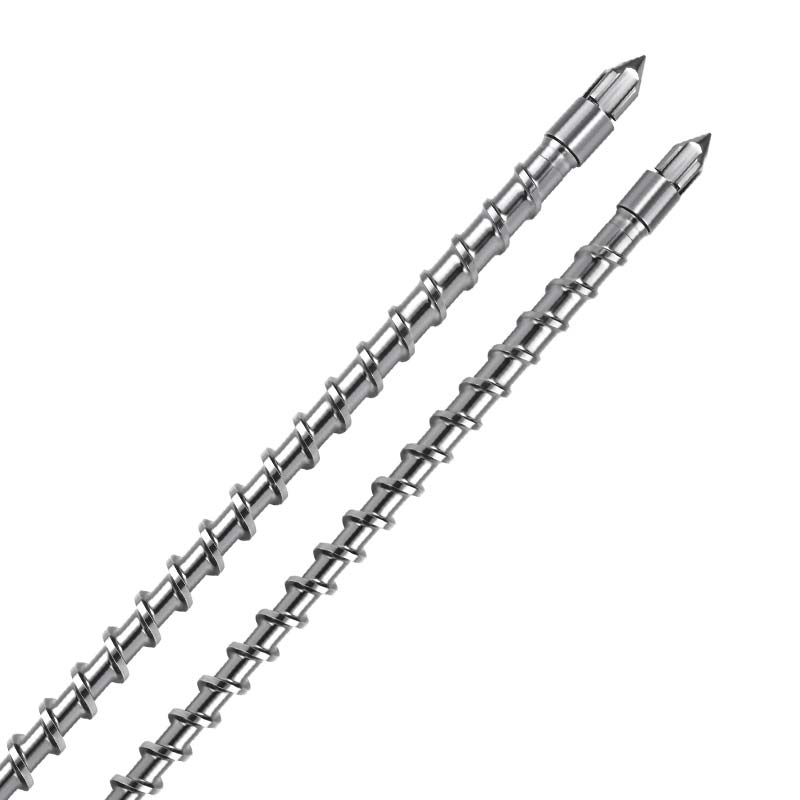
In response to the special needs of the production of medical devices, the medically specialized low-cut, high-light-purified plastic screws have been designed to achieve several technological breakthroughs. Using ultra-precision mirror polishing techniques, the surface is crude enough to reach Ra0.02 m, well below the Ra0.8 m standard for common plywood screws. Such an extremely smooth surface can contain material residues below 0.05 mg in a single cycle. After 200 consecutive production tests, the cumulative residual amount remains below 0.01 g, fully meeting the requirements for the cleanliness of medical devices.
In terms of material selection, the retrospect screws use medical grade corrosive alloy (e.g. Haps alloy C276) to test 480 hours of salt mist with no rust signs and to resist possible erosion of trace acid degradation products during the processing of PC materials. The cut-off control enables the melting-clip rate to be stabilized at 30-80s-1 by optimising the depth of the screws (15-20%) to the depth of the plain plume (control is between 1.8 and 2.2), well below the level of the ordinary plume 100-200s-1. Test data suggest that this design can reduce the degradation rate of PMMA material to less than 0.3%, which is much better than the industry average of 0.8%.
Technical indicators and synergies of precision temperature control systems
The synergy of precision temperature control systems with specialized retrofit screws is central to material stability. The system is designed with a multi-temperature-controlled temperature difference of ±0.5 °C, which is much higher than the control accuracy of ±3 °C for common equipment. In the case of PC material processing, temperature fluctuations in the front leg of the tank can be stabilized at 280 ± 0.3°C to ensure that the material does not produce unmelted particles at too low a temperature and does not degrade at too high a temperature during the melting process.
The system is equipped with an infrared on-line monitoring device that captures changes in the temperature of the melting in real time at a response rate of up to 50 ms and adjusts the heating power within 0.5 seconds when a temperature deviation exceeding 1 °C is detected. Actual production data show that during the eight-hour continuous production cycle, the melting temperature standard was controlled at 0.8 °C, a reduction of more than 60 per cent compared to the traditional temperature control system. Precision control has stabilized the condensation rate for PEEK materials at 0.2-0.3 per cent, ensuring consistency in the size of catheter products.
Performance validation in practical application
In a comparison experiment with a medical syringe production company, the product success rate increased from 82 per cent to 99.5 per cent, following the introduction of a medically specialized plywood screw and precision temperature control system. Of these, the impurity detection success rate (in terms of the number of impurities not eligible per 1,000 products) was reduced from 12 to 0.3, and the size of the CPK was raised from 1.3 to 1.67, fully meeting the FDA requirements for the three categories of medical equipment.
In terms of material costs, the utilization of PC materials increased from 85 per cent to 98 per cent due to material degradation and reduced waste generation. The annual cost of raw materials can be saved by approximately $2.8 million, based on 100 million syringes. At the same time, production efficiency has increased by more than 30 per cent as a result of the extension of the equipment cleaning cycle from 8 to 72 hours.
Medically designed combinations of low-cut, high-light-purification piping screws and precision temperature control systems provide reliable technical support for the production of medical devices through extreme cleanness control, precision cutting and temperature management. As the product quality requirements of the health sector continue to rise, the equipment set-up of this profession will become the standard for the production of high-end medical devices, which will drive the industry towards higher accuracy and safety.
Data to be recorded before implementation
- Material integrity number, filling ratio, flame-retarding system, refill ratio and dry condition.
- Note plastics brand, model, screw diameter, voltage, back pressure, turn speed and current screw structure.
- Indicators of product size, wall thickness, appearance or strength, and current adverse phenomena and frequency of occurrence.
- Continuous production cycle, refuelling frequency, machine clean-up method, wear and tear record and planned useful life.
How to validate the adjustment results
It is recommended that the current process baseline be established, followed by a single-variant test model. Each round records the measurement of time, melting temperature, product weight, formation cycle and bad rate, avoiding multiple parameters being changed at the same time to determine the cause. The parameters in the text are used to illustrate design thinking and should not replace material supplier data and on-site safety protocols.
What kind of support is a star-friend screw?
The Starfleet Mechanical Equipment Co. Ltd. (Starfeng) provides a reset of materials and work evaluation, screw structure advice, base and surface treatment options, non-spectrum customization and trial modelling issues around medical retrofit screws. The submission of information on raw materials, equipment and products could lead to more targeted programmes.
Ask for customized screws immediately, or check firstNote plastic screw productwithNote Plastic SolutionsI don't know.