
TPE and TPU elastic particles
Release time:2026-09-20
For soft materials, the glue of the spilling edges of wrapping and cutting sensitivity, giving advice on the switch and screw. This paper gives recommendations for actionable abbreviators in terms of material properties, temperature, speed, pressure, cooling and common defects.
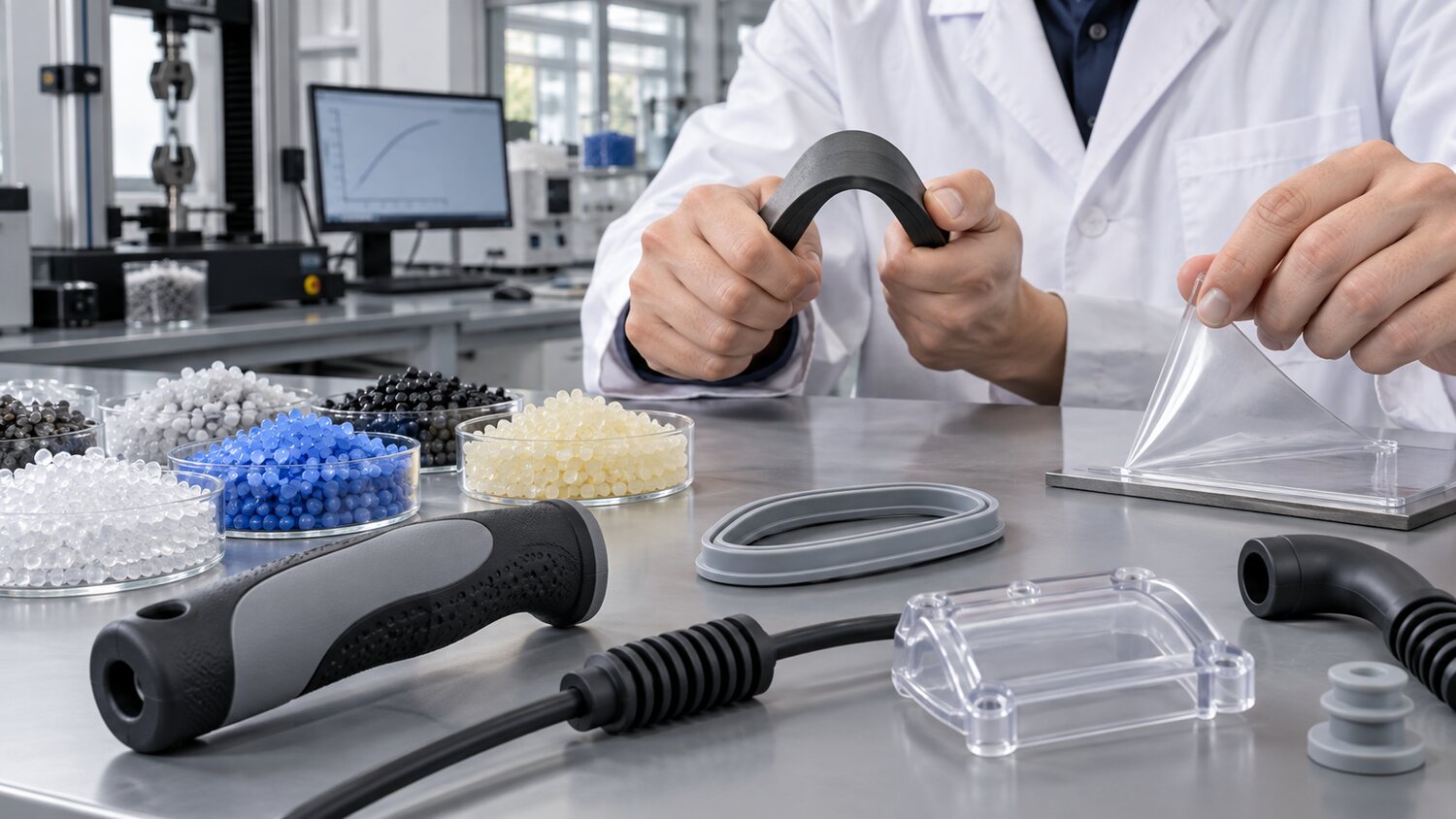
TPE is the generic term for various types of thermoplastic elastomers, and TPUs fall into the category in which they are more sensitive to grinding, strength and moisture. They are often used in hand-held rubber, seals, soft sense parts, cables and footwear. Different degrees of hardness, base material systems and additives lead to very different flows, glues and adhesive manifestations, and it is necessary to confirm card numbers, hardness, whether dry or chemically compatible with the base materials. TPUs are usually required to dry up strictly by plate number; some TPEs may also bring moisture and volatilizers by packaging, colored mother or respirator, although they are not humid.
Soft materials are subject to cutting-up temperature in the contents of the material drums, and back pressure and screw velocity should start at a lower level to measure stability and homogeneity. The low temperature of the drums results in rough surfaces, smelting wires and wrappings that are not strong and that are too high or too long can be sticky, coloured, odour-producing or degraded. Spiral compression should not be excessive, and feed segments should ensure smooth delivery of soft particles, avoid bridge construction and slide. If the particle shape is irregular or the surface is extensive, it should also check the cooling of the plume and the feed mouth.
The combined power of the packaging product is determined not only by injection pressure. The cleanness of the base surface, pre-heat, waiting time after the first formation, bagheavy temperature, modulation and watering position will affect the interface. It can be maintained in the interface at a faster rate, but near the thin edge and at the end of the exhaust is to slow down to avoid plunging and spilling. Overpressure can easily squeeze into a fraction or deform the base, and under-pressure can lead to water loss and partial separation. The combination should be tested by stripping, reversing or using the test in practice, and should not be judged solely on the basis of “simplified” at the moment of emergence.
The TPE and TPU products are commonly glued, white, hairy and variable in size. The solution is to check cooling, modeling, demigation slope, exhaust and top balance, and then adjust temperature and velocity. Overuse of demodulants can affect subsequent adhesion, printing or spraying. Software is more likely to be left behind in retroring, nozzles and thermal flow end, with compatible machine clean-up programmes being used for refuelling. In the case of the long-term production of elastics with high friction or flame retardant fillings, the screw surface and resistance are also assessed. The final parameters should be confirmed by combining the requirements of hardness, echo, appearance, adhesion and smell.