
PP Polypropylene Particle Characteristics and Apostilles Proposal
Release time:2026-09-20
The flow around the PP crystals constricting and retweeting, creating a cyclical and sized switch. This paper gives recommendations for actionable abbreviators in terms of material properties, temperature, speed, pressure, cooling and common defects.
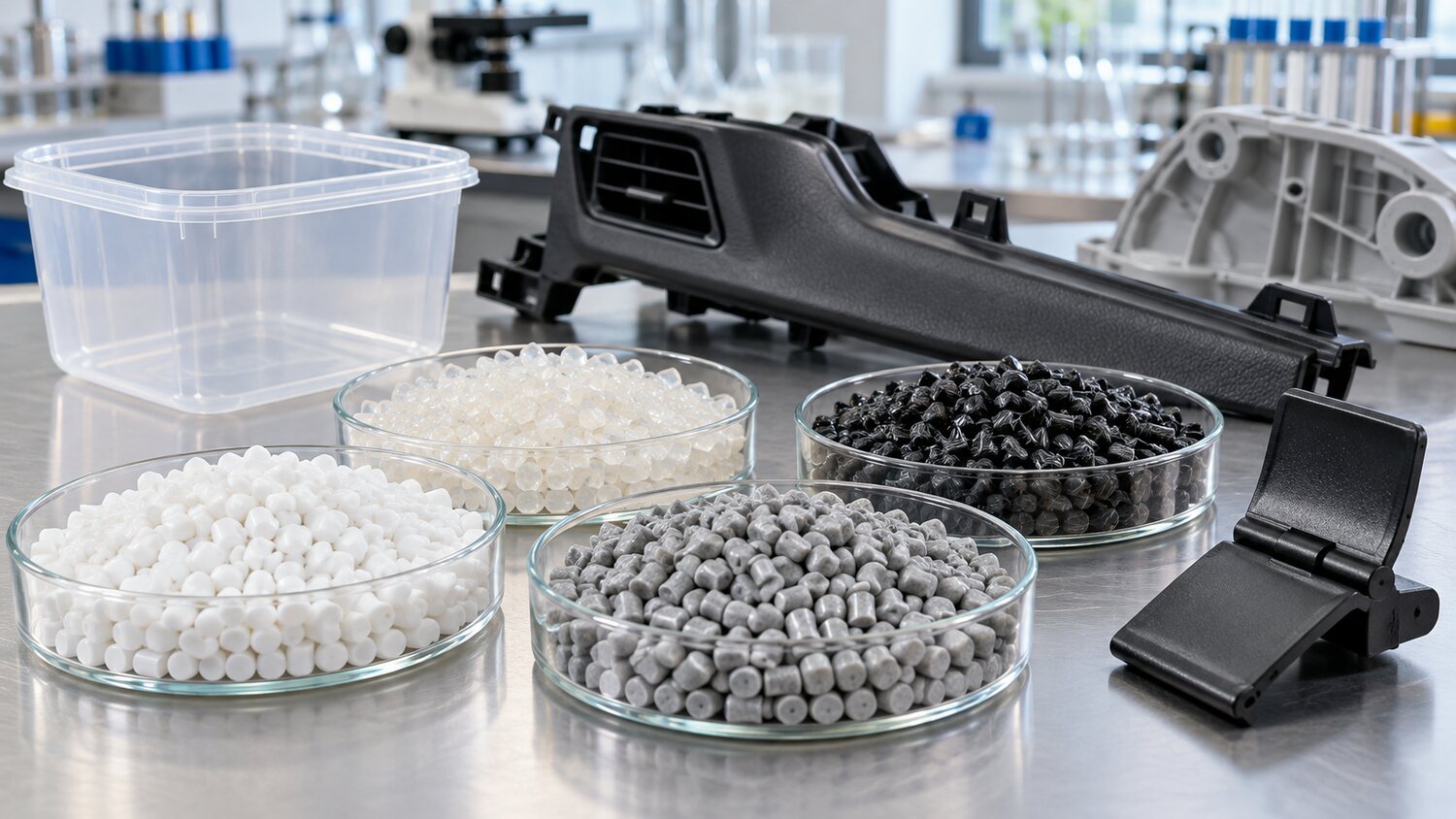
PP is a semi-crystal material with low density, high chemical tolerance and high flow grade, often used in thin-wall packaging, household electrical parts, car interiors and everyday items. Its main modem feature is not so difficult to fill, but the crystals are condensed more markedly, with products prone to water contraction, warp and size changes with cooling conditions. PPs at different melting speeds vary widely in their viscosity, impact performance and condensation, and do not use the same set of parameters for homogeneity, conglomeration, filling and bovine enhancement. The technical data sheet, filling ratio and return ratio of the plate number should be checked before it is turned on before determining the starting window for temperature, temperature and injection speed.
Regular PPs begin to verify from medium drum temperature and medium high-speed filling, with a value based on card number information. Threads need to be filled more quickly to reduce short-shot and flow marks from the frontal freeze of the melting; thick wall or chained products need to avoid overcuting areas. The back pressure is appropriate to stabilize the lower levels of mix and exhaust, and the spiral speed is not appropriate to increase indefinitely in order to shorten the cycle, otherwise the actual melting temperature rises, contractions and warp changes. If the surface of the product is white, slit or silver threads are found, the chromosomal compatibility, receptor contamination, nozzle cold and injection velocity mutations should be checked.
PP-sized controls are focused on the verification of the pressure and watering closure time. Establish a stable switch point and then test the mass platform to determine the time of effective pressure. If the water is concentrated in thick or thick-walled areas, the local wall thickness and cooling need to be checked at the same time, and the pressure should not be increased only; the warp should be more dynamic with regard to temperature differentials, vent location and flow orientation. Mineral fillings are usually smaller, but mobility resistance and mold wear and tear increases, and the orientation of the pelicans to enhance the pep is more evident, and fibre sequencing should be controlled through watering and segment speeds, with the use of grinding screws and anti-reversible components.
PPs themselves are not usually strongly humid resins, but particulate surface moisture, fillings, colour mothers and respirators may still bring gas stripes, so it should not simply be assumed that all PPs need not be dry. If plasticization times are unstable, colour is dispersed or unmelted particles appear in production, the ability of the screws to deliver, compress and the condensation structure should be checked for high filling or high flow plate numbers. For thin-wall high-speed products, the screws need to be sufficiently plastic-capable to avoid excessive cutting leading to temperature rise; for large and thick-wall products, attention should be paid to measuring stability and inverse sealing. The final parameters should be validated by external viewing, weight, size and impact performance.