
PBT & PET Pyrotechnic Focus
Release time:2026-09-20
Comparing PBT and PET with common points and differences in dry crystal flow and bond enhancement applications. This paper gives recommendations for actionable abbreviators in terms of material properties, temperature, speed, pressure, cooling and common defects.
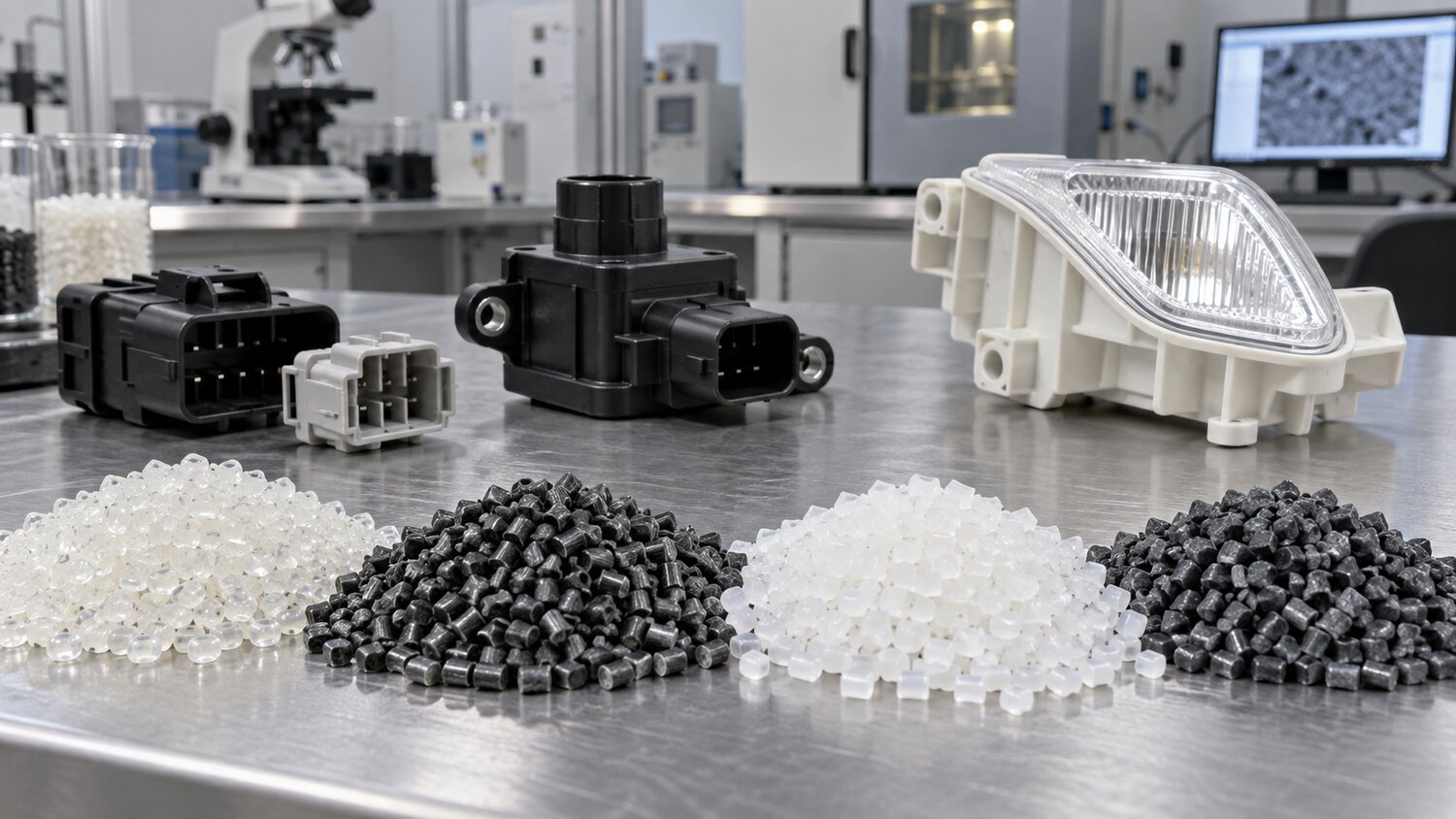
Both PBT and PET are polyester materials with good electrical performance, heat resistance and size, often used for connectors, coil skeletons, sensor casings, lamps and household electric parts. Both are more water-sensitive, and particles at high temperatures are hydrolytic if they are overwatered, leading to silver silk, decreased strength and mucous changes. Dry temperature, time and spot shall be carried out by a specific card number and shall remain dry and closed. PET ' s crystallization and processing windows are usually more sensitive than PBTs, and the use of regeneratives requires attention to viscosity and thermal history.
The temperature of polyester material is set to ensure full melting while avoiding long stay at high temperatures. The bottling booster often requires a higher physical smelting level, but cannot be forced to mix through high back pressure and spiral speed to avoid loss of fibre length, excessive temperature and material breakdown. Injecting can be faster in thin wall areas to prevent early freezing; slower and less burning as it approaches small end and exhaust. Nozzles, thermal fluids and reversible structures shall avoid demurrage, and cooling or emptiness at the time of shutdown in accordance with plate number.
Both PBT and PET are semi-crystal materials, and the temperature of the mold affects the surface, the degree of crystallization, contraction and size. Connectors and precision skeletons usually need to keep the temperature even and reduce crystal differences in different regions; low-temperature temperatures, although short-lived, can lead to surface differences, subsequent changes in size or insufficient melting intensity. The increase in fibres increases the difference between the direction of the flow and the horizontal contraction, and the arc cannot be solved by increased pressure alone, but should be optimized by the combination of watering position, fibre orientation, product wall thickness and waterway balance.
Polyesters containing pelicans, flame retardants or mineral fillings cause wear and corrosion, and screws, drums and reversible rings shall select the corresponding resistant materials. If the measurement time changes, the mass of the product is unstable or the number of fly-sides is increasing, the reverse wear and the actual viscosity should be checked, rather than the change point. Electrical products are also required to verify flame retardation, electrical strength, size and melting line performance, which may have been compromised by damp or overcuting of materials at a time when the appearance is satisfactory. The key to stable processing is the integration of drying, actual melting state, Mo temperature and equipment wear and tear into the same control plan.