
PANYLON AND PROBLEM SCIENTIZED EQUIPMENT
Release time:2026-09-20
Description of the PA6 PA66 and the bottling enhancement plate ' s motor focus in terms of wetting, crystal flow and wear and tear of equipment. This paper gives recommendations for actionable abbreviators in terms of material properties, temperature, speed, pressure, cooling and common defects.
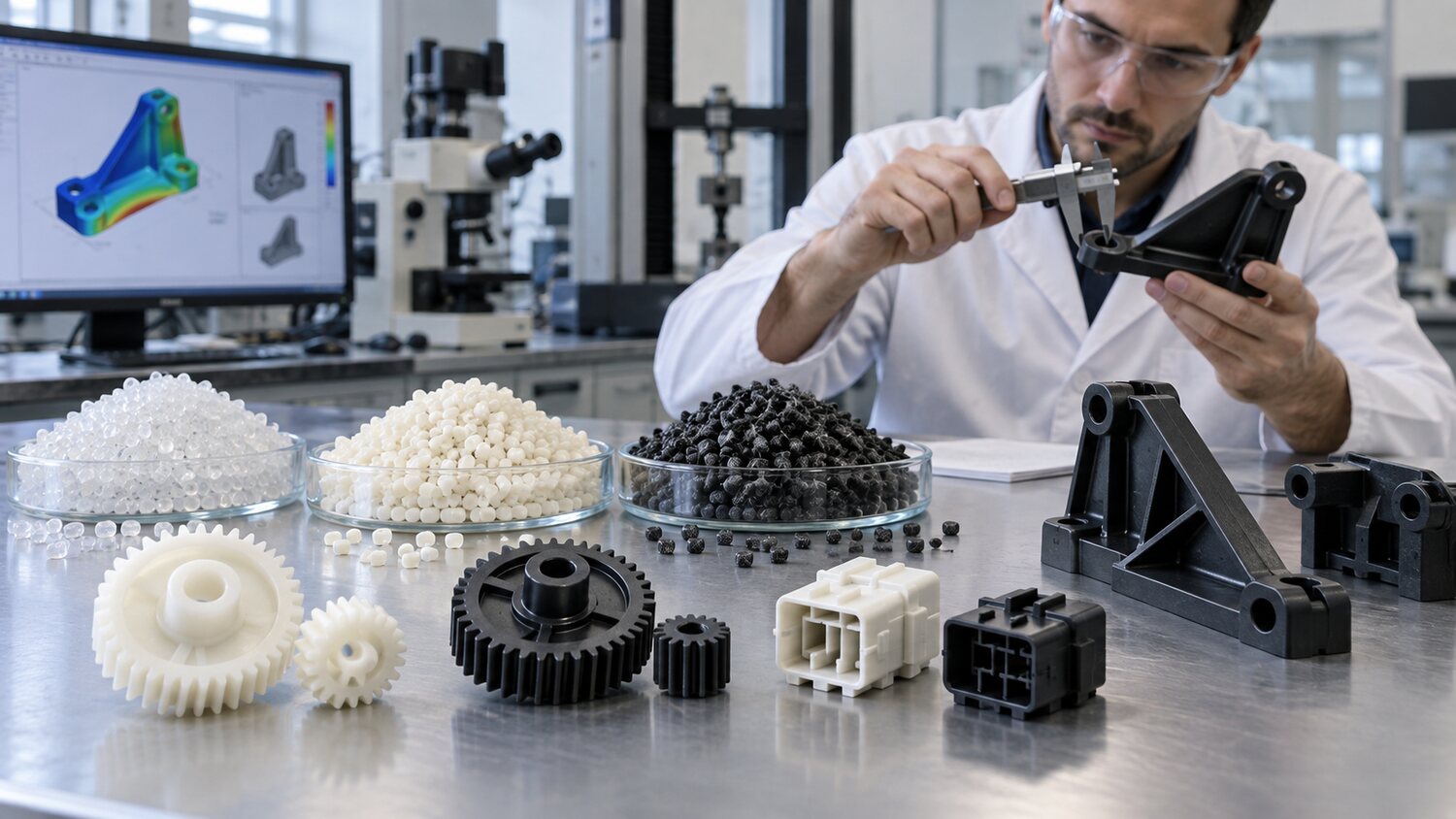
PA6 and PA66 and their boosts are of good strength, grinding and temperature-resistance and are often used for gears, connectors, car parts and industrial structures. It is clear that nylon particles are humid and that high moisture can lead to reduced hydrolysis, silver silk, bubbles and mechanical performance at high temperatures; however, the final size and resilience of the finished product may be affected by subsequent wetting. Thus, the drying, drying and closed transport of raw materials, the measurement of the time of the finished product and the wetting conditions must be defined simultaneously. Drying and processing windows with different PA types, viscosity and product ratio vary considerably, depending on the supplier's number.
The viscosity near the nylon melting point changes more rapidly, is generally better mobile, and nozzle salivation and reverse flow need to be controlled. The temperature of the drums should ensure that the particles are fully melted, while avoiding long periods of high temperature stay leading to colour variability and degradation. The back pressure should start at a lower level, which is based on vents and mixed stabilization; too high a screw velocity would cause excessive break-ups and an increase in the temperature of the melting. Nozzles can combine materials and molds to select current-proof salivation measures, but any mechanical closure structure should avoid the formation of demurrage angles. The charger shall observe the presence of unmelted particles, unusual odor or colour variations.
The pelican reinforcement of PA's arcs is mainly influenced by fibre orientation, wall thickness, watering and cooling temperature differentials. Increases in security can only change part of the contraction and do not eliminate directional distortions caused by orientation. Switching can be done at a fractional speed to control the direction of cutting and main flow of water, to maintain a modulus balance and to compare the warp trends under different watering programmes. Connectors and thin wall skeletons require higher filling speeds, but at the end there must be sufficient exhausting; if burning or missing feet occur at the same time, priority should be given to cleaning the exhaust and optimizing the end velocity rather than simply increasing the pressure.
Fossil and mineral fillings accelerate screws, drums, anti-reverse rings and nozzle wear, which in turn results in a return flow, instability of measurement and fibrous dispersion. Long-term production should be based on grinding-resistant double-metal drums and snails for suitable surface treatment, and should avoid overcompression resulting in unnecessary cutting. If the strength of the product is reduced but the appearance is still satisfactory, the moisture, actual melting temperature, fibre length maintenance and resonance ratio should be checked. The nylon process shall be confirmed by a stretch, shock, size or assembly test and shall not be based solely on short-term appearance.