
ABS Particle Characteristics and High Appearance Product Modifier Recommendations
Release time:2026-09-20
Start with drying, cutting the heat, light and residual stress, and reduce the silver twirl differences and melting marks in the ABS shell. This paper gives recommendations for actionable abbreviators in terms of material properties, temperature, speed, pressure, cooling and common defects.
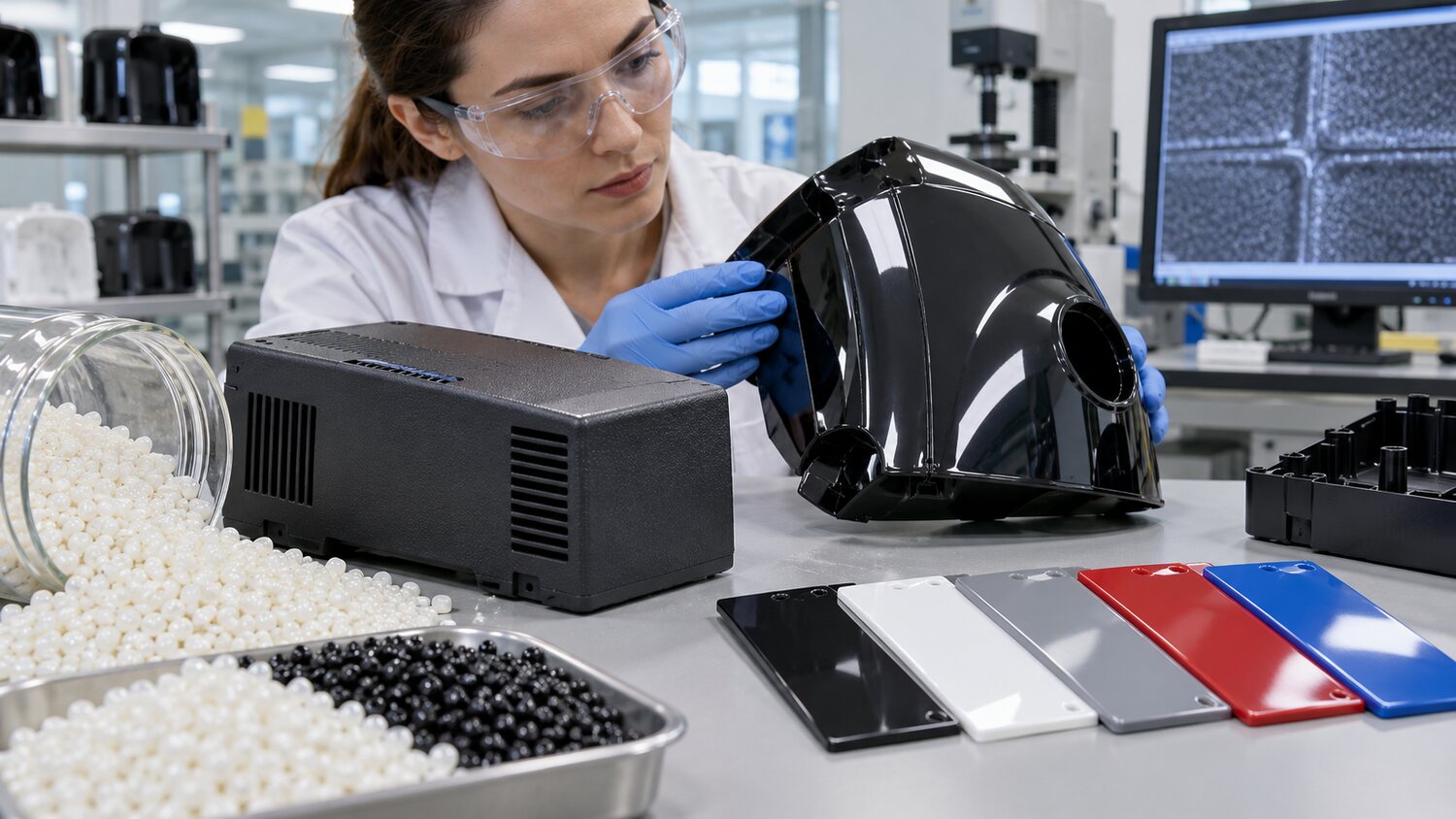
ABS is also a rigid, resilient and colour-friendly feature, which is widely used in household electric casings, electronics, toys and car decorations. It is a non-stereotyped material and does not rely on crystals for larger contractions, as is the case with PP, but is more sensitive to moisture, shearing, stop time and surface reproduction of molds. Different processing windows that are heat-resistant, flame-retarded, plating and high placards vary significantly, and ABS, in particular, is more likely to change colours and to produce gases because of excessive temperatures or long stays. Pre-use requirements should be dehydrated by card number and the dry pipe and pipeline should be kept closed to avoid re-sorting after drying.
ABS usually uses medium injection speeds to build the front line of the flat melt. High-sight surfaces can increase the temperature and filling speed of the mosaics and reduce the flow marks and melting lines, but at the end of the exhaust, slow down to prevent burns and flysides. In case of silver silk, check drying, nozzle cooling and material decomposition and do not immediately “press” with a higher back pressure. The back pressure is only required to satisfy the dispersing and measuring stability of the chromosomal mother; excessive back pressure, too fast screws or too small agglomeration will prolong the stay at high temperatures and increase the cut-off, increasing the yellow and black spots.
Common problems with ABS casings are smelting wires, drowsiness, water contraction and internal stress. In addition to being temperature-related, melting wires are also affected by watering position, velocity switching and exhaust; blind warming may improve the surface but reduce impact performance. The condensed water should be jointly controlled by wall thickness design, pressure and cooling. Fracking after assembly or spraying, plating and bursting after plating are often associated with overpush, top-out deformation and residual stress, which can be improved by lower end-pressure, higher temperature, optimized watering and longer reasonable cooling, and validated with stress testing or actual assembly.
With regard to the screws, ABS needs to be evenly plasticized and temperate, and the flow lanes should be smooth, avoiding reversible loops and nozzles with dead end of demurrage. Corrosion and wear are also to be taken into account in the long-term processing of flame retardation or the enhancement of ABS. In the event of a change of colour, if the black dot is repeated, the screw surface should be checked for attachments, the dead corner of the drum and thermal flow of carbon, rather than for an unlimited increase in temperature. Production parameters should be limited to the maximum stop time and the mode of decommissioning. Qualified ABS processes not only provide a beautiful appearance but also ensure that shock, assembly size, spray or electroplating stabilizes in bulk production.