
How to select a grinding screw for the bobby-enhanced PA project
Release time:2026-09-22
For automobile and connector equipment manufacturers, describe the method of checking the ratio, length maintenance, drying and high-temperature corrosion, analyse the risk that the normal nitrogen layer may wear quickly and affect size stability, and provide recommendations for validation of the use of grinding alloy and control of cut-and-write gaps and rates of wear and tear, fibre length and product strength.
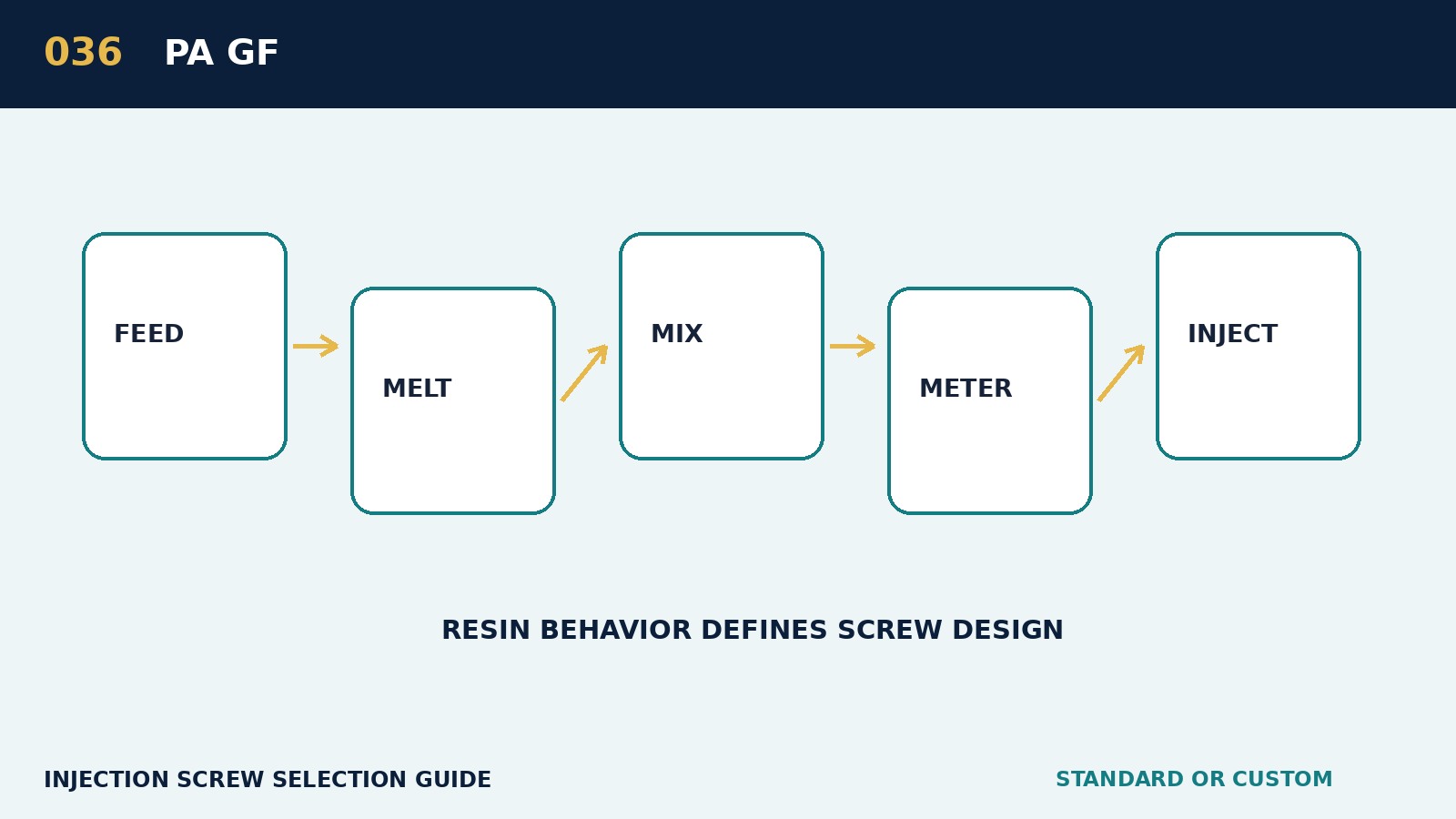
In PA-compositing, the first solution for automobiles and connectors is not to choose a ready-made model, but to confirm the ratio, length, drying and high temperature corrosion. This step determines whether the subsequent spiral diameter, structure and material grade are well founded.
The name of the raw material can only be classified as the first layer, and what really determines the screw configuration is the viscosity, melting point, thermal stability, humidity, filling and additive of the specific plate. Vendors should obtain material forms and identify whether the customer uses raw, retroactive or retroactive formulations to discuss generic, grinding, corrosive or lower shear structures. Calculates the nominal value to be converted to the actual condition. The machine often uses PS as a reference for the gel weight, which should be revised by density when using other raw materials; the weight of the product should be added to the main course, traffic separation and a reasonable buffer. The larger the diameter of the screw, the greater the theoretical capacity, but the pressure of injections per unit area under the same hydraulic pressure or servo system will decline and the resolution of the measurement of the small amount of the aerosol may also be variable.
Material analysis cannot remain under PPP, ABS or PA names. The specific plate number, the percentage of the product or mineral filling, the flame-retarding system, the water-bearing requirements, the permitted stay time and the recommended processing temperature should be checked. Differences in the sensitivity of viscosity, wear, corrosiveness and shearing may be apparent in the broad categories of the same material, which change the compression ratio, the three-part ratio, alloy and surface treatment. The focus of the discussion here is on the ratio, length, drying and high temperature corrosion, which must correspond to the customer ' s current production conditions and not be limited to the maximum values in machine samples.
From a sales management point of view, the use of grinding alloys and the control of cut-off and gap should form a standard process that can be used again. Each project saves original needs, computations, final drawings, test modelling data and client feedback, and can call on experience in the event of a similar machine or material, but there is still a need to reconcile key differences and not to copy the historical configuration directly.
If it is done quickly and on an empirical basis only, it is likely that the normal nitrogen layer will quickly wear and tear and affect size stability. The success of a single test module does not represent long-term stability, particularly for projects with high filling, high temperature, frequent colour change or multi-molecular co-plasms, and needs to look at changes in batches of material, the length of continuous production and the accumulation of wear and tear.
Upon completion of the project, the delivery was concluded by wear and tear rate, fibre length and product strength, and the size tests, material or heat treatment certificates, trial modelling records and maintenance recommendations were archived. Sales teams can return after three months or a ton agreement to compare plasticization time, energy consumption, product fluctuations and wear and tear trends. As a result of the continued accumulation of PA-plus project data, the equipment manufacturer could gradually establish a package, a trade package and an aircraft-type menu to allow sales to quickly identify general and special conditions, while also placing a truly complex project in a timely manner for evaluation by an application engineer.