
If a client needs high-injection pressure, he should choose the big or the small.
Release time:2026-09-22
For the high-speed machine sales team, describe the cross-section of the screw, system pressure, injection rate and material viscosity, analyse the risk that a simple magnification of the screw would reduce the capacity of the pressure per unit area and give recommendations for validation of the selection of the appropriate diameter and peak pressure, filling time and pressure balance between pressures, velocity and capacity.
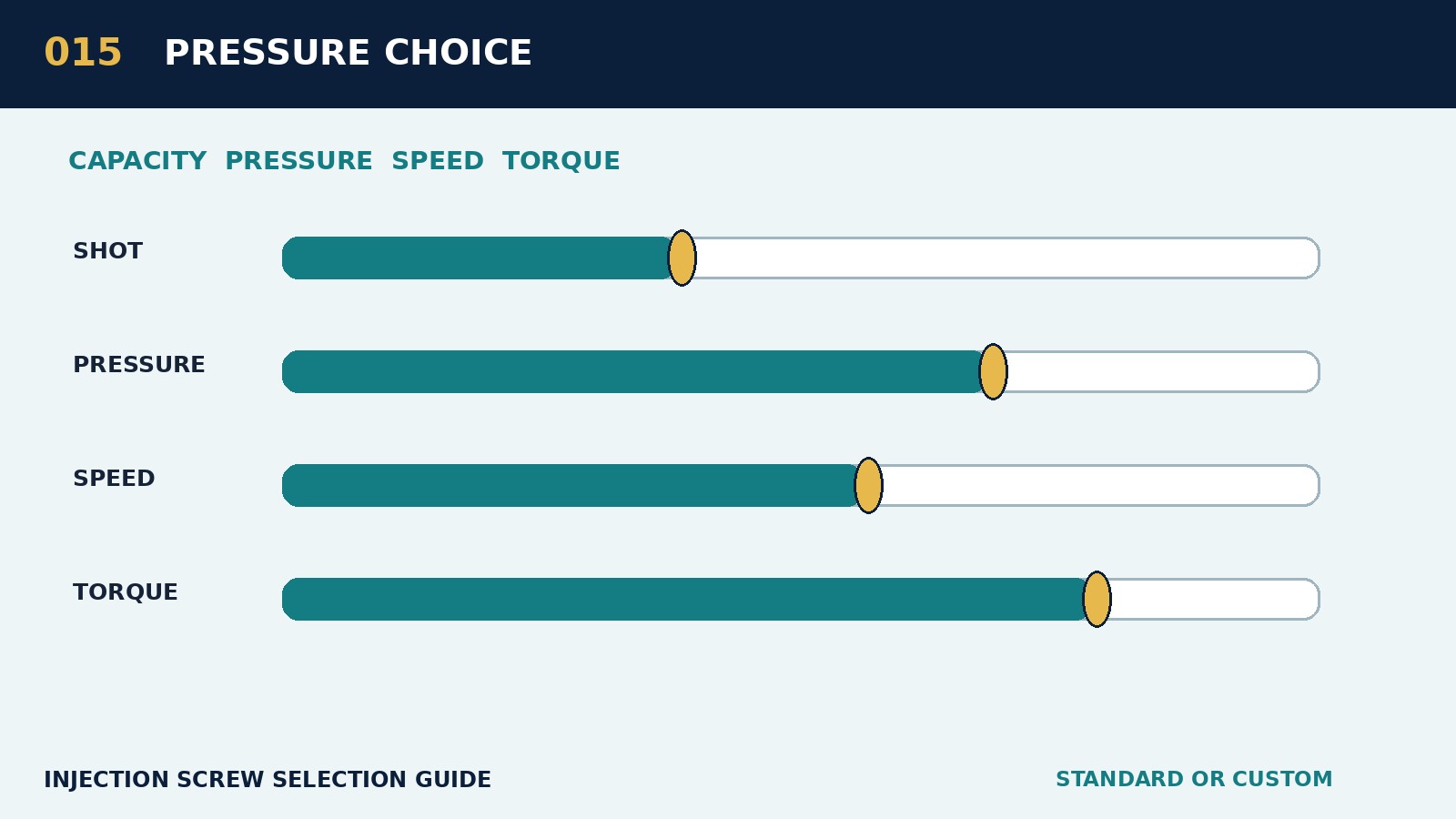
The problem with many high-pressure filling projects is not the lack of adequate equipment capacity, but the loss of screwdriver interdiction, system pressure, injection rate and material viscosity during the selection phase. The high-speed machine sales team can significantly reduce the risk of re-engineering and complaints if it completes the technical confirmation prior to the offer.
The platform parameters are understood separately. Locked-molecular tonnage addresses the pressure of the mould, and the reductive units address the problems of molten volume, pressure, velocity and plasticity, which cannot be replaced by one number. The salesman shall be based on the machine sign, the injection unit specification form and the actual course of the controller, and shall fix the nominal gel mass with the material density. Calculates the nominal value to be converted to the actual condition. The machine often uses PS as a reference for the gel weight, which should be revised by density when using other raw materials; the weight of the product should be added to the main course, traffic separation and a reasonable buffer. The larger the diameter of the screw, the greater the theoretical capacity, but the pressure of injections per unit area under the same hydraulic pressure or servo system will decline and the resolution of the measurement of the small amount of the aerosol may also be variable.
It is recommended that customer information be broken down into five groups: products and moulds, raw materials, platforms, process objectives and existing problems. Product end logs of single weight, flowway, number of caves, wall thickness and appearance levels; ratio of feedstock end recorder number, melting finger, filling, flame retardation and retrofitting; terminal logs of tonnage, voltage, screw diameter, maximum travel, injection pressure and plasticization. All data are sourced and are marked, drawn, physical, measured or estimated by clients. The focus of discussion in this paper is on the screw area, system pressure, injection rate and material stickiness, which must correspond to the client ' s current production conditions and not be limited to the maximum values in machine samples.
The configuration proposal should go to choose the appropriate diameter between pressure, speed and capacity rather than using vague descriptions such as “enhanced” or “high performance”. The spiral drawings need to reflect the effective length, three-part scale, depth, compression ratio, tail connection and anti-reverse components; the material programme needs to distinguish the base, surface hardening, alloy layer or coating, and to indicate the pattern of failure for which they are intended.
If the above steps are ignored, the most common consequence is that a simple magnification of the screw would reduce the pressure capacity per unit area. The problems are often manifested in the trial phase of measuring time instability, insufficient stress residuals, buffer drift, unmelted, black spots, colour differentials or increased wear and tear. Continued increase in temperature, back pressure and turn speed at this time may temporarily improve the appearance, but may increase the shearing heat, material degradation and equipment load.
At the time of acceptance, it is recommended that peak pressure, filling time and pressure residuals be the primary indicators, and that the temperature, screw velocity, back pressure, measurement position, buffer position, injection peak pressure and continuous sample weight be simultaneously recorded in the drums. At least three reasonable process points, low, medium and high, are covered to confirm that the programme is not effective under a single parameter. Where the information is temporarily incomplete, the pre-selection scope and the list to be confirmed may be provided, but it should not be considered a final commitment. Frozen configurations after the client has completed the screwdriver cut-off area, system pressure, injection rate and material stickiness can reduce erroneous orders and facilitate the use of the same version of data after production, testing, installation and sale.