
Design elements of a screw cooling hole in the processing of hot and sensitive materials
Release time:2026-09-20
The internal cooling hole regulates the core temperature of the screw and changes the mucous orientation and local heat accumulation, but should not replace the right structure. Design features from work principles, selection conditions, common risk and certification methods that indicate the cooling hole in the heat-sensitive material processing help to stabilize plasticization and reduce the full life cost of the rotor drums.
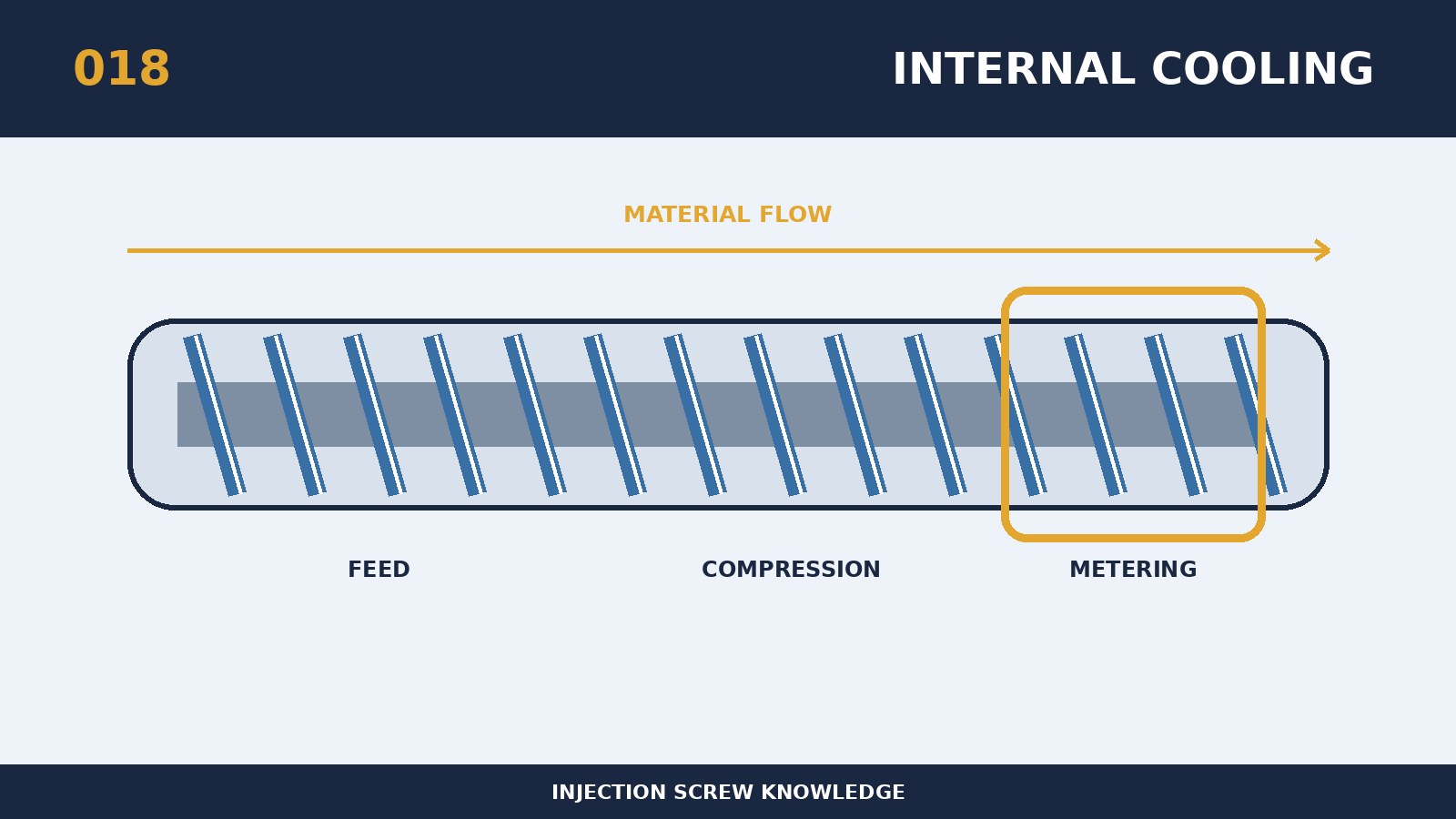
In the screw selection or failure analysis, the design elements of the cooling hole in the heat-sensitive material processing are often simplified as a specification value, but in fact need to be explained in conjunction with the full performance. The core is the internal cooling hole that regulates the core temperature of the screw, alters the mucous orientation and local heat accumulation, but should not replace the right structure. When the cooling medium takes the heat from the core, it changes the surface temperature gradient of the screw, and excessive cooling may increase the twist. Structural parameters are interconnected and any local modifications are evaluated in the complete path of transport, melting, mixing, metrology and cleaning. The retrofitting of old machines could begin with the re-establishment of the existing superstitious model, which compares the volume, intensity and heat history of old and new programmes with the same benchmark. Nominal specifications are therefore only the starting point, and the final conclusions must serve the actual resin, product and volume rhythm.
When customizing around the "design elements of the cooling hole in the heat-sensitive material processing", the equipment model, the original screw and the material drum are first collected for measuring dimensions, driving capacity, resin plate numbers and filling systems, single mass, cycle and existing defects. Specific selection principles for this topic are that heat-sensitive materials or special feeding problems can assess core cooling and identify apertures, depths, seals and flows. If the device can export a curve, the original record of screw position, turn speed, twist, back pressure and time should be kept, so as to avoid only being assessed by the operator. The technical agreement should include quantifiable provisions for size benchmarks, key communications, material status and acceptance methods so that new, old and subsequent restorations can be compared under the same criteria.
The most important precautions in the subject matter are the failure of properly cooling, which causes inadequate melting, condensed corrosive, sealed leaks or heat stress, and the need to avoid concentration of stress at the end of the blind. Periodic fluctuations can be contrasted by the number of screws, the frequency of additions and the frequency of hydraulic pulses, with the characterization of the source. For on-site processing, only one main variable is changed each time and the measurement time, twist, melting temperature, mat, injection pressure and product weight are aligned to the same pattern. If production is to be sustained by excessive temperature, turn speed or back pressure, the use of parameters to mask structures, wear or collage should be discontinued.
The repertoire of the "design elements of the cooling hole in the heat-sensitive material processing" can be used to verify that the replicable option is to record the re-entry of water temperature, flow, plastic twisting, melting temperature, and the post-facing hole sealing. If the programme involves new materials or layers, it can be scaled up in stages under controlled production, and the quality of wear and tear is reviewed at each stage. Inquiries to suppliers should also be accompanied by information on resins and fillings, risk of flame retardation or corrosion, total weight of products and fluids, photographs of available screws and equipment curves. The programme is considered to have a stable engineering value when the detection data, the good product rate, the timing of the switch and the unit cost of the eligible goods are improved.