
What to care about when choosing a compression ratio for non-crystal plastic
Release time:2026-09-20
There are no clear melting points for non-crystal materials, softification and viscosity declines in the wider temperature zone, and the compression process should remain smooth. The working principles, selection conditions, common risks and validation methods explain what should be taken into account when choosing a compression ratio for non-crystal plastics, helping to stabilize the plastics plant and to reduce the full life cost of the screw drum.
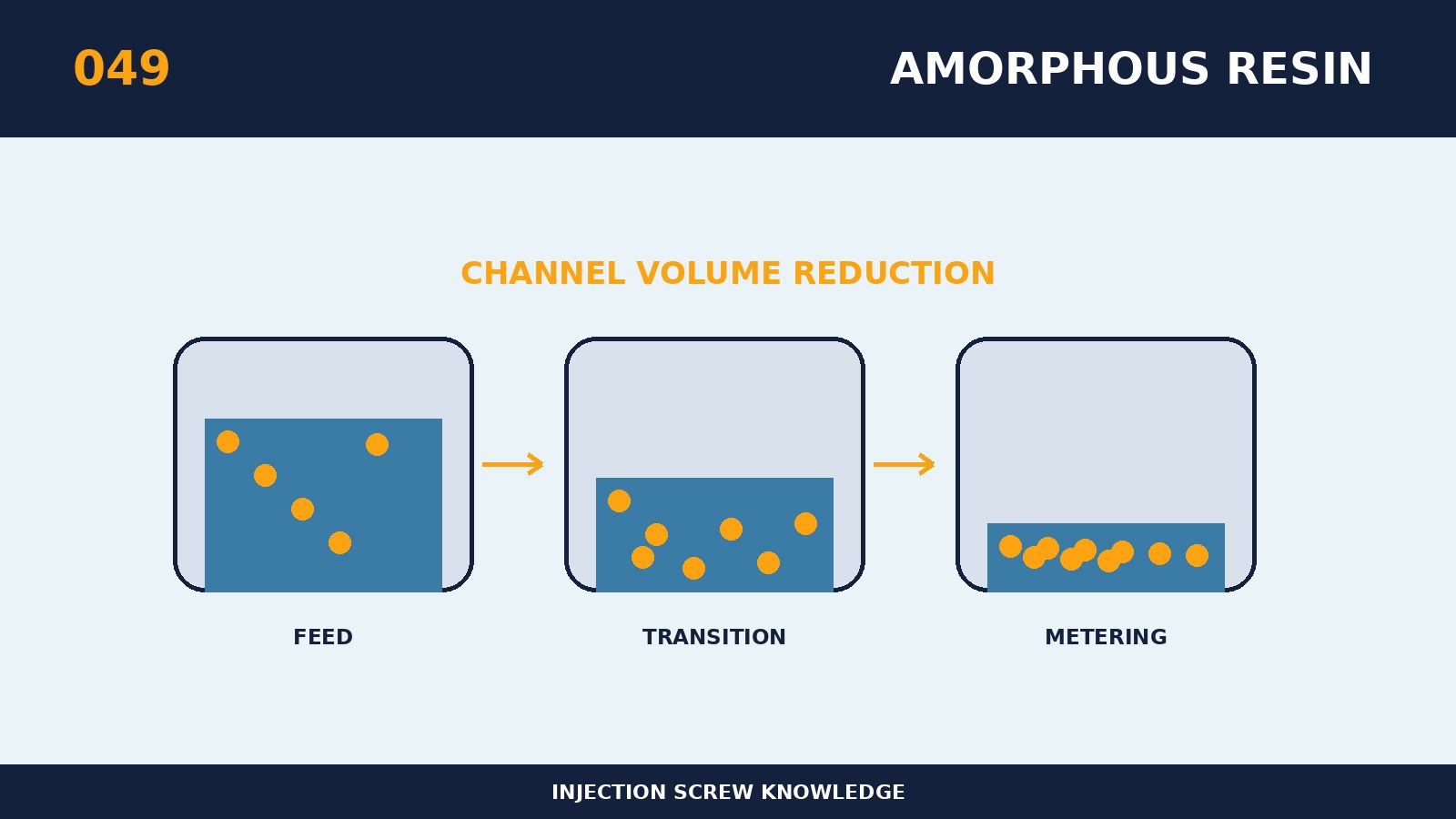
What should be the right focus for choosing a compression ratio for non-crystal plastics should not only refer to the size of the old package or to the equipment label, but also understand the real changes in the materials in the snails. The core is a non-crystalized material with no clear melting point, softening and viscosity occur in the wider temperature zone and the compression process should remain smooth. Over-compression can lead to preheating of the outer layer and to inadequate softening of the core, affecting in particular sensitive materials such as PC, PMMA and others. Compression ratios must be understood in conjunction with the length of the compressed segment, the conductor, the depth of the tank, the back pressure and the material flow, and the individual comparison is easily miscalculated. Parameter decision-making can be based on a failure push: short-shot, black spot, product fluctuations and overloading are listed first, and then the geometrics are identified to block the failure chain. Nominal specifications are therefore only the starting point, and the final conclusions must serve the actual resin, product and volume rhythm.
When customizing around “what to care about when choosing a compression ratio for non-crystal plastics”, first collects the size of the equipment model, the original screw and the material drum, the driving power, the resin number and the filling system, the sum of the single simulator, the cycle and existing defects. The specific selection principles for this topic are that selection should be based on glassized temperature, process viscosity, thermal stability, transparency requirements and product thickness. The specimen shall keep the batch of raw materials, the baking conditions and the mold cooling, and shall determine the spiral reaction by measuring the time, peak twist and actual melting temperature. The technical agreement should include quantifiable provisions for size benchmarks, key communications, material status and acceptance methods so that new, old and subsequent restorations can be compared under the same criteria.
The most needed to guard against the failure of the subject is that high shears cause yellow change, silver silk and residual stress, while undercompression can mix and measure fluctuations. Short-term increases in temperature or back pressure cover part of the structural problem but cannot be a long-term response if the twist, degradation or cycle deteriorates simultaneously. For on-site processing, only one main variable is changed each time and the measurement time, twist, melting temperature, mat, injection pressure and product weight are aligned to the same pattern. If production is to be sustained by excessive temperature, turn speed or back pressure, the use of parameters to mask structures, wear or collage should be discontinued.
This replicable approach can be used to validate “what to care for the non-clinical plastic selection compression ratio”: to detect actual melting temperature, light or colour differential, residual stress, twisting and stop time, and to form material-specific windows. The point of review of continuous production should be triggered by production or tonnage of raw materials, which would better reflect the true load of the screw than a mere calendar time. Inquiries to suppliers should also be accompanied by information on resins and fillings, risk of flame retardation or corrosion, total weight of products and fluids, photographs of available screws and equipment curves. The programme is considered to have a stable engineering value when the detection data, the good product rate, the timing of the switch and the unit cost of the eligible goods are improved.