
Cellular fittings plastic screws: compression ratio to midcut design
Release time:2025-08-07
Cell phone fittings to the screws? Cellular fittings need to match plastic properties, retrofitting specifications and product quality targets, and to identify temperature rises, measurements, mixing and wear and tear performance through trial modelling data. This paper combines information on star-friend screw stations to organize selection, process and validation elements.
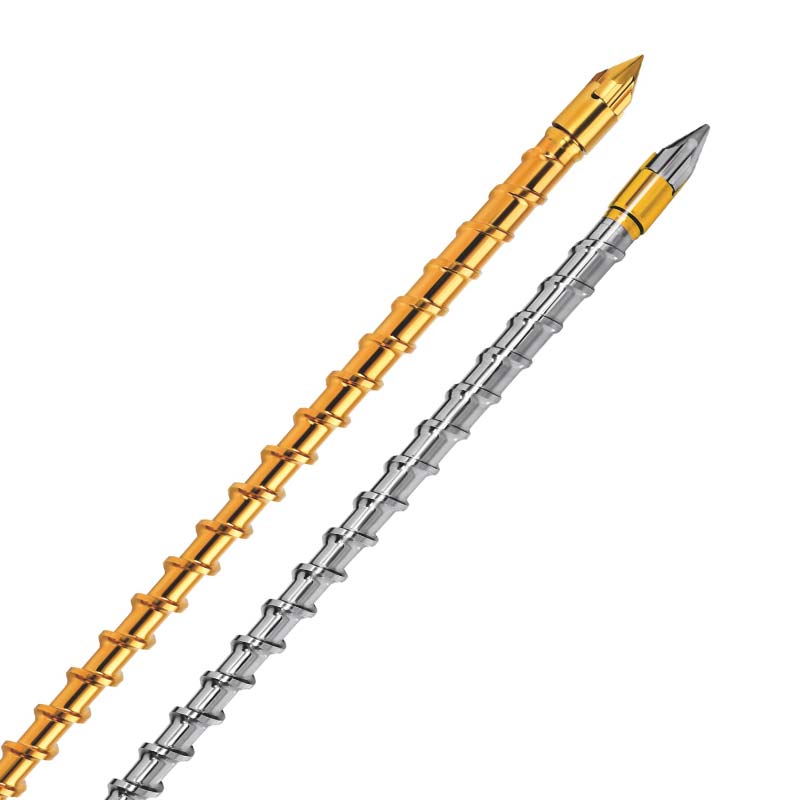
The core conclusion of cell phone fittings to plastic screws.
Cellular fittings need to match plastic properties, retrofitting specifications and product quality targets, and to identify temperature rises, measurements, mixing and wear and tear performance through trial modelling data.
Precise choice for cell phone fittings to form: a high-compression ratio to a medium cut-in-plastic screw solution
In the area of mobile parts production, the quality of products such as shell, key, etc. directly affects user experience and brand image. These products require surface photopurification of 0.08 m (equivalent to a mirror effect), no-fly edge (margin clapping 0.02 mm), and impact strength of 20 kJ/m2 (defaultless drop test). Currently, waste rates due to inadequate photopurification, flying edges and inadequate strength are often as high as 18 per cent, and high-end fittings are even below 70 per cent. This paper will analyse, with specific data, the process characteristics of materials commonly used in mobile phone fittings (ABS, PC/ABS alloys, etc.) and highlight how they can improve product quality in the production process. Special piping screws with high compression ratio and medium shearing power achieve precision control in narrow formation windows and target production pains.
Core quality pain points and technical needs for mobile phone parts production
The three main quality pain points for mobile phone fittings are closely related to material formation properties and equipment control accuracy. In terms of industry standards, the surface of a flagship mobile phone requires a roughness of 0.05 m and a key margin of 0.01 mm. 1.5 m drop test is non-fissile (composite strength requires 25kJ/m2).
The mechanisms behind these pain points are concentrated in three main areas: first, the question of purity. The ABS materials break up when cut unevenly, resulting in oranges on the surface. Leather phenomenon (Ra rises to more than 0.3 μm); second, flyside problem. The formation window of the PC/ABS alloy is narrower (the temperature fluctuations require ≤±2°C) and the flow of the ordinary plume screws is more than ±5%, which is prone to flight edges due to pressure instability; and, third, strength issues. When the material is not plasticized enough, the molecular chain is insufficiently entangled and the impact intensity is reduced by 30 per cent (from 25 kJ/m2 to 17kJ/m2), and the normal plywood screws are less than condensed (2.0-2.5) and cut-downs are more volatile (±10 per cent) and do not meet the requirement for sophisticated mobile phone fittings.
High compression versus medium cutting of plastic screws
In response to the problem of mobile phone fittings processing, the special piping screws with high compression ratio and medium shearing have achieved a breakthrough in structural design:
High-compression ratio design to increase plastic homogeneity
A high compression ratio of 3.5 to 4.0 is used for the screws (normal screws 2.5 to 3.0), and the length of the compression segment is 30 per cent of the total length of the screws (normal screws 20 per cent), so that the material is fully pressured during the plasticization process. The test data show that the design increased the plastic equilibrium of ABS to 96 per cent (80 per cent of the normal screw), reduced the density of the molten body from ±0.03g/cm3 to ±0.005g/cm3 and reduced the surface photopurity of Ra from 0.12 m to 0.04 m, to a full mirror effect. PC/ABS alloy processing indicates that the material impact intensity increased from 18 kJ/m2 to 26kJ/m2 due to full plasticization, and the drop-through rate increased from 75 per cent to 99 per cent.
Medium shear control to avoid melting defects
The spiral measurement segment is designed to be cosmopolitan (from 60 mm to 50 mm) and co-ordinated with the shallow snail structure (15 per cent less common) to stabilize the cut-off rate at 150-200s-1 (200-300s-1 normal), with fluctuations within > 3 per cent. Tests on ABS material show that moderate cutting reduces the melting rate from 15 per cent to 1.2 per cent and surface orange defects from 20 per cent to 2.5 per cent; at the same time, cuttings decreased by 40 per cent, and the temperature of the molten temperature from ±3°C to ±1°C, which provides stable conditions for narrow-forming windows.
Accurate traffic control to remove the prick.
The screw head is equipped with a high accuracy stop loop (spill amount 0.01 cm3/s), which, in conjunction with the server engine, keeps the flow of injections within ±2 per cent (normal screw is ±6 per cent). Production data show that the design will reduce the flyside incidence of the PC/ABS shell from 12 per cent to 1.1 per cent, from 0.05 mm to less than 0.01 mm, fully meeting the standard for flagship mobile phones. In addition, the co-ordinated gap between the screws and the drums is controlled at 0.03-0.05 mm (0.08-0.1 mm for the normal screws), further reducing the smelting leakage during the pressure-pressure phase.
Key technology for forming windows control
This high compression ratio needs to be combined with fine process controls to achieve optimal performance within a narrow form window:
Temperature partition control: 5-temperature control (from feed to nozzle) with a temperature difference of 2°C per segment. Among them, the ABS process temperature was stable at 230°C and the PC/ABS process temperature was stable at 245°C to avoid material degradation caused by local overheating.
Pressure closed ring regulation: Real-time adjustment of injection pressure to allow the pressure pressure to fluctuate by ≤±0.01 mm to ≤±1 bar to ensure uniform filling of the melt.
Quick Match Optimization: Sets an exclusive rate of rotation (ABS 80rpm, PC/ABS 60rpm) for different materials, balancing shearing and plasticization efficiency, increasing production efficiency by 20%.
Validation of effects in practical application
Production data from a mobile phone spares enterprise show an increase in the ABS shell pass rate from 68 per cent to 99.2 per cent, using a high-compression ratio to a medium cut-out of the plastic screwdriver. Among them, the surface photopurification failure rate was reduced from 18 per cent to 1.5 per cent, the flyside deficiency rate was reduced from 12 per cent to 0.8 per cent and the strength failure rate was reduced from 15 per cent to 0.5 per cent; the average impact strength of the product was 27 kJ/m2, the drop-down test was zero and the surface roughness was stabilized at 0.03-0.04 m.
In terms of cost-effectiveness, the utilization of materials has increased from 82 per cent to 98 per cent, resulting in annual savings of about $5.6 million in raw materials, based on an annual production of 10 million intestinal clothing; production efficiency has increased by 30 per cent and combined production costs have decreased by 22 per cent as a result of back-to-work and reduced testing time.
This high-compression ratio provides a high-quality form of mobile phone fittings in a narrow form window by increasing plastic homogeneity, precision-controlled cutting and flow. With the upgrading of the lookout and performance requirements for 5G mobile phones, the professional solution will become the core option for the production of high-end mobile parts and will drive the industry towards “zero defects”.
Data to be recorded before implementation
- Material integrity number, filling ratio, flame-retarding system, refill ratio and dry condition.
- Note plastics brand, model, screw diameter, voltage, back pressure, turn speed and current screw structure.
- Indicators of product size, wall thickness, appearance or strength, and current adverse phenomena and frequency of occurrence.
- Continuous production cycle, refuelling frequency, machine clean-up method, wear and tear record and planned useful life.
How to validate the adjustment results
It is recommended that the current process baseline be established, followed by a single-variant test model. Each round records the measurement of time, melting temperature, product weight, formation cycle and bad rate, avoiding multiple parameters being changed at the same time to determine the cause. The parameters in the text are used to illustrate design thinking and should not replace material supplier data and on-site safety protocols.
What kind of support is a star-friend screw?
The Starfleet Mechanical Equipment Co. Ltd. (Starfeng) provides a reset of materials and work evaluation, screw structure, base and surface treatment options, non-standard size customization and trial modelling issues around mobile phone fittings. The submission of information on raw materials, equipment and products could lead to more targeted programmes.
Ask for customized screws immediately, or check firstNote plastic screw productwithNote Plastic SolutionsI don't know.