
How do you choose a more stable screw with a high rate of return?
Release time:2026-09-22
For recycle material equipment vendors, describe the method of reconciling the fluctuations in particle sizes, stack density, pollution and melting fingers, analyse the risk of feed and pressure fluctuations due to recovery instability, and provide recommendations for validation of enhanced delivery, filtering awareness and process window management and measuring fluctuations, black spots and pressure curves.
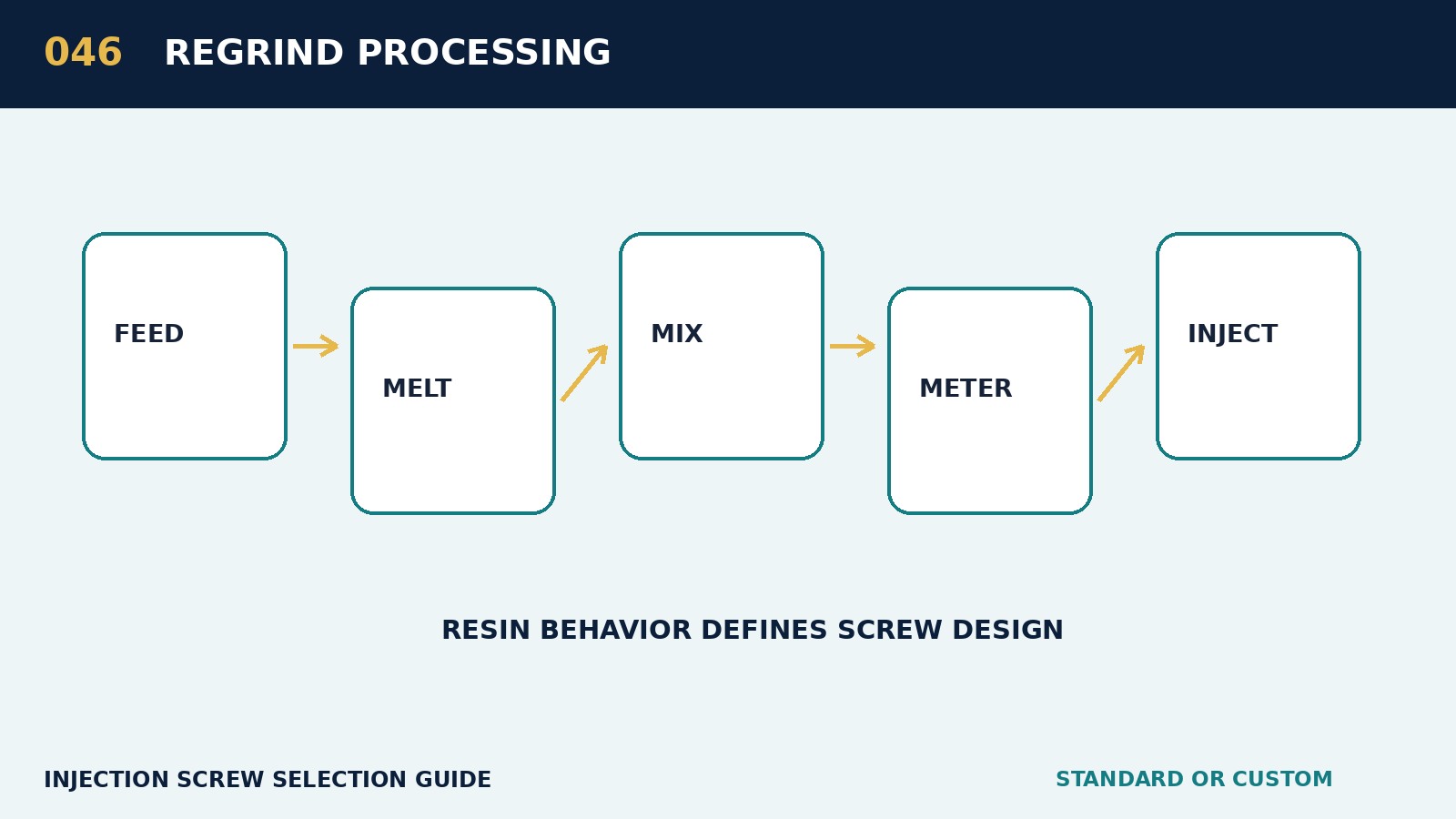
In high-scale feedback, it is not the choice of an off-the-shelf model that is first to be addressed by a recycle material vendor, but rather the identification of particle size differentials, pile density, pollution and melting point fluctuations. This step determines whether the subsequent spiral diameter, structure and material grade are well founded.
Additions and fillings change the demand for currents, frictions, wear, corrosion and mixing. The configuration is not limited to additions, but also focuses on particle form, carrier, fibre length, decomposition products and batch fluctuations; where necessary, the screws, drums, retroring, nozzles and dry delivery systems are evaluated together. Technical communication distinguishes between three types of objectives that must be met, desired improvement and acceptable. It is necessary to meet the hard boundary of the item for the determination of equipment and screws, and it is hoped that the improvement item will be used for the comparison of standards and specialized programmes, while the acceptable item will help to control costs and deadlines. This would avoid stacking all requirements on a screw and would make it easier for clients to understand the real value of each configuration.
Calculates the nominal value to be converted to the actual condition. The machine often uses PS as a reference for the gel weight, which should be revised by density when using other raw materials; the weight of the product should be added to the main course, traffic separation and a reasonable buffer. The larger the diameter of the screw, the greater the theoretical capacity, but the pressure of injections per unit area under the same hydraulic pressure or servo system will decline and the resolution of the measurement of the small amount of the aerosol may also be variable. The focus of the discussion here is the fluctuations in particle size differentials, stack density, pollution and melting fingers, which must correspond to the current level of production conditions of the client and not be limited to the maximum values in machine samples.
The implementable options are enhanced transmission, filtering awareness and process window management. The quoted documents should include both the applicable raw materials, the range of recommended voltage, the permitted turn-off and back pressure, the size of the interface, the material and thermal treatment, and the need for re-evaluation when marking subsequent changes to the material or the mould by the client. This would prevent the use of earmarked programmes in completely different conditions.
If the above-mentioned steps are ignored, the most common consequence is that uncertainty can cause fluctuations in feed and pressure. The problems are often manifested in the trial phase of measuring time instability, insufficient stress residuals, buffer drift, unmelted, black spots, colour differentials or increased wear and tear. Continued increase in temperature, back pressure and turn speed at this time may temporarily improve the appearance, but may increase the shearing heat, material degradation and equipment load.
It is recommended that clients set clear upper and lower limits around measuring fluctuations, black points and pressure curves, rather than just " running properly " . Quantification criteria may include measurement of time fluctuations, extremely poor product weights, number of black dots, change time, hourly production or ton wear and tear, with specific projects choosing indicators that really affect business outcomes. Therefore, the simple logic of “symmetrically-sized screw” should not be applied to high-scale feedback. Only by accounting for products, feedstocks, tonnages, voltage, screw diameter and target cycles will the standard screws have a clear scope of application and the dedicated screws have a reasonable design basis and return on investment.