
Advantages of short longitudes over screws versus use of boundaries
Release time:2026-09-20
Shorter effective length can reduce material retention and equipment occupancy space, but also the distance from which transport, melting and mixing can take place. From the principles of work, selection conditions, common risks and validation methods, the advantages of short long-range versus screws and the use of boundaries are shown to help the retrofitting plant stabilize and reduce the full life cost of the screw drum.
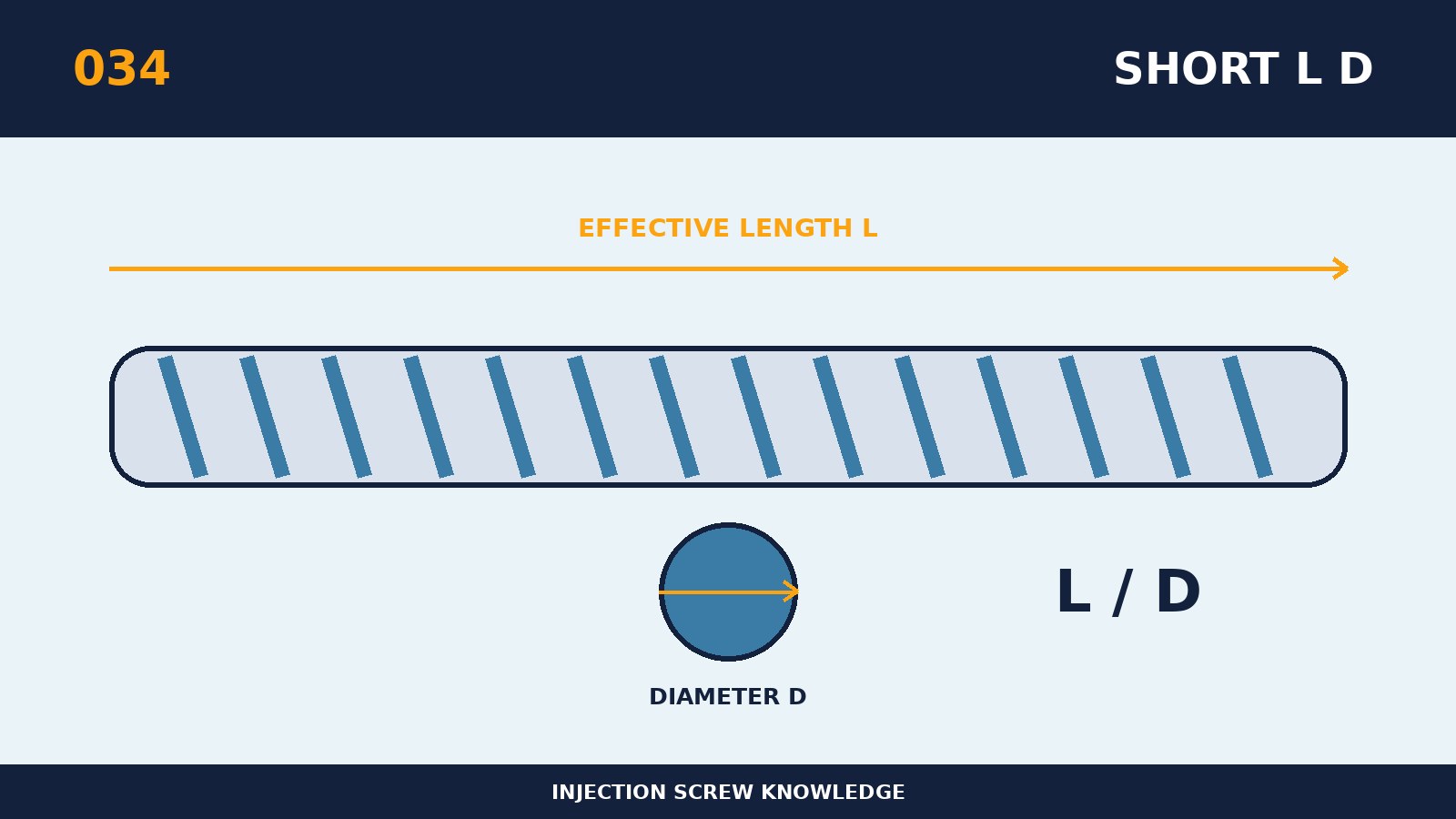
To match the advantage of a short long diameter with the use of a screw, it is important not only to refer to the size of the old piece or to the device label, but also to understand the real change in the material in the snail. Its core is a short active length that reduces material retention and equipment space, but also the distance from which it can be transported, melted and refined. For decompositionable materials or low-yielding applications, short L/D may reduce the thermal history; for hard to melt materials it may be insufficient. The long-range ratio is only a geometric entry, and what really determines is the effective length, distribution of the functional segments, actual production and material heat history. If the same platform is to cover a variety of resins, the three extremes that are the most difficult to melt, the most afraid of cutting and the most susceptible to degradation are applied separately. Nominal specifications are therefore only the starting point, and the final conclusions must serve the actual resin, product and volume rhythm.
When customizing around "The Advantages of Short Longness vs. the Threads and the Use Borders", first collects the size of the equipment model, the original screw and the material drum, the driving power, the resin number and the filling system, the sum of the single simulator, the cycle and existing defects. The specific selection principle for the topic is to determine whether the material can be pressured and melted within a limited length and to check the product ' s requirements for mixing. If the device can export a curve, the original record of screw position, turn speed, twist, back pressure and time should be kept, so as to avoid only being assessed by the operator. The technical agreement should include quantifiable provisions for size benchmarks, key communications, material status and acceptance methods so that new, old and subsequent restorations can be compared under the same criteria.
The most needed to guard against the failure of the subject is the presence of unmelted particles, colour differentials, insufficient plasticization and increased back pressure after crossing the boundary. Bad pictures are bound to the same pattern as the equipment curve and raw material records, otherwise only the defective name cannot be judged to have been caused by a screw. For on-site processing, only one main variable is changed each time and the measurement time, twist, melting temperature, mat, injection pressure and product weight are aligned to the same pattern. If production is to be sustained by excessive temperature, turn speed or back pressure, the use of parameters to mask structures, wear or collage should be discontinued.
The test of the “advantages of a short longness compared to a screw” could be a replicable option: the longness ratio should be re-evaluated rather than continue to increase the back pressure when it is still unstable by reducing the rate of turn and changing the temperature. Acceptance and inspection reports should include both actual measurements and location of points, rather than only “qualified”; critical sizes should also be kept with calibration and temperature conditions. Inquiries to suppliers should also be accompanied by information on resins and fillings, risk of flame retardation or corrosion, total weight of products and fluids, photographs of available screws and equipment curves. The programme is considered to have a stable engineering value when the detection data, the good product rate, the timing of the switch and the unit cost of the eligible goods are improved.