
Why can't PP and PE screw compression be fully universal?
Release time:2026-09-20
Both PP and PE are polyolefins, but there are differences in melting points, viscosity, density, crystal and card ranges. The working principles, selection conditions, common risks and validation methods explain why the PPP-PE screw compression ratio is not fully universal, helping to stabilize plasticization and reduce the full life cost of the screw drums in the plating plant.
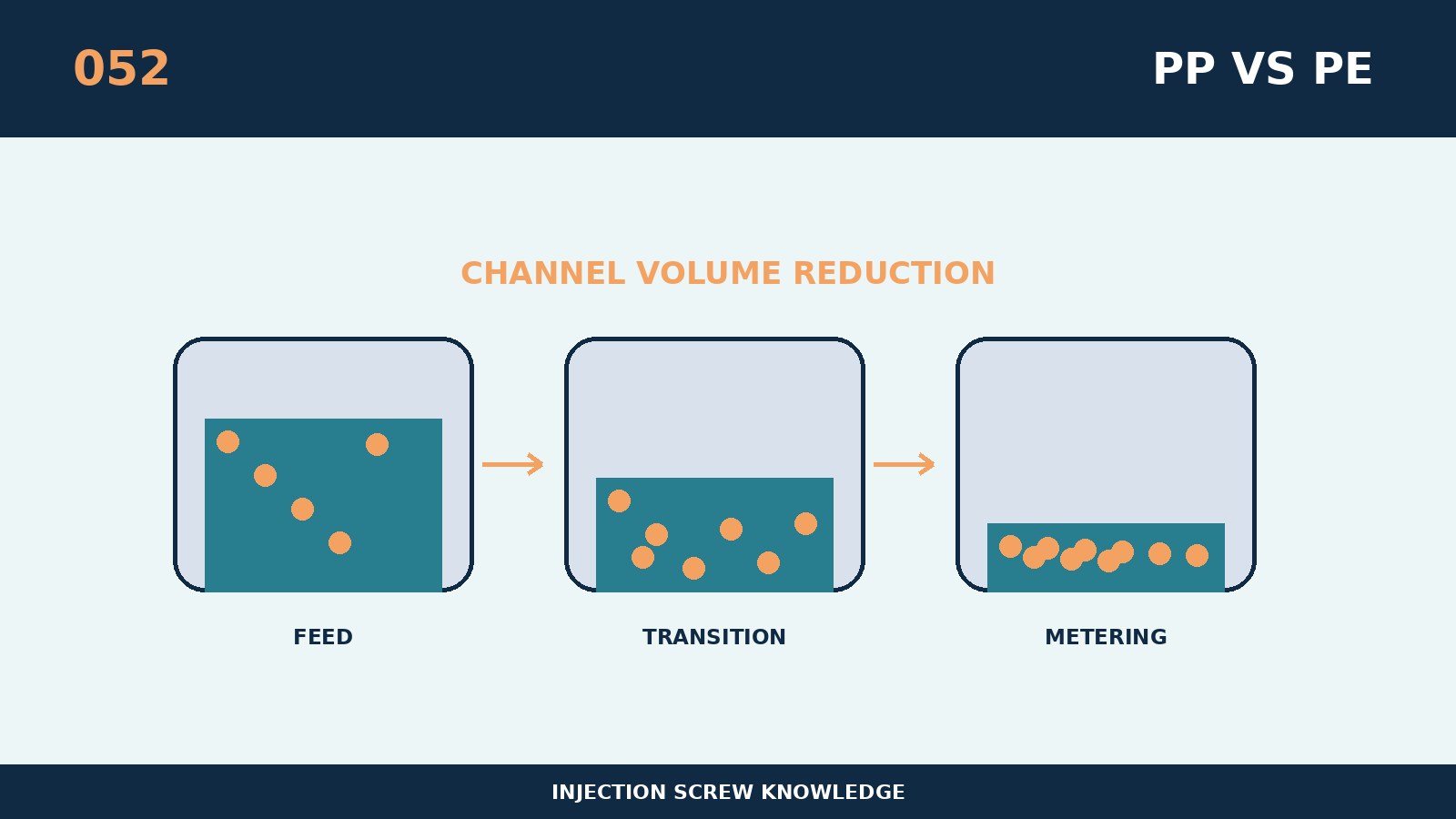
The pP-PE screw compression ratio is not an isolated parameter, but a key condition for influencing transmission, temperature rise, pressure and repetition in the plasticization system. The core is PP and PE for polyolefin, but there are differences in melting points, viscosity, density, crystal and card ranges. The same condensed structure presents different twists and melting positions in high-mobile PP, HDPE or LLDPE. Compression ratios must be understood in conjunction with the length of the compressed segment, the conductor, the depth of the tank, the back pressure and the material flow, and the individual comparison is easily miscalculated. A usable manufacturing map is not only a common name, but also a signal, a measuring transect, a surface state and a receiving and inspection belt to accompany the drum. Nominal specifications are therefore only the starting point, and the final conclusions must serve the actual resin, product and volume rhythm.
When customizing around “PP-PE screw compression ratio why it is not fully universal”, first collects the equipment model, original screw and material drum measurements, driving capacity, resin plate numbers and filling systems, single mass, cycle and existing defects. The specific selection principles for this topic are to be determined on the basis of specific melting fingers, particle form, filling ratio, retrofitting and product appearance requirements. The same mass and the same cooling time should be used for the test to record the amount of plasticization and energy consumption at a low, medium and high three-stage rotation, respectively. The technical agreement should include quantifiable provisions for size benchmarks, key communications, material status and acceptance methods so that new, old and subsequent restorations can be compared under the same criteria.
The most important defence against the failure of the subject is that all polyolefins are treated as the same material that causes plasticization, temperature rise, bubbles or colour differentials. Bad pictures are bound to the same pattern as the equipment curve and raw material records, otherwise only the defective name cannot be judged to have been caused by a screw. For on-site processing, only one main variable is changed each time and the measurement time, twist, melting temperature, mat, injection pressure and product weight are aligned to the same pattern. If production is to be sustained by excessive temperature, turn speed or back pressure, the use of parameters to mask structures, wear or collage should be discontinued.
To verify why the “PP and PE screw compression ratio is not fully universal”, this replicable option can be used: to establish back-pressor steps at turn speeds, respectively, to compare the melting temperature, metrology, twist and product surface. When the production line is stabilized, the parameters of the equipment are locked and the version number is formed, the unrecorded modulation opportunities undermine the comparison conditions and the contribution of hardware optimization cannot be judged. Inquiries to suppliers should also be accompanied by information on resins and fillings, risk of flame retardation or corrosion, total weight of products and fluids, photographs of available screws and equipment curves. The programme is considered to have a stable engineering value when the detection data, the good product rate, the timing of the switch and the unit cost of the eligible goods are improved.