
What's the cost of high compression compared to a screw to improve melting capacity?
Release time:2026-09-20
The high compression ratio significantly reduces the snail volume at a shorter distance, which enhances pressure, membrane renewal and shearing. The cost of increasing melting capacity from high compression compared to screws is illustrated by the principles of work, selection conditions, common risks and certification methods, helping to stabilize and reduce the full-life costs of screw drums in retrofitting plants.
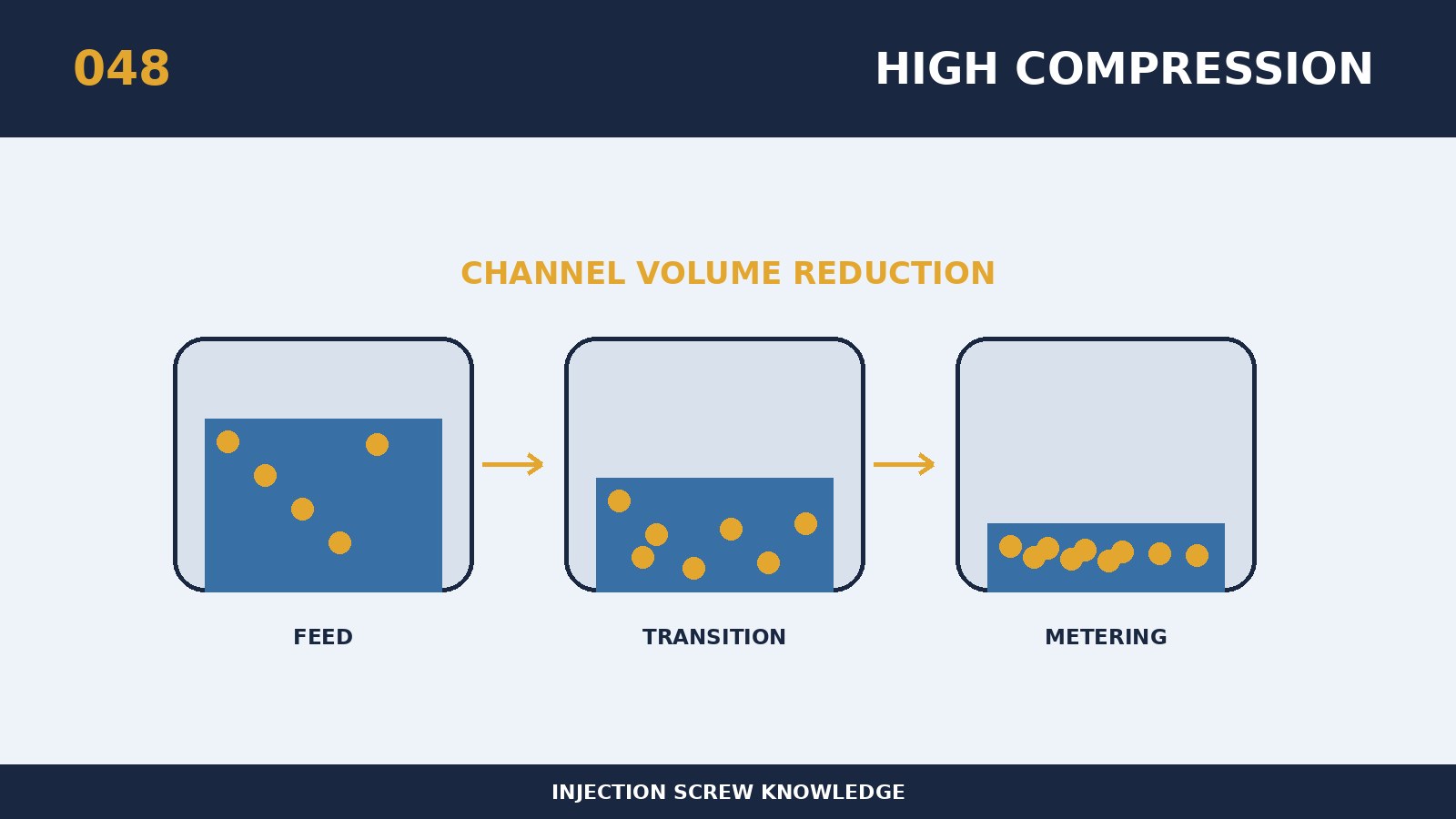
In a screw selection or failure analysis, what costs are often simplified as a specification when a high compression compared to a screw improves the melting capacity, but in fact needs to be explained in conjunction with the full performance. At its core is a significant reduction in the convection volume from a high compression to a shorter distance, which enhances the pressure, membrane renewal and cutting of the raw heat. It may increase the melting speed of certain materials, but at the same time it increases the twisting, melting temperature and mechanical load. Compression ratios must be understood in conjunction with the length of the compressed segment, the conductor, the depth of the tank, the back pressure and the material flow, and the individual comparison is easily miscalculated. If the same platform is to cover a variety of resins, the three extremes that are the most difficult to melt, the most afraid of cutting and the most susceptible to degradation are applied separately. Nominal specifications are therefore only the starting point, and the final conclusions must serve the actual resin, product and volume rhythm.
When customizing around “the cost of increasing the melting capacity of a high compression-to-heavy screw”, first collects the size of the equipment model, the original screw and the material drum, the driving capacity, the resin number and the filling system, the sum of the single model, the cycle and existing defects. The specific selection principle for this topic is that it is to be assessed only when the material allows for a higher cut-off, with a surplus of drive and structure, and with a reasonable compression period. The operational evaluation should not only look at single-modules, but at least cross three stages of complete warming, steady-state production and a moratorium on restarting. The technical agreement should include quantifiable provisions for size benchmarks, key communications, material status and acceptance methods so that new, old and subsequent restorations can be compared under the same criteria.
The most needed failures on this subject are the possible degradation of heat-sensitizers, fibers and resistance fuels, fibrous damage, increased corrosion or superloading of screws. A curved envelope of the normal package should be created to see if the abnormal cycle occurs at the feed, later-storage, injection start or voltage stage. For on-site processing, only one main variable is changed each time and the measurement time, twist, melting temperature, mat, injection pressure and product weight are aligned to the same pattern. If production is to be sustained by excessive temperature, turn speed or back pressure, the use of parameters to mask structures, wear or collage should be discontinued.
This replicable approach can be used to verify the “costs of high compression compared to the increased melting capacity of the screws”: a quantitative comparison of benefits and costs by twisting the cap, actual melting temperature, molecular performance, fibre length and energy consumption. Receiving and inspection should not end when the equipment is not in thermal equilibrium, and should cover typical use links such as start-up, steady state, suspension of re-opening and refuelling. Inquiries to suppliers should also be accompanied by information on resins and fillings, risk of flame retardation or corrosion, total weight of products and fluids, photographs of available screws and equipment curves. The programme is considered to have a stable engineering value when the detection data, the good product rate, the timing of the switch and the unit cost of the eligible goods are improved.