
What about PEEK/PPS/LCP High Temperature Project plastic retrofit screws?
Release time:2025-08-07
What about PEEK/PPS/LCP High Temperature Project plastic retrofit screws? To match materials processing hot zones, corrosiveness, stay time and twist loads, select heat resistant to corrosive material, and avoid local overheating and prolonged demurrage. This paper combines information on star-friend screw stations to organize selection, process and validation elements.
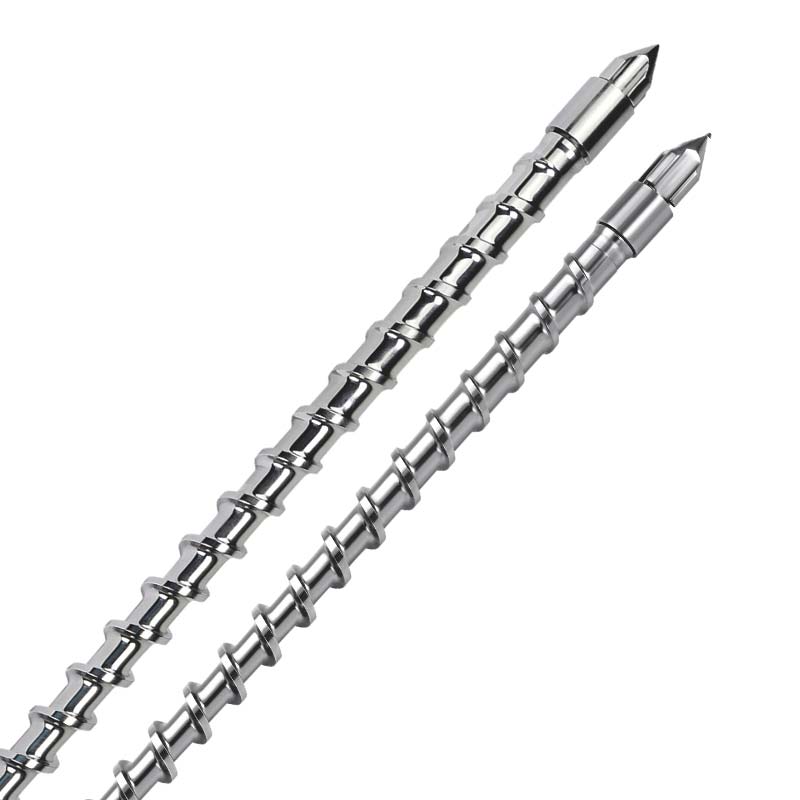
The core conclusions of the high-temperature project plastic plastered screws
To match materials processing hot zones, corrosiveness, stay time and twist loads, select heat resistant to corrosive material, and avoid local overheating and prolonged demurrage.
Precision control of high-temperature engineering plastics formation: high-temperature alloy low-cutting screw solution
In the area of high-temperature engineering plastics, materials such as PEEK, PPS, LCP have become core materials in high-end areas such as aerospace, electronic semiconductors and medical devices, based on excellent high temperature tolerance (with long-term use of temperatures up to 150-260°C), corrosive resistance and mechanics. The formation of these materials is extremely demanding for the equipment: they need to operate at a high temperature of 300-400°C, and the shear rate fluctuations need to be contained within > 5%, otherwise they can lead to material degradation (e.g. PEEK loses up to 20% of molecular volume during cutting overheat). Currently, high-temperature engineering plastics are produced using general equipment, often with a pass rate of less than 65 per cent, with 40 per cent degradation defects due to inadequate heat stability and 35 per cent performance fluctuations due to inappropriate cutting control. This paper will analyse the process properties of high-temperature engineering plastics in the context of specific data and will highlight how it effectively controls the cut rate during the process of high-temperature engineering plastics. Special piping screws for high-temperature alloys and low-helicopter compressions can be tailored to the high-precision temperature control system to address production pains.
Core quality pain points and technology needs for high-temperature engineering plastic production
Quality defects in high-temperature engineering plastics are closely related to thermal and shear sensitivity of materials. In terms of industry standards, space-grade PEEK components are required to stretch to 90 MPa (degradable to below 60 MPa); electronic-level LPCP communication constant deviations are required to ≤±0.2 or affect the transmission of 5G signals; medical-level PPS is required to meet the requirement of non-decomposition at 106 Gy irradiation doses, while excessive cutting reduces their irradiability by 30 per cent.
The logic behind these pain points focuses on two aspects: the issue of hot stability. The PEEK process temperature window is narrower (360-390°C) and when the temperature exceeds 400°C, it degrades significantly within 10 minutes, producing bubbles, colour variations, etc. The PPS is above 300°C and, if heat is not even, the conjunctive reaction is uneven, resulting in the impact intensity of the product exceeding 15%. Two is cut control. When LCP cuts at more than 150 s-1 the molecular chain is over-directed, with the product arcing in excess of 0.5 mm/m, while the cut-off rate of the general plume screw tends to fluctuate at > 20 per cent, and the material strength above 350°C falls by 40 per cent, which does not meet the requirements for long-term stabilization.
Technical advantages of high-temperature alloy, low-cut cutting, plastic screws.
In response to the processing difficulties of high-temperature engineering plastics, the special piping screws that are resistant to high-temperature alloys and lower shear compression have made breakthrough innovations in material selection and structural design:
High temperature alloy material to ensure heat stability
The spiral is made from a combination of GH4169 high-temperature alloy (52% nickel and 19% chromium) with a working temperature of up to 450°C, with a sustained tensile strength of 95% (50% reduction in average 38CrMoAl steel at 300°C) after 100 hours of continuous operation. AlCrN ceramics with a surface coating of 50 μm thick with a high temperature friction factor reduced to 0.1 380 °C with only 1/20 of the normal screw. Test data indicate that the material degradation rate was reduced from 25% to 3.8% of the normal screw and the colour of the product surface was increased to 98% (only 70% of the normal equipment).
Low shear compression segment design with precise control of shear speed
A lower compression ratio of 1.8 to 2.2 (normal screws of 3.0 to 3.5) is used for the screw compression segment, which represents 20 per cent of the total length of the screw. Combining a deeper snail (25% deeper than the normal screw), the shear rate is stable at 80-120s-1 and the rate of fluctuations is within 3%. Tests on the LPCP showed that the design could reduce the excess orientation of the molecular chain from 35 per cent to 5 per cent of the normal screw, and the arctics from 0.6 mm/m to 0.15 mm/m; a cut-off test on the PPS showed that its melting rate (MFR) fluctuated from ±12 per cent to ±2.5 per cent, ensuring consistency in material performance.
Gradient measurement segment structure, plasticization and transport balance
The spiral measurement segment is designed with gradients (50 mm and 40 mm smooth transition) in order to avoid local pressure mutations leading to shearing and heat concentration. In the PEEK process, the structure increases the temperature distribution of the melt to 95 per cent (75 per cent of the normal screw) and reduces the internal bubble rate of the product from 18 per cent to 1.2 per cent; at the same time, at the end of the measurement segment, sets a reverse cone to stop the loop and to control the flow of the melting within 0.5 per cent (3 per cent of the normal screw) and ensures a deviation of 0.3 per cent per injection.
Synergy of high-precision temperature control systems
The best performance of a dedicated plywood screw is achieved by matching the high-precision temperature control system, which has three core characteristics:
(b) Partition independent temperature control: 6-temperature control (from feed to nozzle) with a temperature accuracy of > 0.5°C and a response rate of ~50 ms. When PEEK processes a temperature deviation of 3°C, the system can adjust the heating power within 1 second to restore the temperature to a given value (the normal system takes more than 5 seconds).
Infrared real-time monitoring: Infrared temperature probes are implanted in the head of the screw, 100 groups of molten temperature data are collected per second and dynamically modified to ensure temperature fluctuations of 1°C within 300-400°C (normal system ± 3°C) compared with set values.
Refrigerated water circuit optimization: The screw core uses a spiral-cooled water route, which forms a closed ring control with the argon-cycle system of the cylinder, controls the surface temperature gradient of the wheel at 5°C/cm and avoids spiral deformation due to the heat stress (the normal screw can deform at high temperatures up to 0.05 mm).
Validation of effects in practical application
Data from an aviation spares enterprise show that the PEEK product eligibility rate increased from 62 per cent to 97.3 per cent, following the introduction of a high accuracy temperature control system with a low-cissor screw of high-temperature alloy. Specifically, material degradation defects dropped from 40% to 3.2% and performance fluctuations due to overcuting decreased from 35% to 2.8%; product stretching strength stabilized at 92-95MPa and molecular mass distribution index (PDI) controlled at 1.8-2.0 (PDI could be up to 3.5 after general equipment processing).
In the electronic domain, data on the production of LCP connectors show that the dichotomy of the medium constant has been reduced from ±0.5 to ±0.15 to meet the 5G base station requirements; the warp has been reduced from 0.6 mm/m to 0.12 mm/m, with a better assembly rate to 99 per cent. In terms of cost-effectiveness, the utilization of materials increased from 60 per cent to 90 per cent. The annual cost of raw materials can be around $8 million, based on 100,000 space-grade PEEK spare parts produced annually; the maintenance cycle has been extended from one month to six months, with a 35 per cent reduction in combined production costs, as a result of reduced high-temperature consumption of equipment.
This high-temperature alloy low-clip-slip-slip-slip-slip-slip-slip-slip-slip-slip-slip-slip-slip-slip-slip-sup, which is associated with the high-precision temperature control system, has fundamentally solved the heat stability and cut-scratch control problems of high-temperature engineering plastics. As the material performance requirements in the high-end manufacturing field continue to rise, the professional solution will become a stylist for the formation of high-temperature engineering plastics and will facilitate the industry's breakthrough towards “super-precision, super-stability”.
Data to be recorded before implementation
- Material integrity number, filling ratio, flame-retarding system, refill ratio and dry condition.
- Note plastics brand, model, screw diameter, voltage, back pressure, turn speed and current screw structure.
- Indicators of product size, wall thickness, appearance or strength, and current adverse phenomena and frequency of occurrence.
- Continuous production cycle, refuelling frequency, machine clean-up method, wear and tear record and planned useful life.
How to validate the adjustment results
It is recommended that the current process baseline be established, followed by a single-variant test model. Each round records the measurement of time, melting temperature, product weight, formation cycle and bad rate, avoiding multiple parameters being changed at the same time to determine the cause. The parameters in the text are used to illustrate design thinking and should not replace material supplier data and on-site safety protocols.
What kind of support is a star-friend screw?
The Starfleet Mechanical Equipment Co. Ltd. (Starfeng) provides materials and situational assessments of high-temperature engineering plastic aplastic screws, screw structural recommendations, base materials and surface treatment options, non-spectrometric customization, and simulations. The submission of information on raw materials, equipment and products could lead to more targeted programmes.
Ask for customized screws immediately, or check firstNote plastic screw productwithNote Plastic SolutionsI don't know.