
Food-grade retrofit spiral programme: materials, clean and stable plasticization
Release time:2025-08-07
A food-grade snail scheme? Priority should be given to the assessment of exposure materials, cleaning methods, surface polishing and demurrage, and the final acceptance should be based on the applicable regulations of the client, material certification and clean certification requirements. This paper combines information on star-friend screw stations to organize selection, process and validation elements.
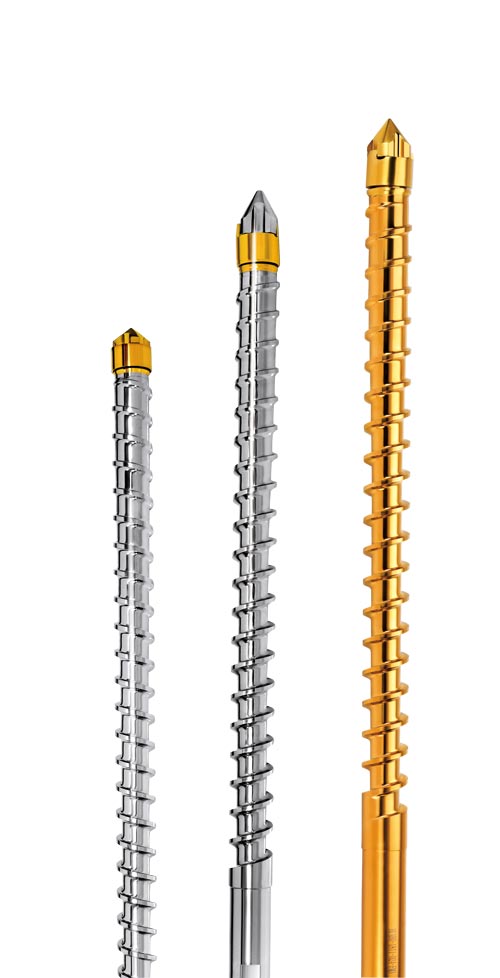
The core conclusion of the food-grade plastic screw.
Priority should be given to the assessment of exposure materials, cleaning methods, surface polishing and demurrage, and the final acceptance should be based on the applicable regulations of the client, material certification and clean certification requirements.
Core security for food packaging: food-grade special retrospect screws and thermal stability temperature design
In the area of food packaging, the quality of products such as milk cups, lunch boxes and drinking water accessories is directly related to food safety and consumer health. At present, yellow changes, flavours and impurities are common in production, which not only affect product appearance and user experience, but may also result in harmful substances due to material degradation, in violation of safety standards for food-exposed materials. This paper will provide an in-depth analysis of the process properties of food packaging materials, taking into account specific data, as well as a description of how the food-grade special retrofit screws and thermal stability temperature-control designs target production pain sites.
Core quality pain points and technology needs for food packaging production
The safety and stability of food packaging is the primary objective of production, while the three main issues of yellow transformation, odour and impurities are common challenges for the industry. In terms of food safety standards, GB 4806.7-2016 specifies that volatile organic compounds (VOCs) in plastics for food exposure should contain less than 10 mg/m2 and that no heavy metal transport may be detected (lead, cadmium, etc. 0.01 mg/kg). However, during the processing of PP materials using general production equipment, impurities caused by retrofitted screw residues could be as high as 3.2 per cent, and the incidence of yellow changes in food boxes (the colour difference E is more than 3) could be as high as 8.5 per cent.
In material properties, PP materials produce osteoporosis at a processing temperature above 230 °C, which produces osteoporosis; HDPE is sensitive to shearing when shearing at a rate above 150 s- At 0100, the break-up of the molecular chain causes the material to decolate; as a biodegradable material, a crystallization anomaly occurs when temperature fluctuations exceed ±5°C, leading to a reduction in the product ' s mechanics by more than 20%. These data highlight the special requirements of plywood screws for materials, surface treatment, temperature accuracy, etc.
Technical parameters and performance advantages of food-grade specialized plating screws
In response to the special needs of food packaging production, the food-grade plastic screws have been optimized in all aspects of material selection, surface treatment and structural design. Material security using 316 L medical grade stainless steel. The amount of heavy metal dissolved (lead, chromium, nickel, etc.) is less than 0.001 mg/kg, which is well below the limit of GB 4806.7 as certified by third-party testing agencies. The 720-hour salt mist test is rust-free and resistant to the possible erosion of trace acids during PLA material processing.
Surface treatment is based on mirror polishing, with a rough surface of up to Ra.04 m, which is only 2.5 per cent of the normal plume (Ra1.6 m). According to empirical data, this hyperslide surface can contain material residues below the single-stage 0.08 mg, and after 500 consecutive productions, the cumulative residues remain below 0.05 g, thus completely addressing the impurities posed by residues.
The melting cut-off rate is stabilized at 50-100s-1 by optimizing the snail depth (20-25%) and compression ratio (in the range 2.0-2.5). Comparative tests showed that the design would reduce the oxidation rate of PP materials from 4.2% to less than 0.5% and the yellow rate of HDPE products (ΔE>3) from 8.5% to 0.8%, fully meeting the appearance and safety requirements of food packaging.
Technical indicators and synergies for heat stabilization temperature design
The co-operation of thermal stabilization temperature control system with the food-grade special retrospect screws is key to solving the problem of yellow change and different tastes. The system uses four independent temperature controls (heated, compressed, metering, nozzles) with a temperature control accuracy of ±0.3 °C, which is much higher than that of common equipment at ±2 °C. In the case of the production of a PP lunch box, the measuring period temperature can be stabilized at 210 ± 0.2 °C to avoid the degradation of materials due to local overheating - When the temperature exceeds 230°C, the luminous index of the PP material rises sharply from 0.1 to 0.8, producing a clear aroma.
The system is equipped with an online laser thermometry device with a response rate of 30 ms, which allows real-time monitoring of the temperature changes of the molten body and adjusts the heating power within 0.3 seconds when temperature deviations exceeding 1°C are detected. Actual production data show that during the 12-hour continuous production cycle, the standard deviation of the melting temperature was controlled at 0.5°C, 70% less than the traditional temperature control system. Precision control stabilizes the crystallity of PLA material at 35-40 per cent, ensuring that product transparency (of < 5 per cent) and mechanic performance (of > 30 MPa) meet the requirements.
Validation of effects in practical application
A comparison experiment with a large food box production company showed that the product success rate had increased from 89 per cent to 99.7 per cent, with impurities exceeding the standard from 3.2 per cent to 0.1 per cent, with the incidence of yellow (ΔE>3) almost eliminated (0.2 per cent), and the VOC detection value from 12 mg/m2 to 3.5 mg/m2 fully meeting the criteria of GB 4806.7-2016.
In terms of cost control, as a result of reduced material degradation, the utilization of PPP materials increased from 90 to 98 per cent, resulting in annual savings of approximately $1.8 million in raw materials, calculated as 100 million meals per year. At the same time, the equipment cleaning cycle was extended from 12 to 96 hours, with production efficiency increasing by more than 25 per cent and combined production costs falling by 12 per cent.
A combination of food-grade retrospective screws and thermal stability thermostat design addresses the root causes of yellow changes, flavours and impurities in food packaging production through material safety, residual control, cutting optimization and precision temperature control. As consumers increasingly attach importance to food safety, this professional solution will become a central option for upgrading food packaging enterprises and will drive the industry in a safer and more efficient direction.
Data to be recorded before implementation
- Material integrity number, filling ratio, flame-retarding system, refill ratio and dry condition.
- Note plastics brand, model, screw diameter, voltage, back pressure, turn speed and current screw structure.
- Indicators of product size, wall thickness, appearance or strength, and current adverse phenomena and frequency of occurrence.
- Continuous production cycle, refuelling frequency, machine clean-up method, wear and tear record and planned useful life.
How to validate the adjustment results
It is recommended that the current process baseline be established, followed by a single-variant test model. Each round records the measurement of time, melting temperature, product weight, formation cycle and bad rate, avoiding multiple parameters being changed at the same time to determine the cause. The parameters in the text are used to illustrate design thinking and should not replace material supplier data and on-site safety protocols.
What kind of support is a star-friend screw?
The Starfleet Mechanical Equipment Co. Ltd. (Starfeng) provides a reset of material and work evaluation, screw structure, base and surface treatment options, non-standard size customization, and trial modelling issues around food-grade retrospect screws. The submission of information on raw materials, equipment and products could lead to more targeted programmes.
Ask for customized screws immediately, or check firstNote plastic screw productwithNote Plastic SolutionsI don't know.