
Proposal for a new energy battery shell and insulation component switch
Release time:2026-09-20
Large shell for flame retardant enhanced material connects components and insulation structures to balance filling a warp and performance maintenance. This paper gives recommendations for actionable abbreviators in terms of material properties, temperature, speed, pressure, cooling and common defects.
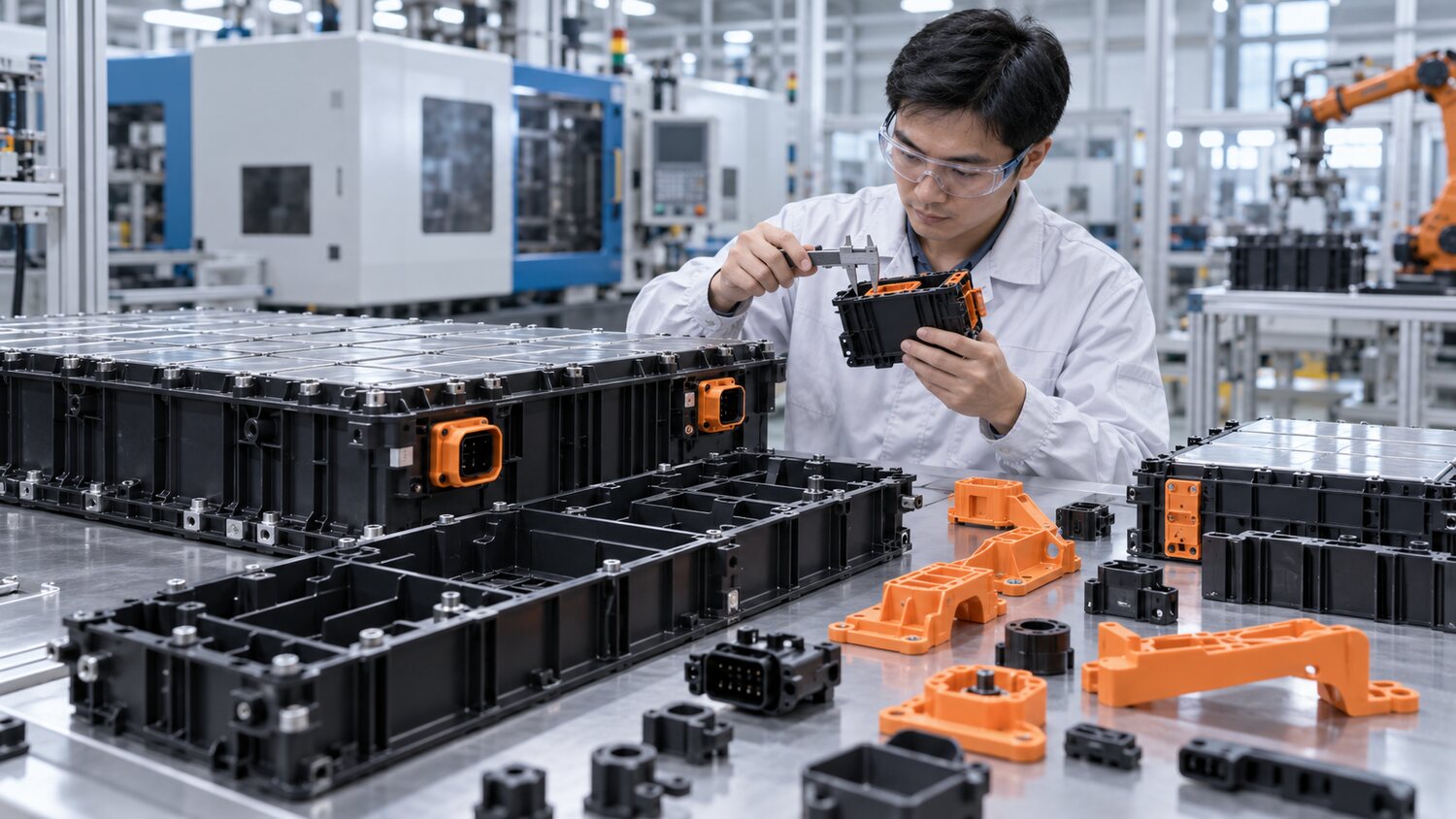
Flammable PP, bottling enhancement PA, PBT, PC ABS or other engineering materials are frequently used for new energy cell modules, panels, connectors, insulation racks and charging equipment components. The product consists of both large thin-wall casings and sophisticated high-voltage connective components, which must be predefined in terms of flame retardation, electrical, heat resistance, size and mechanical performance. Flammable retardants, fibers and mineral fillings alter the flow, gas dialysis, wear and constriction, and cannot be produced directly using unenhanced parameters for base resin. The drying and batching of materials shall be carried out retroactively and in strict compliance with the registration code.
Large flame-retardant casings should confirm the flow balance by short-shot and per cavity weight. Faster filling can facilitate long-process thin wall formation, but excessive cutting can cause material to warm up, bile damage or surface fibers, with burning at the end too fast. Steady speed should be maintained in the main thin-walled areas, which should be reduced as close to the currents and vents, and the exhaust tanks should be kept clean. If the burning occurs at the same time as the short-shot, the pressure of the pristine and flowways is addressed instead of continuing to increase.
Size and warp control require a combination of fibre orientation, watering, voltage and cooling. In contrast to horizontal contraction along the direction of the movement of fibre-enrichment materials, large-area shells are prone to distortion; increased lock modulation or pressure may not be effective. Momentum and waterways temperature balances should be maintained, and the sequence valves should be optimized to open and peak at a time when the product is fully cooled and measured against the assembly baseline. Connectors and parent packs also control the temperature, positioning and melting of the embeddeds, avoiding their deviation or the interface gas gap.
Flammability enhancement material requires a high degree of resistance to corrosive resistance for screws, drums and reversible rings. Harm can lead to a return flow, instability of measurements and sized drift, and overcut may damage fibres or heat degradation of flame retardation systems. A suitable screw structure, a lower to medium back pressure and a rotation that can be completed within cooling time should be selected, and high temperature stops limited. In addition to the size and size of the mass certification, it shall include flame retardation, electrical insulation, heat resistance, vibration and assembly tests. Any alteration of materials, equipment or screws should be re-validated and not be validated with the first skin replacement.