
How the PP product is configured with a screw that combines production and stability
Release time:2026-09-22
For general purpose manufacturers, describe the method of checking the smelting range, filling ratio, product cycle and mix, analyse the risk that a pure PPP configuration may not be suitable for high-filling or flame retardation plates, and provide recommendations for validation of the selection of common or mixed structures and the time, colour difference and weight stability of plasticization based on card numbers and additions.
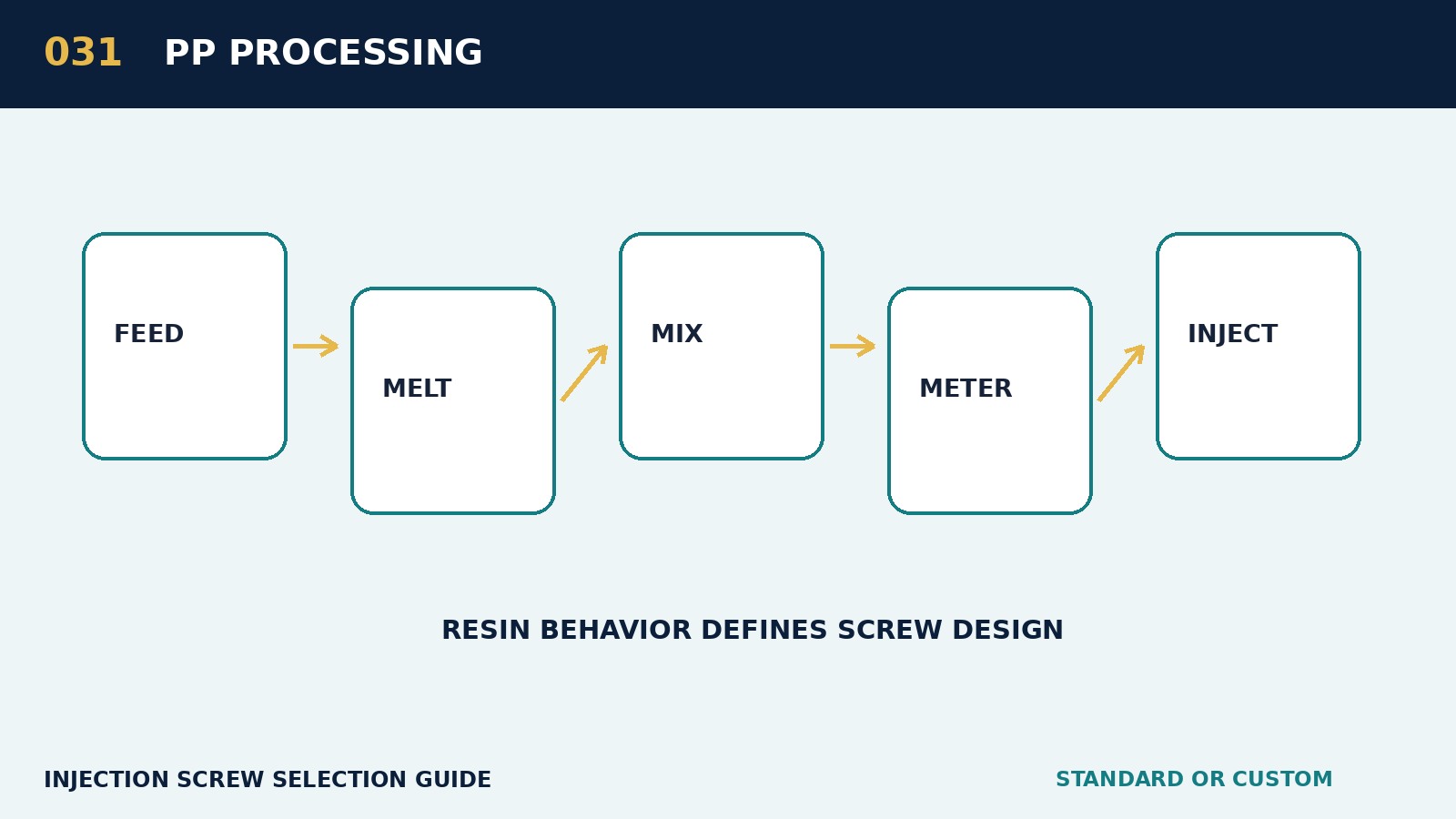
In the PPP formation, the first solution for a general utility manufacturer is not to choose an off-the-shelf model, but to confirm the melting point margin, filling ratio, product cycle and mix. This step determines whether the subsequent spiral diameter, structure and material grade are well founded.
The name of the raw material can only be classified as the first layer, and what really determines the screw configuration is the viscosity, melting point, thermal stability, humidity, filling and additive of the specific plate. Vendors should obtain material forms and identify whether the customer uses raw, retroactive or retroactive formulations to discuss generic, grinding, corrosive or lower shear structures. Site information should preferably include both photographs, short videos and data sheets. Photos are used to identify machine interfaces, screw tails and front-end components, video can be observed to measure, buffer and abnormal sound, and data tables are used to calculate the rate of application, the need for plasticization per hour and the length of stay. If only partial information can be obtained, a list should be provided for confirmation, rather than a tentative condition being a definitive conclusion.
Calculates the nominal value to be converted to the actual condition. The machine often uses PS as a reference for the gel weight, which should be revised by density when using other raw materials; the weight of the product should be added to the main course, traffic separation and a reasonable buffer. The larger the diameter of the screw, the greater the theoretical capacity, but the pressure of injections per unit area under the same hydraulic pressure or servo system will decline and the resolution of the measurement of the small amount of the aerosol may also be variable. The focus of the discussion here is the extent of the melting finger range, the filling ratio, the life cycle of the product and the mix, which must correspond to the customer ' s current production conditions and not be limited to the maximum values in machine samples.
A generic or condensed structure may be selected as the main line for the project ' s advancement on the basis of the card number and the addition system, with an evaluation of sales, design, process and customer participation. The evaluation focused on the completeness of the input data, whether the assumptions were confirmed by the client, whether the mechanical interfaces were matched, how standards and specialized programmes were selected, and who provided the acceptance data.
The main risk of the scene is that a pure PPP configuration may not be suitable for high filling or flame retardation. The issue of whether or not to be derived from a screw should first be excluded from drying, heating ring, thermal voltage, nozzles, reversible rings, wear and tearing of the material drums and changes in process parameters. The use of exclusions is more reliable than the direct replacement of components and also protects the time and cost of both the seller and the client.
Ultimately, the programme should be judged by the time, colour and weight stability of plasticization. If the result fails to meet the standard, each adjustment and result shall be recorded in five directions, by raw material, equipment, molds, process and screw, so as to avoid the loss of causal judgement by modifying multiple parameters at the same time. Where the information is temporarily incomplete, the pre-selection scope and the list to be confirmed may be provided, but it should not be considered a final commitment. The freeze of the configuration after the customer has completed the smelting range, filling ratio, product life cycle and chromatography reduces erroneous orders and facilitates the use of the same version of data after production, testing, installation and sale.