
How the PS-HIPS project balances transparency and shock resistance requirements
Release time:2026-09-22
For general-purpose machine distributors, describe the cross-checking methods of transparency or resilience, cut hair and colour, analyse the risks of using the same process to ignore differences in the performance of the two types of material, and provide validation recommendations for the selection of surface and condensing structures and transparency, silver silk and shock stability based on transparency and resilience objectives.
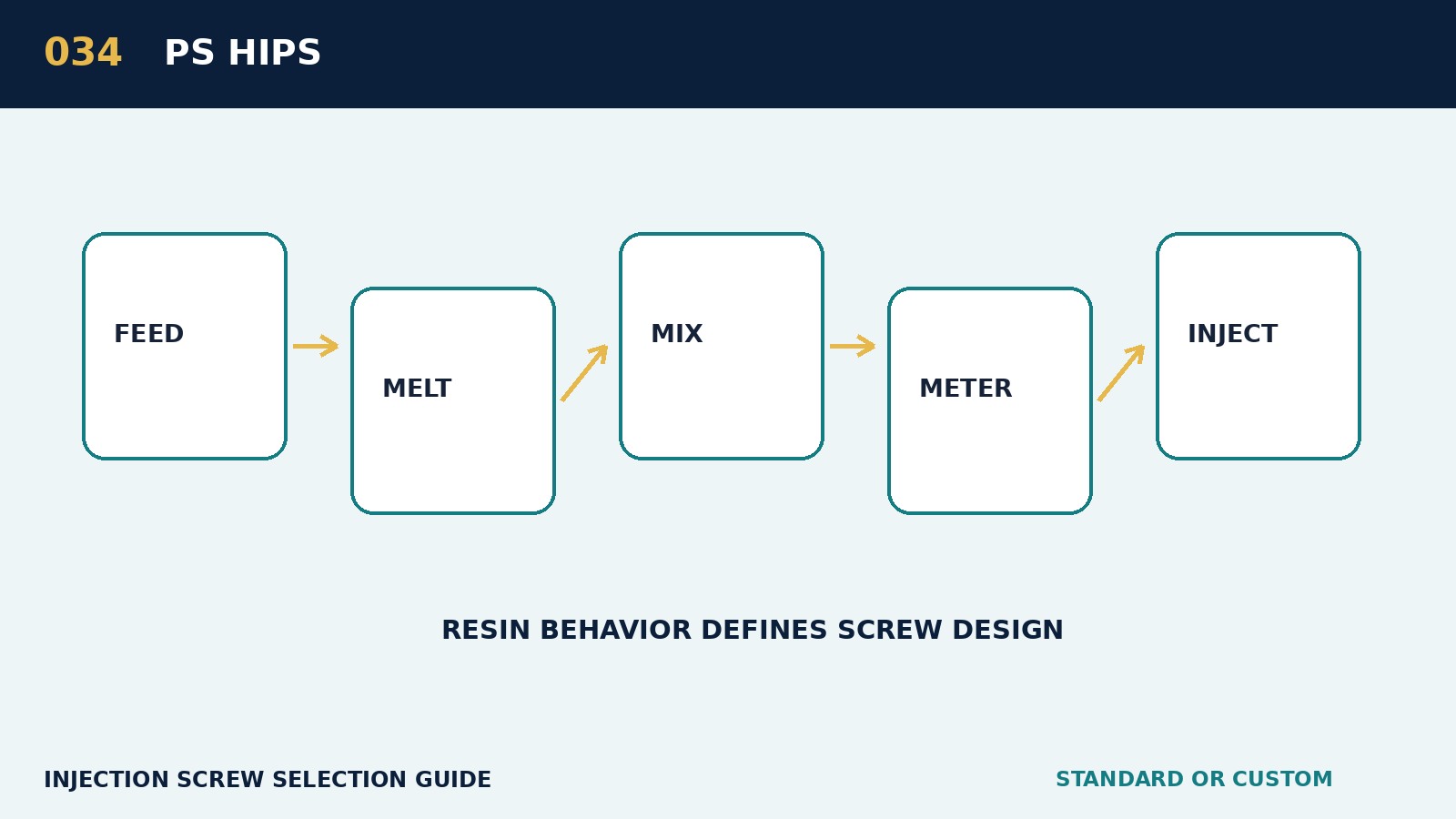
When the project involves PS and HIPS, the screwdriver programme must start from the customer ' s real production task. Generic machine distributors need to organize transparency or resilience, cut hair and colour into a set of verifiable, calculable and retroactive input conditions.
The name of the raw material can only be classified as the first layer, and what really determines the screw configuration is the viscosity, melting point, thermal stability, humidity, filling and additive of the specific plate. Vendors should obtain material forms and identify whether the customer uses raw, retroactive or retroactive formulations to discuss generic, grinding, corrosive or lower shear structures. Site information should preferably include both photographs, short videos and data sheets. Photos are used to identify machine interfaces, screw tails and front-end components, video can be observed to measure, buffer and abnormal sound, and data tables are used to calculate the rate of application, the need for plasticization per hour and the length of stay. If only partial information can be obtained, a list should be provided for confirmation, rather than a tentative condition being a definitive conclusion.
It is recommended that customer information be broken down into five groups: products and moulds, raw materials, platforms, process objectives and existing problems. Product end logs of single weight, flowway, number of caves, wall thickness and appearance levels; ratio of feedstock end recorder number, melting finger, filling, flame retardation and retrofitting; terminal logs of tonnage, voltage, screw diameter, maximum travel, injection pressure and plasticization. All data are sourced and are marked, drawn, physical, measured or estimated by clients. The focus of discussion in this paper is transparency or resilience, cut hair and colour, which must correspond to the customer ' s current production conditions and not be limited to the maximum values in machine samples.
The project may be advanced by selecting surfaces and condensing structures on the basis of transparent and resilient objectives and by arranging an evaluation of sales, design, process and customer participation. The evaluation focused on the completeness of the input data, whether the assumptions were confirmed by the client, whether the mechanical interfaces were matched, how standards and specialized programmes were selected, and who provided the acceptance data.
If they are placed on an empirically quick basis, it is likely that the same process will ignore the two material differences in performance. The success of a single test module does not represent long-term stability, particularly for projects with high filling, high temperature, frequent colour change or multi-molecular co-plasms, and needs to look at changes in batches of material, the length of continuous production and the accumulation of wear and tear.
Upon completion of the project, the results of the delivery are based on transparency, silver silk and shock stability, and the size tests, material or thermal treatment certificates, trial modelling records and maintenance recommendations are archived. Sales teams can return after three months or a ton agreement to compare plasticization time, energy consumption, product fluctuations and wear and tear trends. For aluminum manufacturers and vendors, professionalism is reflected in the ability to translate the client language into engineering parameters and to interpret the programme into production, quality, maintenance and cost results that the client can understand. The establishment of standard processes around PS and IPS will not only improve the accuracy of this selection, but also create reusable machine and application databases.