
How TPE and TPU software avoid slippage and overheat
Release time:2026-09-22
For soft-gel application equipment manufacturers, describe the method of checking the sensitivity of particulate friction, softening points, sticky and shearing, analyse the risk of slippage in overheating or non-matching of surfaces, and give recommendations for the validation of the optimization of feed cooling, surface and low-cut cutting and measurement of time, temperature and surface quality.
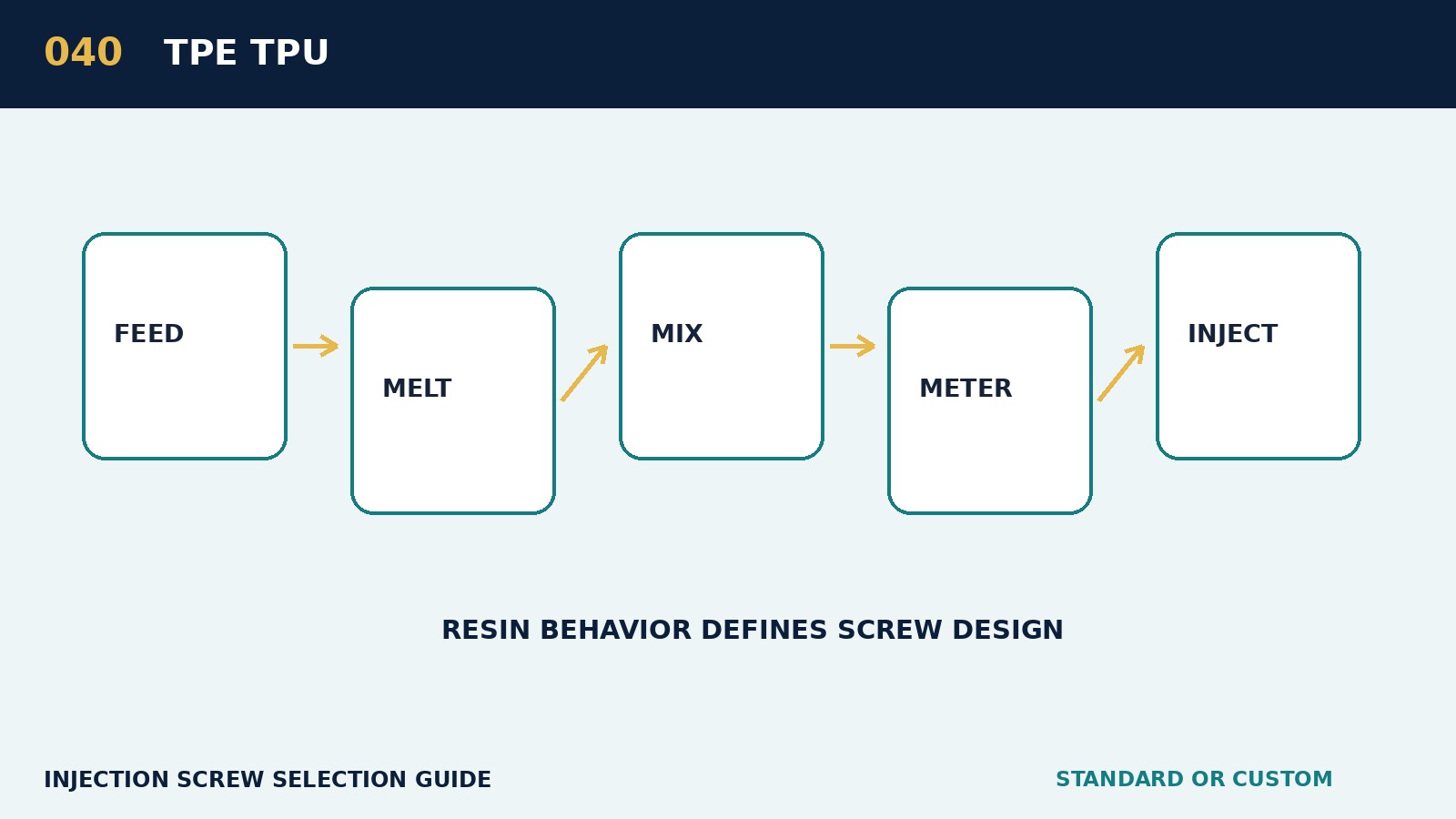
The problem with many TPE and TPU projects is not the lack of equipment capacity, but the omission of particle friction, softening points, adhesiveness and cut sensitivity during the selection phase. The ability of a soft-gel application plant manufacturer to complete the technical confirmation prior to the offer would significantly reduce the risk of re-engineering and complaints.
The name of the raw material can only be classified as the first layer, and what really determines the screw configuration is the viscosity, melting point, thermal stability, humidity, filling and additive of the specific plate. Vendors should obtain material forms and identify whether the customer uses raw, retroactive or retroactive formulations to discuss generic, grinding, corrosive or lower shear structures. Calculates the nominal value to be converted to the actual condition. The machine often uses PS as a reference for the gel weight, which should be revised by density when using other raw materials; the weight of the product should be added to the main course, traffic separation and a reasonable buffer. The larger the diameter of the screw, the greater the theoretical capacity, but the pressure of injections per unit area under the same hydraulic pressure or servo system will decline and the resolution of the measurement of the small amount of the aerosol may also be variable.
Site information should preferably include both photographs, short videos and data sheets. Photos are used to identify machine interfaces, screw tails and front-end components, video can be observed to measure, buffer and abnormal sound, and data tables are used to calculate the rate of application, the need for plasticization per hour and the length of stay. If only partial information can be obtained, a list should be provided for confirmation, rather than a tentative condition being a definitive conclusion. The focus of this paper is on the sensitivity of particle friction, softening points, stickyness and cut-off, which must correspond to the customer ' s current mass production conditions and not be limited to the maximum values in machine samples.
From a sales management point of view, the optimization of input cooling, surface and low-cutting plasticization should result in standard processes that can be used again. Each project saves original needs, computations, final drawings, test modelling data and client feedback, and can call on experience in the event of a similar machine or material, but there is still a need to reconcile key differences and not to copy the historical configuration directly.
Special vigilance is required for overheating or surface mismatches. Many of the post-sale disputes arise from inconsistencies between the design input and the actual production conditions, such as the customer ' s replacement of the raw material number, the increase in the return rate or the transfer of the screw to another set of moulds, while still requiring the maintenance of the original acceptance results. The configuration of the boundary and change management should therefore be included in the technical document.
Validation focuses on measuring time, temperature and surface quality. The test shall use the actual material and representative moulds of the client, retaining the batch number, dry condition, ambient temperature and sample number. When compared to old schemes, equipment, moulds and major process conditions other than screws should be as consistent as possible. For aluminum manufacturers and vendors, professionalism is reflected in the ability to translate the client language into engineering parameters and to interpret the programme into production, quality, maintenance and cost results that the client can understand. The establishment of standard processes around TPE and TPU not only improves the accuracy of this selection but also creates a reusable machine and application database.