
How does the cortex of the screws affect the return flow efficiency?
Release time:2026-09-20
The extent to which a high-pressure molten is leaking along the prism is determined by the trajectorial gap between the diameter of the screw and the inner diameter of the drum. The working principles, selection conditions, common risks and validation methods illustrate how the cortex and the material cylinder gap affect the return flow efficiency, helping to stabilize the retrofitting plant and reduce the full life cost of the screw drum.
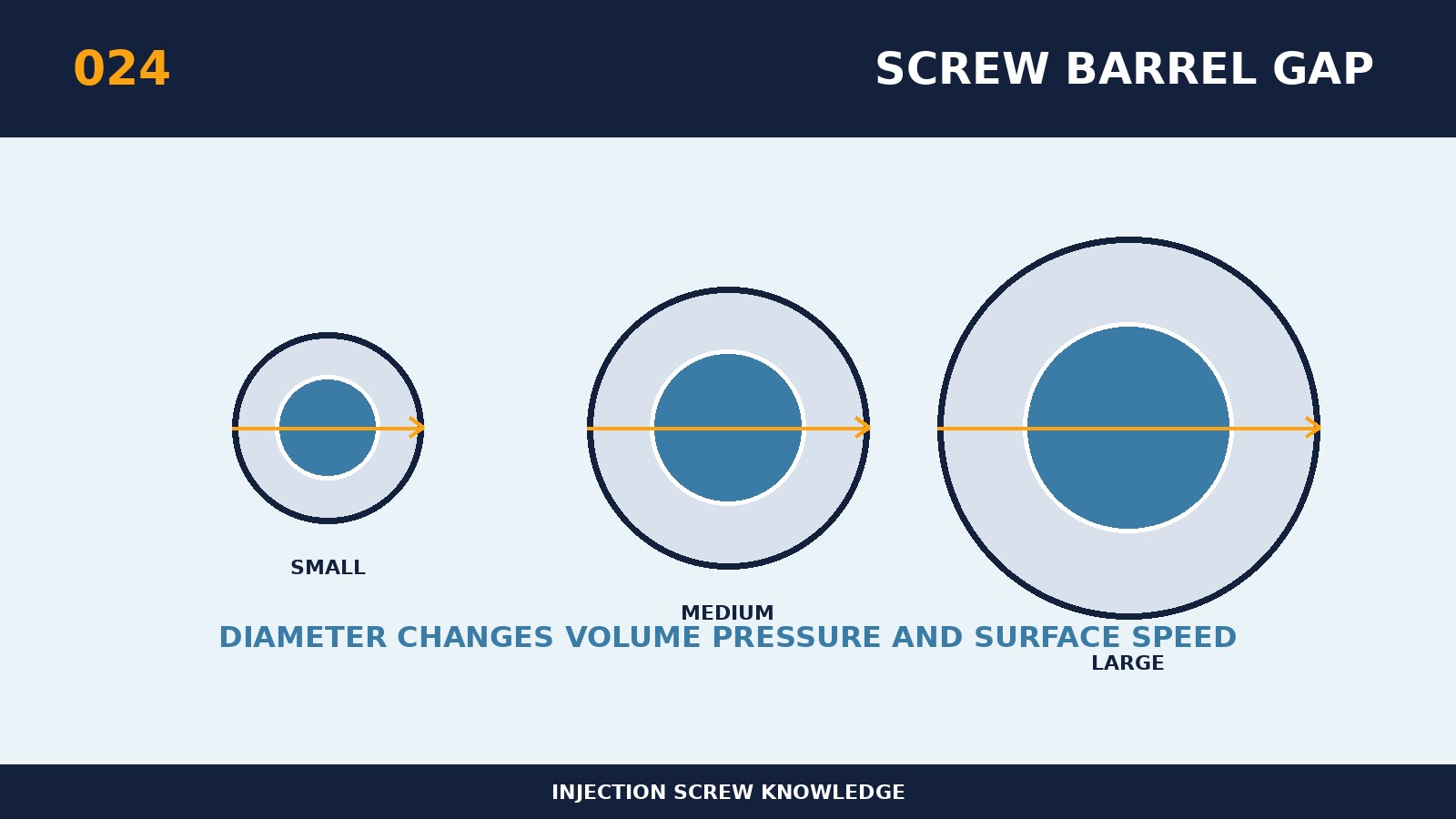
To match how the reflow efficiency is affected by the cortex of the screw and the drum, it is important not only to refer to the size of the old piece or to the equipment label, but also to understand the real change in the material in the snail. Its core is the diameter gap between the diameter of the screw and the inner diameter of the material cylinder, which determines the degree of leakage of the high pressure molten along the prism. An appropriate gap avoids mechanical contact, while an increase in the gap reduces the effective delivery and increases the repeated cutting of the melting. The choice of diameter involves both reductive resolution, pressure capacity, plasticization, stop time and driver load and cannot be judged by product weight alone. A usable manufacturing map is not only a common name, but also a signal, a measuring transect, a surface state and a receiving and inspection belt to accompany the drum. Nominal specifications are therefore only the starting point, and the final conclusions must serve the actual resin, product and volume rhythm.
When customizing around “how the reflow efficiency is affected by the slugs between a screw and a material drum”, first collects the size of the equipment model, the original screw and the material drum, the driving capacity, the resin plate number and the filling system, the single mass, the cycle and existing defects. The specific selection principles for this topic are: the diameter, thermal expansion of the material, the straightness, the converse degree, the thickness of the surface layer and the working temperature of the new package. The operational evaluation should not only look at single-modules, but at least cross three stages of complete warming, steady-state production and a moratorium on restarting. The technical agreement should include quantifiable provisions for size benchmarks, key communications, material status and acceptance methods so that new, old and subsequent restorations can be compared under the same criteria.
The most important of the failures that the subject needs to be prevented are the death of thermal bruises and even the death of the carcasses at a small age, and the increase in plasticization times, reduced capacity and abnormal warming. The removed parts shall retain directional markings and record grinding marks, corrosive pits, discoloration and residues in the order in which the loading end reaches the front end, and establish a retroactivity map. For on-site processing, only one main variable is changed each time and the measurement time, twist, melting temperature, mat, injection pressure and product weight are aligned to the same pattern. If production is to be sustained by excessive temperature, turn speed or back pressure, the use of parameters to mask structures, wear or collage should be discontinued.
This replicable option could be used to verify how the "spreads of the screws and the material drums" affect the return flow efficiency: Segments measure the diameter of the screws and the inner diameter of the material drum, draw a gap distribution and correspond to changes in production, twisting and melting temperature. The screws, drums and reversible rings are proposed as side acceptances, since single-sizes do not represent a suitable axis of the combination gap with the heat. Inquiries to suppliers should also be accompanied by information on resins and fillings, risk of flame retardation or corrosion, total weight of products and fluids, photographs of available screws and equipment curves. The programme is considered to have a stable engineering value when the detection data, the good product rate, the timing of the switch and the unit cost of the eligible goods are improved.