
What's the right place for dispersing a nail?
Release time:2026-09-20
The elimination of nails allows the melting to be diverted, condensed and re-directed over a number of times, improving the distribution of chromosoes, fillings and additives. The working principles, selection conditions, common risk and validation methods illustrate which distillation bands are appropriate to address the problem of fragmentation, helping the retrofitting plant to stabilize plasticization and reduce the full life cost of the screw drum.
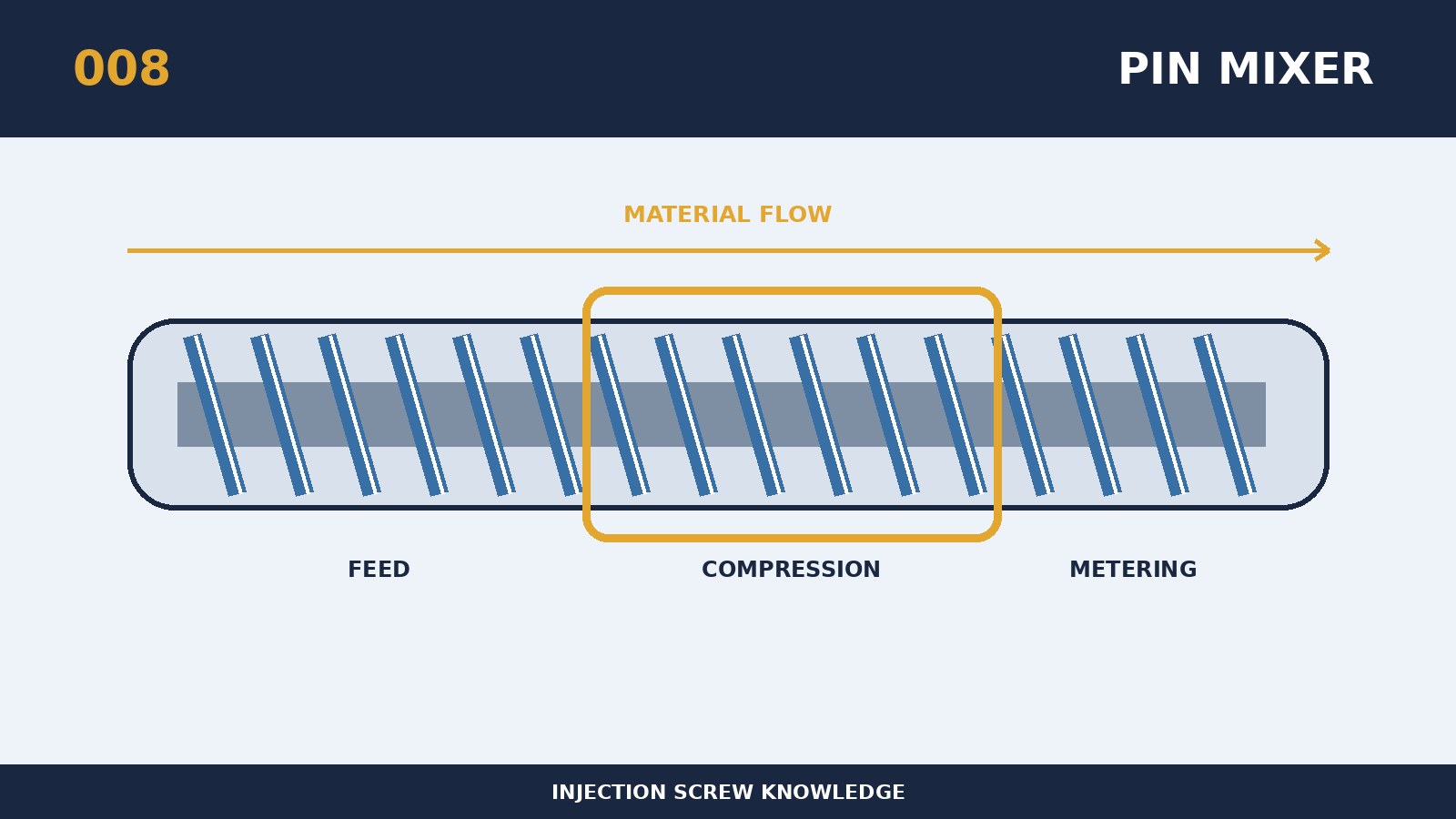
In the screw selection or failure analysis, which distillation bands are suitable for addressing which fragmentation issues are often simplified into a specification value, but need to be explained in conjunction with the full work situation. At its core is the reduction of nails to divert, collide and change the direction of the melting, which can improve the distribution of colored mothers, fillings and additives. The amalgamation effect comes from a controlled stream reorganization rather than a mere extension of stay, with the number of nails and gaps affecting cutting. Structural parameters are interconnected and any local modifications are evaluated in the complete path of transport, melting, mixing, metrology and cleaning. It is recommended that the snails be expanded and the axle-sized chain compared to the material melting route, so that it can be seen which area is actually carrying the transmission, pressure or amalgamation function. Nominal specifications are therefore only the starting point, and the final conclusions must serve the actual resin, product and volume rhythm.
When customizing around “what is fit to solve dispersing problems”, the equipment model, the original screw and the material drum are first collected for physical dimensions, driving capacity, resin numbers and filling systems, single totals, cycles and existing deficiencies. The specific selection principle for this topic is that a system that is sensitive to colour differences or a small amount of additives can be evaluated to remove nails while confirming the cut and temperature increase allowed by the material. The operational evaluation should not only look at single-modules, but at least cross three stages of complete warming, steady-state production and a moratorium on restarting. The technical agreement should include quantifiable provisions for size benchmarks, key communications, material status and acceptance methods so that new, old and subsequent restorations can be compared under the same criteria.
The most important defence against the failure of the subject is that the removal of the nails or the small gap leads to the destruction of the fibers, difficulties in the decomposition and cleaning of the thermally sensitive materials, and the lack of improvement is limited. When the size is still satisfactory and performance is abnormal, the same axiality, roughness of the surface, partial loss of coatings and thermal deformation are also examined and not only the outer diameter. For on-site processing, only one main variable is changed each time and the measurement time, twist, melting temperature, mat, injection pressure and product weight are aligned to the same pattern. If production is to be sustained by excessive temperature, turn speed or back pressure, the use of parameters to mask structures, wear or collage should be discontinued.
This replicable approach can be used to verify “what is appropriate to solve the dispersing problem” by comparing the colour differences, filling distribution, fibre retention length, pressure loss and actual melting temperature. When the production line is stabilized, the parameters of the equipment are locked and the version number is formed, the unrecorded modulation opportunities undermine the comparison conditions and the contribution of hardware optimization cannot be judged. Inquiries to suppliers should also be accompanied by information on resins and fillings, risk of flame retardation or corrosion, total weight of products and fluids, photographs of available screws and equipment curves. The programme is considered to have a stable engineering value when the detection data, the good product rate, the timing of the switch and the unit cost of the eligible goods are improved.