
Measuring the effect of the length of the segment on the replicability of the film and the smelting balance
Release time:2026-09-20
The measurement segment, which is responsible for stabilizing the melting pressure, temperature and output, is an important buffer zone linking plasticization to injection. From the principles of work, selection conditions, common risks and validation methods, the effect of the measurement period length on the replicability of the gel and the smelting homogeneity helps to stabilize the retrofitting plant and to reduce the full life cost of the screw drum.
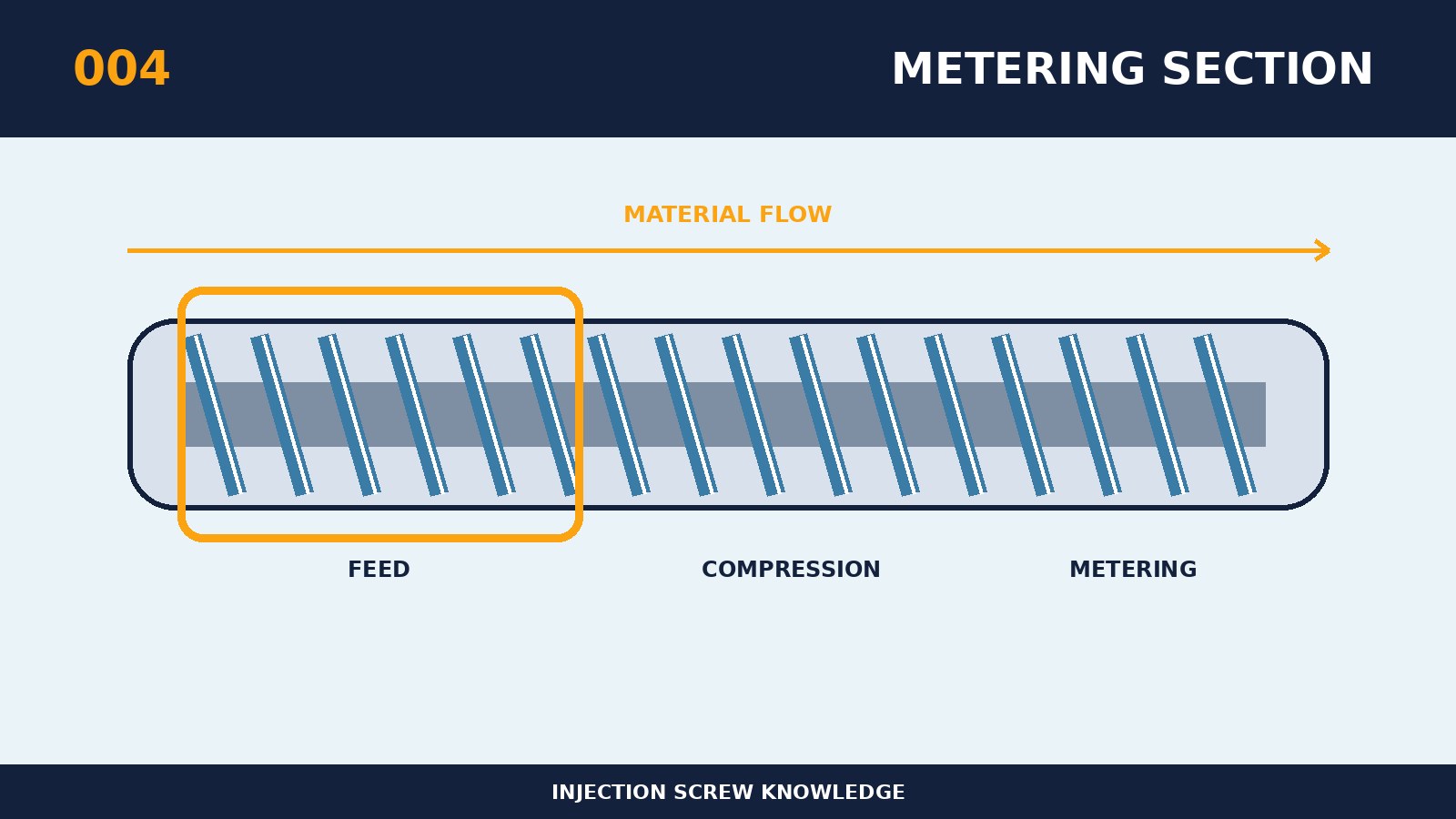
The effect of measuring the length of the segment on the replicability of the gel and the smelting balance is not only to refer to the size of the old piece or to the equipment label, but also to understand the true change of the material in the snail. At its core, the measurement segment is responsible for stabilizing melting pressure, temperature and output, and is an important buffer zone linking plasticization and injection. Sufficient effective length can reduce the melting pulsation of the front and make the melting density more consistent into the screwhead. Structural parameters are interconnected and any local modifications are evaluated in the complete path of transport, melting, mixing, metrology and cleaning. The retrofitting of old machines could begin with the re-establishment of the existing superstitious model, which compares the volume, intensity and heat history of old and new programmes with the same benchmark. Nominal specifications are therefore only the starting point, and the final conclusions must serve the actual resin, product and volume rhythm.
When customizing around "The role of measuring the length of the segment for replicability and smelting homogeneity", first collects the size of the equipment model, the original screw and the material drum, the driving capacity, the resin plate number and the filling system, the single mass, the cycle and existing defects. Specific selection principles for this topic are that high-precision products, transparency packages, thin wallware and multi-modes should pay particular attention to the matching of the length and depth of the measurement segment. The same mass and the same cooling time should be used for the test to record the amount of plasticization and energy consumption at a low, medium and high three-stage rotation, respectively. The technical agreement should include quantifiable provisions for size benchmarks, key communications, material status and acceptance methods so that new, old and subsequent restorations can be compared under the same criteria.
The most needed to guard against the failure of this theme is the volatility of the fusion of mosaics and the dispersion of the mosaics over too short a period of measurement, which may increase the length of stay and limit plasticization. Short-term increases in temperature or back pressure cover part of the structural problem but cannot be a long-term response if the twist, degradation or cycle deteriorates simultaneously. For on-site processing, only one main variable is changed each time and the measurement time, twist, melting temperature, mat, injection pressure and product weight are aligned to the same pattern. If production is to be sustained by excessive temperature, turn speed or back pressure, the use of parameters to mask structures, wear or collage should be discontinued.
Validation of the "effects of measuring the length of the segment on replicability and smelting homogeneity" can be used as a replicable option: continuous Quantification and synchronized recording of material mats, measuring endpoints, plasticization time and nozzle smelting temperature, and determination of output repetition. Receiving and inspection should not end when the equipment is not in thermal equilibrium, and should cover typical use links such as start-up, steady state, suspension of re-opening and refuelling. Inquiries to suppliers should also be accompanied by information on resins and fillings, risk of flame retardation or corrosion, total weight of products and fluids, photographs of available screws and equipment curves. The programme is considered to have a stable engineering value when the detection data, the good product rate, the timing of the switch and the unit cost of the eligible goods are improved.