
Level B all-hard alloy refilled screws: grinding material and applicable conditions
Release time:2025-07-15
Level B all-hard alloy piping screws? The grinding-resistant foundation, surface treatment, distillation and fibre retention rates should be assessed together, and not only hardness should be seen; the final option would be to test and model with actual material, back pressure and cycle. This paper combines information on star-friend screw stations to organize selection, process and validation elements.
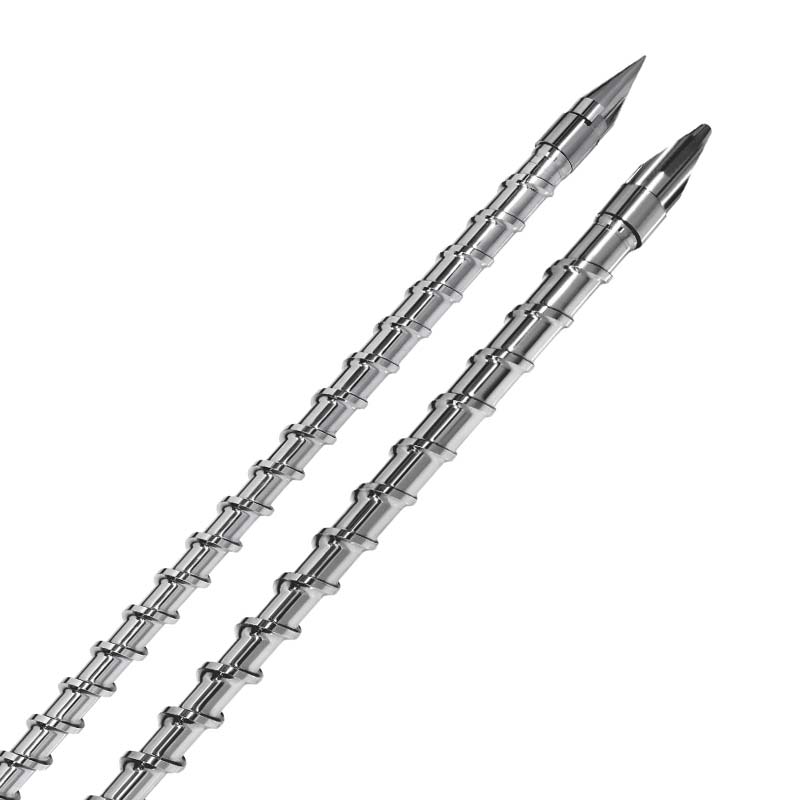
The core conclusion of the all-hard alloy pin.
Grain-resistant materials, surface treatment, mixing and fibre retention rates should be assessed together, and not only hardness should be seen; the final programme needs to be validated with actual material, back pressure and cycles.
Level B all-hard alloy screws: grinding tools with materials and process hammers
In the “steel jungle” of the plating industry, the B-grade fully-rigid alloy screws return fire with their unique material formulations and processes and become the backbone for medium-damaged material. It rejects the traditional screws' reliance on surface coatings as “outside and inner”, opts for imported alloy tools and high-speed steel as the base material, and locks the whole hardness at HRC 60-63 in combination with precision thermal treatment and the “hard-and-uncorrected point” process. As in the case of a “diamond nail” for platinum production, the combined advantage of strong grinding, moderate corrosive resistance and high-temperature softening has been demonstrated in the area of enhanced plastic processing.
Material selection: “innate advantage” of imported steel
The excellence of the B-class alloy screw begins with the selection of quality raw materials. Its core base uses a composite formulation of imported alloy steel (e.g., 1.2,379 in Germany) and high-speed steel (e.g., M2 in the United States). The steel itself contains alloy elements such as tungsten, molybdenum and chromium, as if it had been injected into the metallic matrix with a "carrying-resistant gene". In the case of M2 high-speed steel, for example, tungsten levels of 6-10 per cent can produce stable carbon at high temperatures, as in the case of the construction of numerous microbots within the steel to resist grinding erosion of filling materials.
The purity of imported parent materials is higher than that of domestic steel, and the levels of harmful impurities, such as sulphur and phosphorus, are controlled below 0.01 per cent, avoiding local impurities caused by impurities. Under the microscope, the carbon particles are evenly distributed in the gold-phased tissue, with a size of 5-10 m, while the carbon particles in the ordinary steel are often more than 20 m. This is the "generative foundation" of the B-class screws to achieve overall flatness.
Craft spirit hammering: from "Burning" to "Sculpting"
Overall vacuum fire: “reorganization revolution” of metal crystals
Thermal processing of all hard alloy screws at level B is an example of a “precision process”. When the overall vacuum is fires, the screws are placed in a vacuum environment of -0.1 MPa, rising slowly from room temperature to 860-880°C for two hours, then rapidly cooling. This process avoids the oxidation of the steel surfaces of the traditional aluminum, as in the case of a “restructuring operation” of the metallic crystals, which has resulted in a more radical transition from the aus to the Maragings. The difference between the surface and the hardness of the heart in the aftermath of the fire was contained within the limits of Human Rights Council 2, which addressed the fatal defects of the common screw “outside hard and inner” soft.
Second time back fire: "Torture" to remove stress
The screws behind the accelerator are as tight as a bow string, and a second return fire is required to “dismantling the stress”. The first fire return temperature was 520°C for 3 hours; the second fire return temperature was 500°C for 2 hours. On each return, the furnace cooled down to less than 100 °C. This step-to-step backfire process can gradually eliminate acupuncture stress, such as a “mass and relaxing” of metals, which will make the mast tissue more stable and prevent the screws from being fractured in subsequent use due to a concentration of stress. As a result of this treatment, the shock resilience of the screws increased to more than 15 J/cm2, increasing by 30 per cent over a single fire return process and demonstrating greater “resistence” in responding to intermittent shock loads.
"Current Uncorrected Point" processing: "Dual Safeguards" for precision and hardness
Distinguished from the traditional screw “manufacturing before flaring”, the B-class all-hard alloy screw uses the “total hard, uncorrected point” process - the heat treatment reaches target hardness and then the fine grinding process. This means that all sizes are processed after “complete hardening” of steel, as it is carved on hard diamonds. The accuracy of 1 μm of a milling bed by import control is controlled by a screw-span error within ±0.02 mm/m and the external diameter is maintained at ±0.01 mm to ensure that the gap with the cylinder is stabilized at 0.12-0.18 mm. This not only avoids the leakage of molten fluids caused by excessive gaps, but also prevents overheated friction caused by small gaps.
Performance presentation: Work "All Power"
Strong grinding: the “brick wall” against moderate wear
The overall hardness of HRC 60-63 has enabled the B-class screws to show excellent resistance in processing enhanced PA materials containing 20-30 per cent of the product. The empirical data from a car dashboard plant show that, after 300,000 per month cycles of the moulds, the outside diameter of the screws was worn at 0.03 mm, compared with 0.15 mm of the normal nitrogen steel screws during the same period. This means that the B-class screws can be used for 12 consecutive months for maintenance, while the traditional screws have to be replaced every three months, significantly reducing the cost of downtime maintenance.
Medium corrosive resistance: "Steve" in a weak acid environment
Although less “indestructible” than a total stainless steel screw, the alloy composition of the B-class screw gives the equivalent corrosive properties. When processing PVC material with fluorinated additives, the surface corrosive rate is controlled at 0.005 mm/year, 60% less than the normal screw. Practice at a plumbing plant shows that a 10 per cent calcium carbonate-containing PP-R tube is produced using a B-class screw and that six months later, the surface of the screw remains smooth and does not show the common corrosive effects of the ordinary screw.
Anti-heat softening: “temperature stability” under heat conditions
High temperature engineering plastics such as PEEK (melt temperature 380°C) are particularly resistant to high temperature softening in class B spirals. The experiment showed that, after 100 hours of temperature protection at 400°C, the surface hardness remained above HRC 58, with only a 3 per cent drop, while the normal alloy screw would fall sharply to HRC 45 under the same conditions. This stability ensures the plastic homogeneity of the high-temperature melting, keeping the size of the PEEK gear within ±0.02 mm and meeting the requirements of the precise moving parts.
Application of scenes: A precise match for "The Hour and the Hour"
Level B all-hard alloy screws are like “circulars” tailored to medium-complication tasks, which apply in particular to the following scenarios: The car industry has an enhanced PPP bumper production of less than 30 per cent of the fibres, the electronics industry's mineral fillings for ABS shell processing, and the domestic electricity sector's flame retardant PBT connection manufacturing. However, in the processing of ultra-hard filling materials such as silicon carbide (hard HVthium 2000) or high-corrosive materials (e.g., PVC with chlorine content exceeding 15 per cent), there is still a need to choose a higher level of full-hard alloy screw; for pure resin processing, its high procurement costs appear to be “small-scale”.
From the careful selection of raw materials to the process ' s repeated hammering, the B-class full-hard alloy screws, based on the hardness of HRC 60-63, find a precise balance between grinding resistance, corrosive resistance and high temperature stability. It is not only a crystallization of metal processing processes, but it is more condensed in the engineering wisdom of “good steel on blades”. In the sub-section of plastered production, the "hard-knocked".
Data to be recorded before implementation
- Material integrity number, filling ratio, flame-retarding system, refill ratio and dry condition.
- Note plastics brand, model, screw diameter, voltage, back pressure, turn speed and current screw structure.
- Indicators of product size, wall thickness, appearance or strength, and current adverse phenomena and frequency of occurrence.
- Continuous production cycle, refuelling frequency, machine clean-up method, wear and tear record and planned useful life.
How to validate the adjustment results
It is recommended that the current process baseline be established, followed by a single-variant test model. Each round records the measurement of time, melting temperature, product weight, formation cycle and bad rate, avoiding multiple parameters being changed at the same time to determine the cause. The parameters in the text are used to illustrate design thinking and should not replace material supplier data and on-site safety protocols.
What kind of support is a star-friend screw?
The Starfleet Mechanical Equipment Co. Ltd. (Starfinger) provides a reset of materials and work evaluation, screw structure, base and surface treatment options, non-spectrum customization and trial modelling issues around all hard alloy plume. The submission of information on raw materials, equipment and products could lead to more targeted programmes.
Ask for customized screws immediately, or check firstNote plastic screw productwithNote Plastic SolutionsI don't know.