
High-filled plastic snails: grinding and dispersing design
Release time:2025-08-07
A high-filled plastic retrospect scheme? Grain-resistant materials, surface treatment, mixing and fibre retention rates should be assessed together, and not only hardness should be seen; the final programme needs to be validated with actual material, back pressure and cycles. This paper combines information on star-friend screw stations to organize selection, process and validation elements.
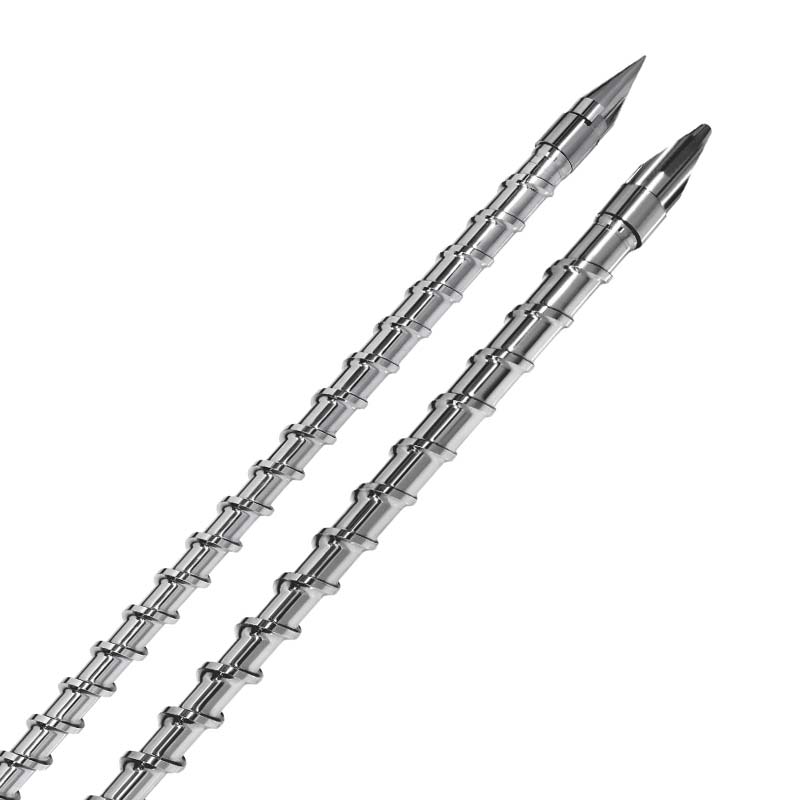
The core conclusion of the high-filled plastic retrospect.
Grain-resistant materials, surface treatment, mixing and fibre retention rates should be assessed together, and not only hardness should be seen; the final programme needs to be validated with actual material, back pressure and cycles.
High-filled plastic-formed grind-resilver-resistant dispersing solution: alloy steel, high-cut-slice-sliced screws
In the area of high-filled plastics, the product fibres, carbon fibre enhancement products, because of their high intensity and rigidity, are widely used in such areas as car structures and electronics shell. This type of product requires that the filling material be distributed evenly (single-fibre exterior length = 0.5 mm) and that the retrospect screws be more worn - When the fibre content exceeds 30 per cent, the service life of the general plywood screw will be reduced to one fifth of normal conditions. Currently, at the time of production of general equipment, the failure rate due to uneven distribution of fillings is as high as 22 per cent, and the impurity rate for metal impurities due to mill wear exceeds 15 per cent. The present paper will analyse the process properties of high-filled materials in the context of specific data and describe how they will improve the service life of the plume-plugs. Specially designed retrofit screws with alloy steel, high-intensity cutting-off face, can be used to target pain spots.
Core quality pain points and technology needs for high-filled plastic production
Quality defects in high-filled plastics are closely related to filling characteristics, wear and tear of equipment, etc. In terms of industry standards, the convulsive strength of a fibre-enrichment PP should be 80 MPa (down to less than 50 MPa if the filling is unevenly dispersed); carbon fibre-enhancement of the PC surface fibres should be 3/cm2 or otherwise affect appearance and corrosive resistance.
The logic behind these painful points focuses on two aspects: the one being fragmentation. Fossil, carbon fibres are easily reunited in the melting, and the common plume screws have insufficient shearing and dispersing capacity, resulting in a unit size of more than 500 m, reducing the mechanics of the product by 30 per cent; and secondly, wear and tear. The hardness of the filling material (6.5 bovine moth hardness) is much higher than that of the normal screw material (38 Cr Moal moll hard point 2.5), which, after a series of 1,000 formation cycles, can wear up to 0.2 mm of the threaded ridge, resulting in impurities of the product.
Technical advantages of alloy steel to cut to the plastic screw.
To meet the processing needs of high-filled materials, the dedicated retrofit screws have achieved double breakthroughs in materials and structures:
Alloy steel. It's super hard to grind.
The screw uses WC-Co hard alloy coatings (0.3-0.5 mm thick) with a surface hardness of up to HRC65 (normal screwHRC35), a hardness of up to 8.5 degrees, which is eight times more resistant than the normal screw. The test data show that when 30 per cent of the product fibre is processed to enhance PA, after 5,000 consecutive cycles, the screwdriver vertebrae is only 0.03 mm, or 1/7 of the normal screw; the impurity rate for metal has been reduced from 15 per cent to 1.2 per cent, and the maintenance cycle for equipment has been increased to six times.
High-intensity cutting segment design to increase dispersible evenness
Gravity is measured using a sawn-tooth cut ring and a stairwell compression structure, increasing the cut rate to 300-400s-01 (normal screw 150-200s-1) with a slashing blade at 20° and effectively breaking the fillings. The 30 per cent bobby-enhanced PP test showed that the input was distributed from 65 per cent to 92 per cent of the normal screw and that the conjunctuary particle size was reduced from 500 m to less than 50 m; the convulsive strength of the product was increased from 55 MPa to 88 MPa to meet the design criteria.
Gradient compression structure, balancing fill and plasticization
Using a high compression ratio of 3.5 to 4.0, the compression segment length represents 25 per cent of the total length of the screw (20 per cent of the normal screw) and allows a “predispersion-strength-remix” three-tier processing of the pelican in the melt. Production data show that the exposure of the carbon fibre-enhanced PC surface fibre was reduced from 8/cm2 to 2/cm2 of the normal screw, and the retention of the product impact strength was increased to 90 per cent (75 per cent after the normal screw was processed).
Synergy to optimize the coordination process
Process optimization combined with special plating screws further enhances production stability:
Temperature control: Using partition controlled temperature (60-80°C, compressed 220-240°C), local high temperatures have been avoided, resulting in decomposition of the fibers and increased the aging performance of the product by 20%.
Scrap-to-trpm: Re-integrate the velocity with different fillings (30% bott 80-100rpm) to ensure a balance between the shearing power and the efficiency of the discharge of the filling, with a 15% increase in production efficiency.
Validation of effects in practical application
Data on the production of a car spare parts firm indicate that 30 per cent of the product success rate of PA products was increased from 70 per cent to 98.5 per cent with the use of alloy steel high-cut-slice-sliced plastic screws. In particular, the failure rate due to uneven distribution of fillings fell from 22 per cent to 1.8 per cent and the metal impurity deficiency rate from 15 per cent to 1.1 per cent; the average mechanics performance of the product increased by 35 per cent to fully meet the standards of the automobile industry.
In terms of cost-effectiveness, the material utilization rate has increased from 78 per cent to 95 per cent, resulting in annual savings of approximately $5.2 million in raw materials, based on 1 million vehicle structural units produced annually; and 60 per cent in maintenance costs and 25 per cent in combined production costs due to reduced wear and tear replacement of equipment.
The problem of wear and dispersion of high-filled plastics has been fundamentally addressed through the design of extremely resistant materials and efficient dispersive structures. With the surge in demand for light-quantitative, high-strength products from new energy vehicles and high-end equipment, the professional solution will become the core option for high-filled plastic production and will drive the industry to upgrade to “efficient, stable, low-consumption”.
Data to be recorded before implementation
- Material integrity number, filling ratio, flame-retarding system, refill ratio and dry condition.
- Note plastics brand, model, screw diameter, voltage, back pressure, turn speed and current screw structure.
- Indicators of product size, wall thickness, appearance or strength, and current adverse phenomena and frequency of occurrence.
- Continuous production cycle, refuelling frequency, machine clean-up method, wear and tear record and planned useful life.
How to validate the adjustment results
It is recommended that the current process baseline be established, followed by a single-variant test model. Each round records the measurement of time, melting temperature, product weight, formation cycle and bad rate, avoiding multiple parameters being changed at the same time to determine the cause. The parameters in the text are used to illustrate design thinking and should not replace material supplier data and on-site safety protocols.
What kind of support is a star-friend screw?
The Starfleet Mechanical Equipment Co. Ltd. (Starfeng) provides materials and situation assessments, screw structure recommendations, base and surface treatment options, non-standard size customization, and trial modelling issues around high-filled plastic aplastic screws. The submission of information on raw materials, equipment and products could lead to more targeted programmes.
Ask for customized screws immediately, or check firstNote plastic screw productwithNote Plastic SolutionsI don't know.