
The client should be advised to replace the length of the screw and the material cylinder.
Release time:2026-09-22
For the sale and maintenance of accessories, describe the method of checking the external diameter, the inside of the material drum, the flow back and the corrosive nature of the material, analyse the risk that the effective plasticization capacity cannot be judged by the surface colour alone, and provide a sub-measure and recommendations for validation in the light of declining production and gaping trends, time and energy consumption.
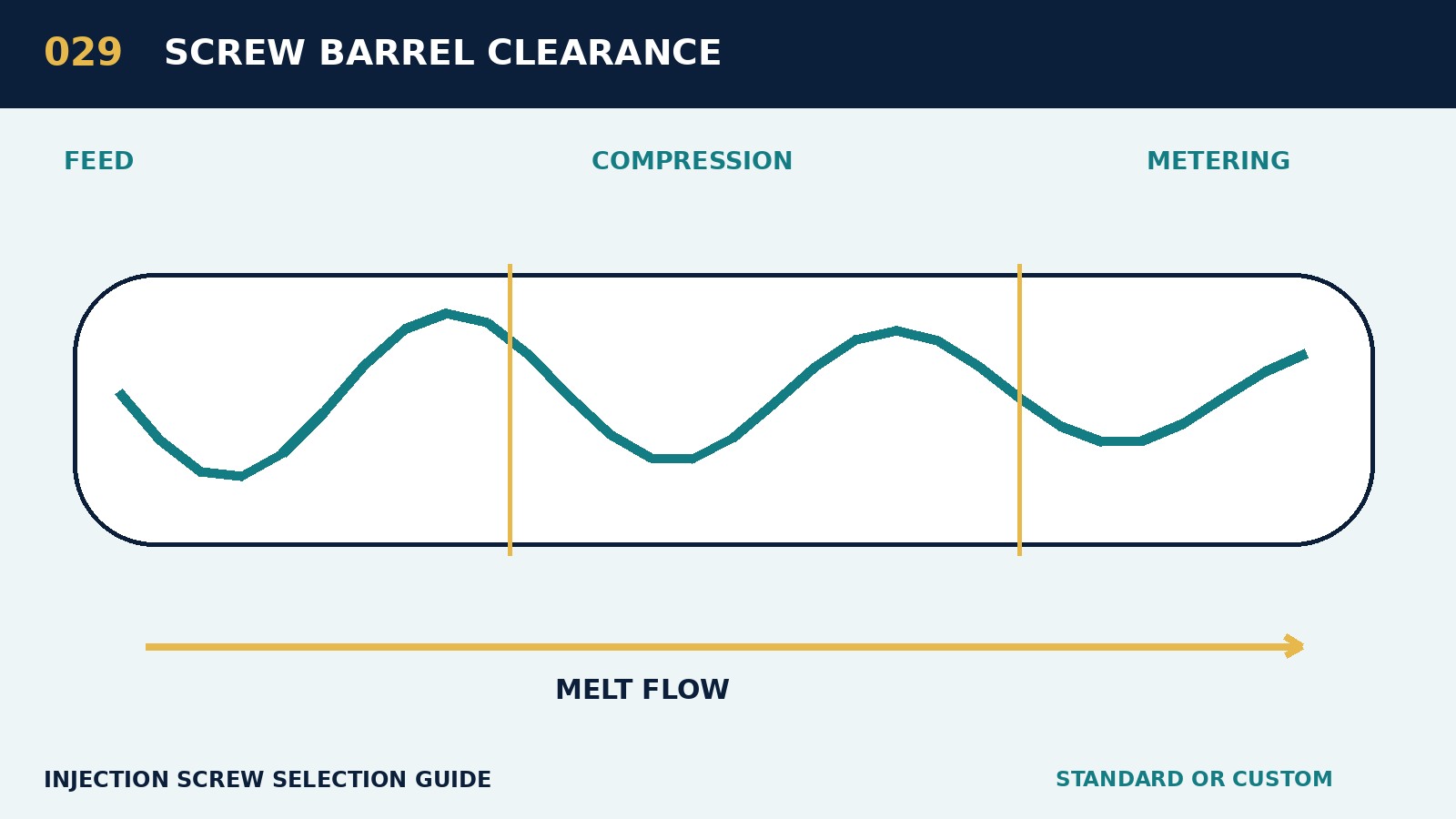
When the project involves an assessment of the wear and tear gap, the screwdriver programme must start from the actual production task of the client. The sales and maintenance of spare parts need to be organized into a set of verifiable, calculable and traceable entry conditions for the outer diameter, the inside of the material drum, the flow back and the corrosivity of the material.
Each size of the screw structure serves solid transport, melting, refining, measuring and injection sealing. The diameter, long-range ratio, three-part ratio, depth, compression ratio and front-end components need to be considered as a system; local parameters appear to be stronger and do not represent the raw materials and cycles of the package that are more suitable for customers. It is recommended that customer information be broken down into five groups: products and moulds, raw materials, platforms, process objectives and existing problems. Product end logs of single weight, flowway, number of caves, wall thickness and appearance levels; ratio of feedstock end recorder number, melting finger, filling, flame retardation and retrofitting; terminal logs of tonnage, voltage, screw diameter, maximum travel, injection pressure and plasticization. All data are sourced and are marked, drawn, physical, measured or estimated by clients.
Site information should preferably include both photographs, short videos and data sheets. Photos are used to identify machine interfaces, screw tails and front-end components, video can be observed to measure, buffer and abnormal sound, and data tables are used to calculate the rate of application, the need for plasticization per hour and the length of stay. If only partial information can be obtained, a list should be provided for confirmation, rather than a tentative condition being a definitive conclusion. The focus of this paper is on the outer diameter, the inner diameter of the material drum, the flow back and the corrosivity of the material, which must correspond to the customer ' s current production conditions and not be limited to the maximum values in the machine sample.
The configuration proposal should be sub-measured and judged in conjunction with a reduction in production, rather than using vague descriptions such as “enhanced” or “high performance”. The spiral drawings need to reflect the effective length, three-part scale, depth, compression ratio, tail connection and anti-reverse components; the material programme needs to distinguish the base, surface hardening, alloy layer or coating, and to indicate the pattern of failure for which they are intended.
The main risk of the scene is that only surface colour does not judge effective plasticization. The issue of whether or not to be derived from a screw should first be excluded from drying, heating ring, thermal voltage, nozzles, reversible rings, wear and tearing of the material drums and changes in process parameters. The use of exclusions is more reliable than the direct replacement of components and also protects the time and cost of both the seller and the client.
Ultimately, programmes should be judged on whether or not they have met their objectives through gap trends, modelling time and energy consumption. If the result fails to meet the standard, each adjustment and result shall be recorded in five directions, by raw material, equipment, molds, process and screw, so as to avoid the loss of causal judgement by modifying multiple parameters at the same time. With the continued accumulation of project data from the wear and tear gap assessment, the plant manufacturer could gradually establish a package, a trade package and an aircraft-type menu to allow sales to quickly identify general and special conditions and to submit a truly complex project to the application engineer for evaluation in a timely manner.