
How the measuring segment determines the temperature and material stability of the molten body
Release time:2026-09-22
(b) Proactive to the screw technology, describing the reconciliation method established to measure the depth of the trough, reflow, refining and pressure, analysing the risk of temperature differentials and measuring fluctuations due to mismatches in the measurement segments, and providing recommendations for validation of optimizing the depth of the trough between output capacity and lower shears, as well as the temperature of the molten and measurement repetition.
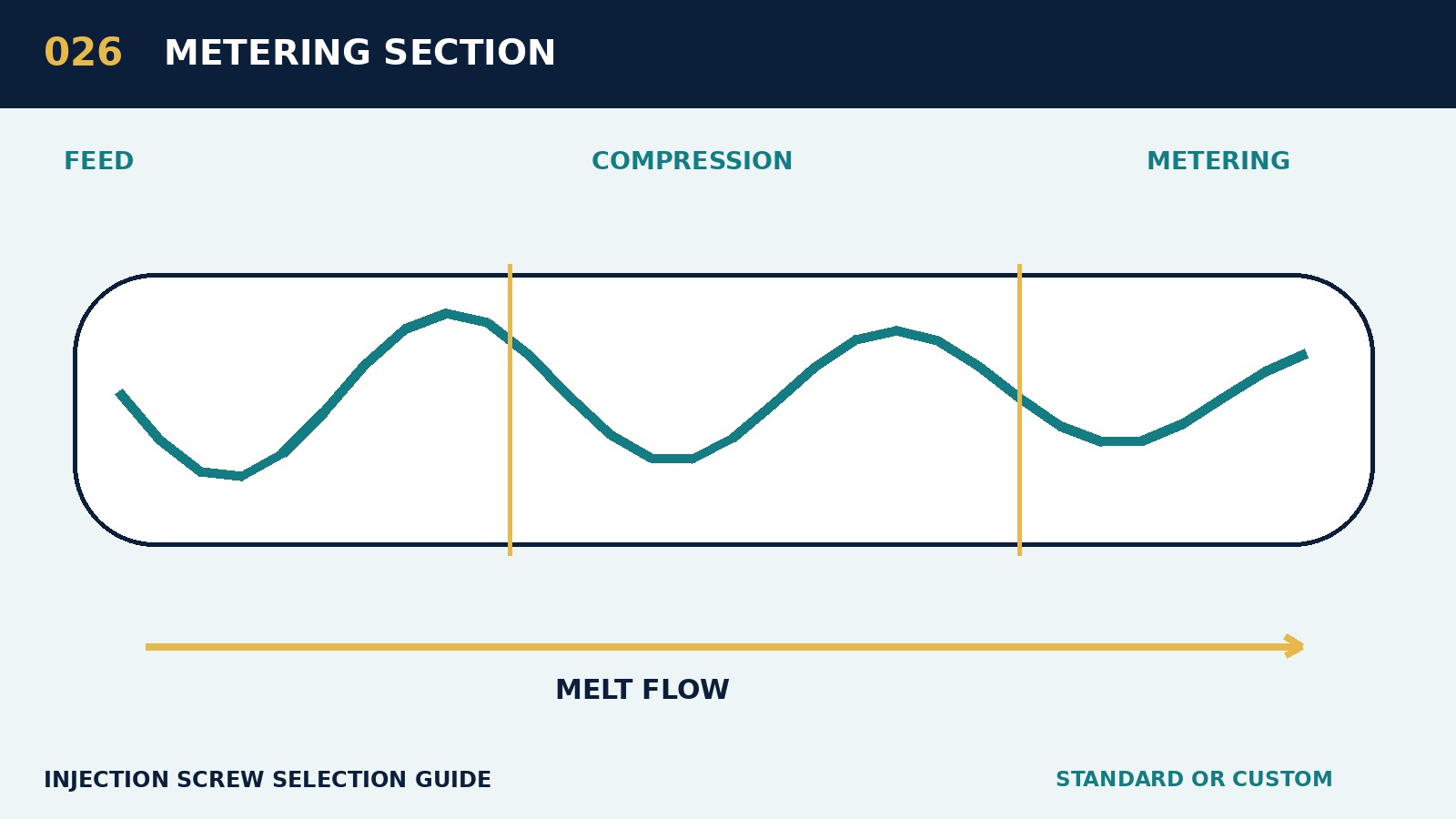
In the measurement segment design, the first solution to be addressed by screw technology sales is not the choice of an off-the-shelf model, but the recognition of the depth of the measuring slot, reflow, refining and pressure-building. This step determines whether the subsequent spiral diameter, structure and material grade are well founded.
Each size of the screw structure serves solid transport, melting, refining, measuring and injection sealing. The diameter, long-range ratio, three-part ratio, depth, compression ratio and front-end components need to be considered as a system; local parameters appear to be stronger and do not represent the raw materials and cycles of the package that are more suitable for customers. It is recommended that customer information be broken down into five groups: products and moulds, raw materials, platforms, process objectives and existing problems. Product end logs of single weight, flowway, number of caves, wall thickness and appearance levels; ratio of feedstock end recorder number, melting finger, filling, flame retardation and retrofitting; terminal logs of tonnage, voltage, screw diameter, maximum travel, injection pressure and plasticization. All data are sourced and are marked, drawn, physical, measured or estimated by clients.
Calculates the nominal value to be converted to the actual condition. The machine often uses PS as a reference for the gel weight, which should be revised by density when using other raw materials; the weight of the product should be added to the main course, traffic separation and a reasonable buffer. The larger the diameter of the screw, the greater the theoretical capacity, but the pressure of injections per unit area under the same hydraulic pressure or servo system will decline and the resolution of the measurement of the small amount of the aerosol may also be variable. The focus of the discussion here is to measure the depth of the chutes, reflows, refining and pressure-building, which must correspond to the customer ' s current production conditions and not be limited to the maximum values in machine samples.
The configuration proposal should go down to optimize the depth of the slot between output capacity and lower shear, rather than using vague descriptions such as “enhanced” or “high performance”. The spiral drawings need to reflect the effective length, three-part scale, depth, compression ratio, tail connection and anti-reverse components; the material programme needs to distinguish the base, surface hardening, alloy layer or coating, and to indicate the pattern of failure for which they are intended.
There is a need for special vigilance that mismatches in measurement segments can cause temperature differentials and measure fluctuations. Many of the post-sale disputes arise from inconsistencies between the design input and the actual production conditions, such as the customer ' s replacement of the raw material number, the increase in the return rate or the transfer of the screw to another set of moulds, while still requiring the maintenance of the original acceptance results. The configuration of the boundary and change management should therefore be included in the technical document.
The focus of the validation was the temperature of the molten body and the measurement of repetition. The test shall use the actual material and representative moulds of the client, retaining the batch number, dry condition, ambient temperature and sample number. When compared to old schemes, equipment, moulds and major process conditions other than screws should be as consistent as possible. The sales proposal should answer three questions at the same time: why this selection was made, which conditions had changed and which were re-selected, and how the customer validated the results. Clearing up these three questions would make it possible for the measurement segment to be designed from a trade in spare parts to a traceability technology project.