
Why would a small diameter screw be better suited to a fine, fine plume?
Release time:2026-09-20
The small diameter screw corresponds to a smaller volume change at the same process resolution, which facilitates the control of micro-jet. The working principles, selection conditions, common risks and certification methods explain why small diameter screws are more suitable for fine and fine plating, helping to stabilize the pyrotechnics and reduce the full life costs of the screw drums.
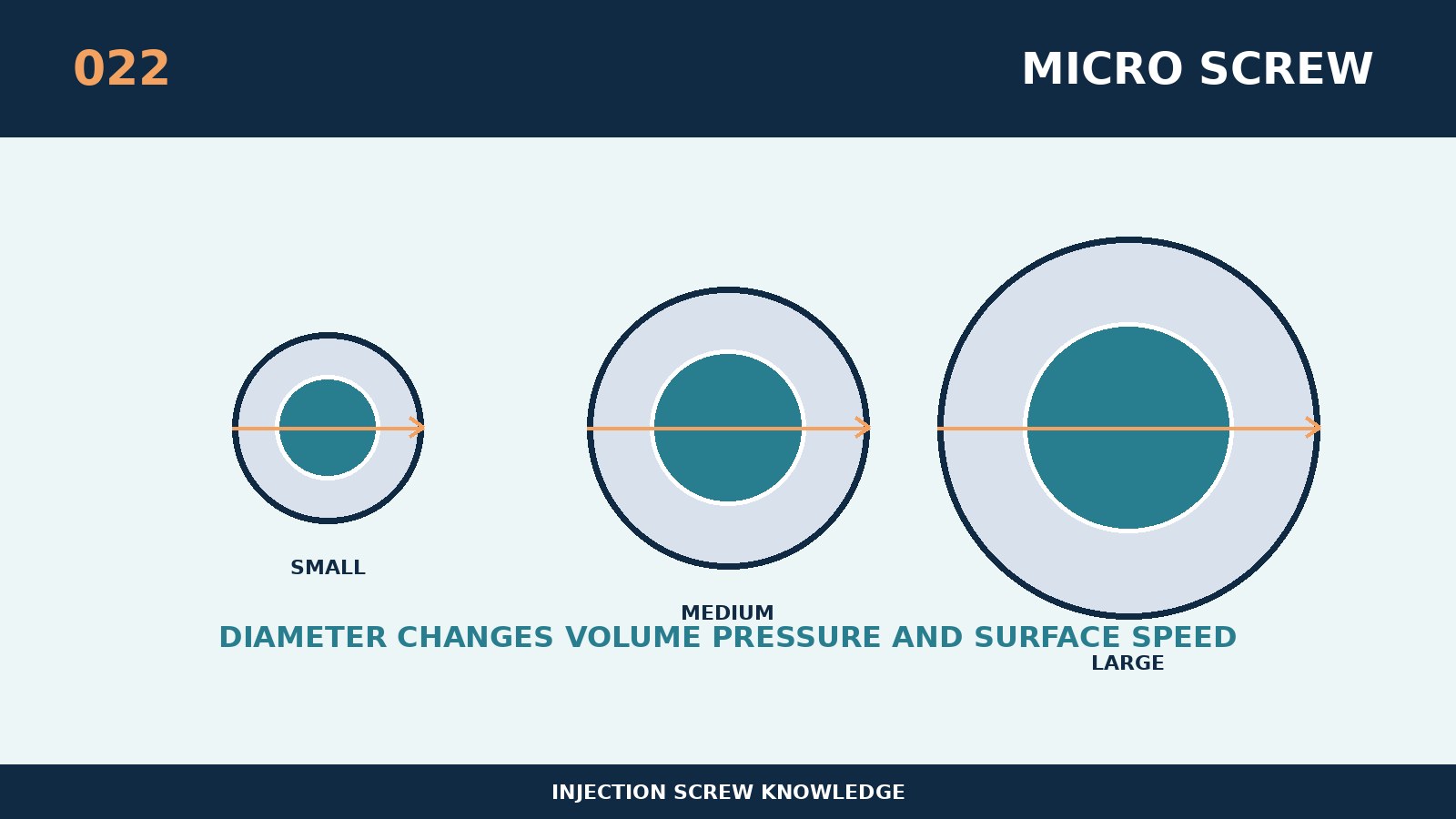
Why the small diameter spiral is better suited for micro-precision retrofitting is not an isolated parameter, but a key condition for influencing transmission, temperature rise, pressure and repetition in the plasticization system. The core is a small diameter screw that corresponds to smaller volume changes at the same process resolution, which facilitates micro-jet control. The smaller effective area translates the change in location into a more detailed measure of increments, but pressure demand and structural intensity also require calibration. The choice of diameter involves both reductive resolution, pressure capacity, plasticization, stop time and driver load and cannot be judged by product weight alone. It is recommended that the snails be expanded and the axle-sized chain compared to the material melting route, so that it can be seen which area is actually carrying the transmission, pressure or amalgamation function. Nominal specifications are therefore only the starting point, and the final conclusions must serve the actual resin, product and volume rhythm.
When customizing around “why small diameter screws are more suitable for finely finely retrofitting”, first collects the size of the equipment model, the original screw and the material drum, the driving power, the resin number and the filling system, the single mass, the cycle and existing defects. The specific selection principles for this topic are: micro-connectors, medical smalls and high-value materials may choose a special diameter based on single-modular weight and flow-rate ratio. Precision is recommended to track the mass, critical size and pressure exchange points of the product at the same time in order to distinguish between the fluctuations in plasticization and the effects of the mould or hydraulic system. The technical agreement should include quantifiable provisions for size benchmarks, key communications, material status and acceptance methods so that new, old and subsequent restorations can be compared under the same criteria.
The most important defence against the failure of the subject is that too small a diameter may reduce plasticization capacity and increase surface speed, and that a thin, long spiral also needs to focus on reversal and bending. Short-term increases in temperature or back pressure cover part of the structural problem but cannot be a long-term response if the twist, degradation or cycle deteriorates simultaneously. For on-site processing, only one main variable is changed each time and the measurement time, twist, melting temperature, mat, injection pressure and product weight are aligned to the same pattern. If production is to be sustained by excessive temperature, turn speed or back pressure, the use of parameters to mask structures, wear or collage should be discontinued.
This replicable option can be used to verify why a “small diameter screw” is more suitable for a finely fine retrofit: using standard deviations in the weight of a continuous product, a minimum stabilization cushion, measuring process resolution and peak pressure assessment accuracy. The results of the validation should be the denominator of the eligible products, while counting the time spent on energy consumption, cleaning, stoppage and maintenance, which is closer to real value than a separate comparison of the purchase price. Inquiries to suppliers should also be accompanied by information on resins and fillings, risk of flame retardation or corrosion, total weight of products and fluids, photographs of available screws and equipment curves. The programme is considered to have a stable engineering value when the detection data, the good product rate, the timing of the switch and the unit cost of the eligible goods are improved.