
How do you learn how to turn the length of a spiral when it increases? Nuclear
Release time:2026-09-20
The increase in length will magnify the turning angles and scratches under the same twists, with higher requirements for medium, dynamic responses and fatigue. From the working principles, selection conditions, common risks and certification methods, how to reverse the nuclei after an increase in the long-wire ratio of the screws, help the retrofitting plant to stabilize plasticization and reduce the full-life costs of the screws.
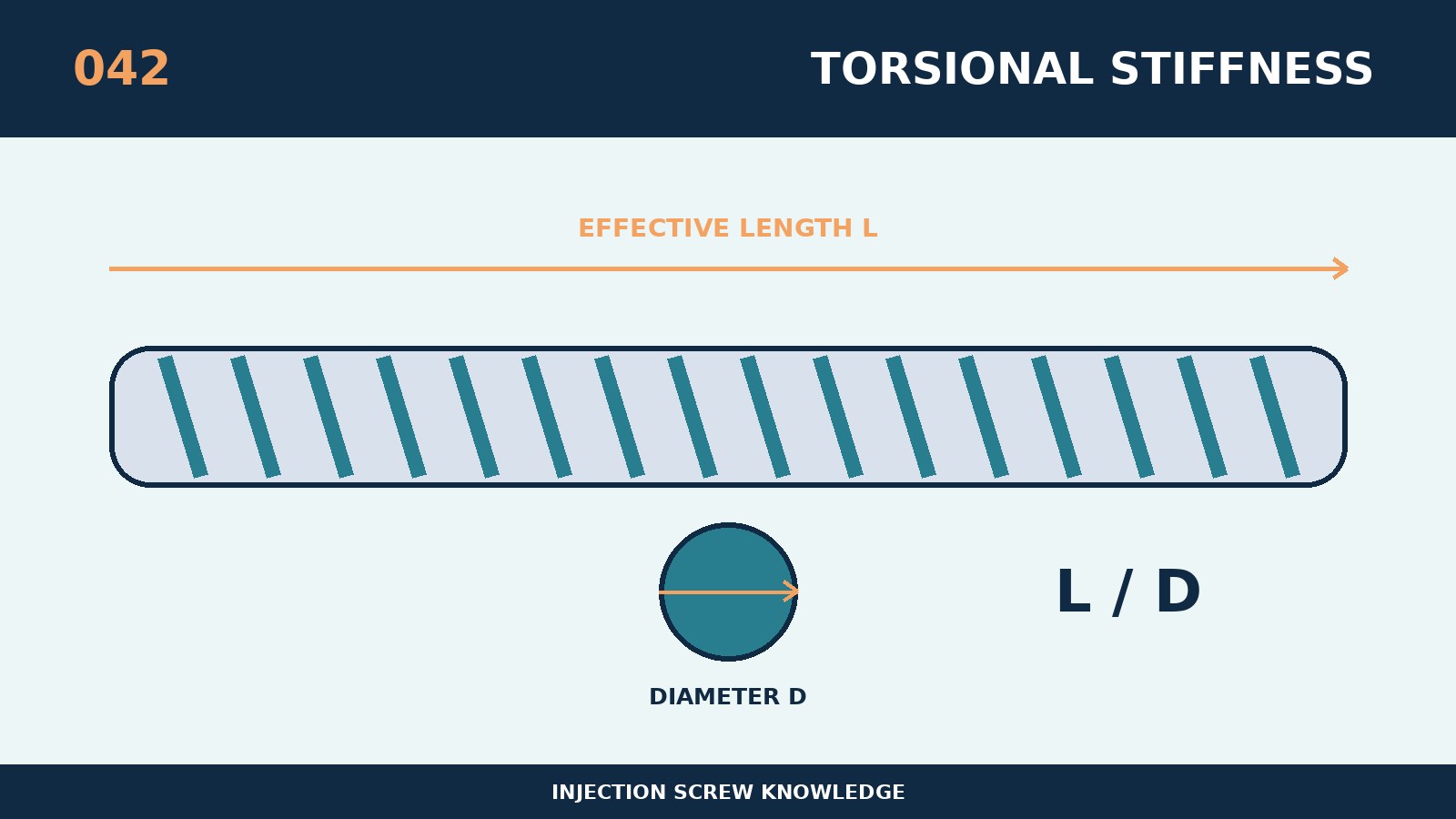
The calibration of the condensed length of the spiral relative to the increase is not an isolated parameter, but a key condition for influencing transmission, temperature rise, pressure and repetition in the plasticization system. At its core, the increase in length magnifies the turning angles and scratches under the same twists, requiring higher demands for medium, dynamic responses and fatigue. The deformation of a fine long axis is determined not only by the strength of the material, but also by the core diameter, hole, end-end connection and support. The long-range ratio is only a geometric entry, and what really determines is the effective length, distribution of the functional segments, actual production and material heat history. Parameter decision-making can be based on a failure push: short-shot, black spot, product fluctuations and overloading are listed first, and then the geometrics are identified to block the failure chain. Nominal specifications are therefore only the starting point, and the final conclusions must serve the actual resin, product and volume rhythm.
When customizing around "how to calibrate when the long-wire ratio of the screw increases and reverses the condensation", first collects the size of the equipment model, the original screw and the material drum, the driving power, the resin number and the filling system, the single mass, the cycle and the existing defects. The specific selection principle for this topic is that the length of the screw should be re-engineered in a manner that is nuanced, critical turn-off, bending, thermal expansion and co-opting. If the device can export a curve, the original record of screw position, turn speed, twist, back pressure and time should be kept, so as to avoid only being assessed by the operator. The technical agreement should include quantifiable provisions for size benchmarks, key communications, material status and acceptance methods so that new, old and subsequent restorations can be compared under the same criteria.
The most important defence against the failure of the subject is that only static intensity can be met by vibrations, unilateral wear and tear, or fatigue, in initial and load fluctuations. The removed parts shall retain directional markings and record grinding marks, corrosive pits, discoloration and residues in the order in which the loading end reaches the front end, and establish a retroactivity map. For on-site processing, only one main variable is changed each time and the measurement time, twist, melting temperature, mat, injection pressure and product weight are aligned to the same pattern. If production is to be sustained by excessive temperature, turn speed or back pressure, the use of parameters to mask structures, wear or collage should be discontinued.
This replicable program can be used to verify how "reverse the strength after the increase in the length ratio of the screw": the remaining amount of the structure is confirmed by computation, empty jump, load twisting, and periodic straightness tests. The first data is stored as a baseline for the equipment, and each subsequent maintenance is based on the same material number, quantity and sampling method in order to be able to detect a drift. Inquiries to suppliers should also be accompanied by information on resins and fillings, risk of flame retardation or corrosion, total weight of products and fluids, photographs of available screws and equipment curves. The programme is considered to have a stable engineering value when the detection data, the good product rate, the timing of the switch and the unit cost of the eligible goods are improved.