
Selection of equidistance screws and modulation screws in a plume screw
Release time:2026-09-20
The transport affects the axle transport distance at the turn of the unit and changes the way the particles roll and stay in the snail. From the principles of work, selection conditions, common risk and certification methods, the choice of the equidistance screw and the modulation screw in the plume screw helps to stabilize the plasticization of the plume and to reduce the full life cost of the screw drum.
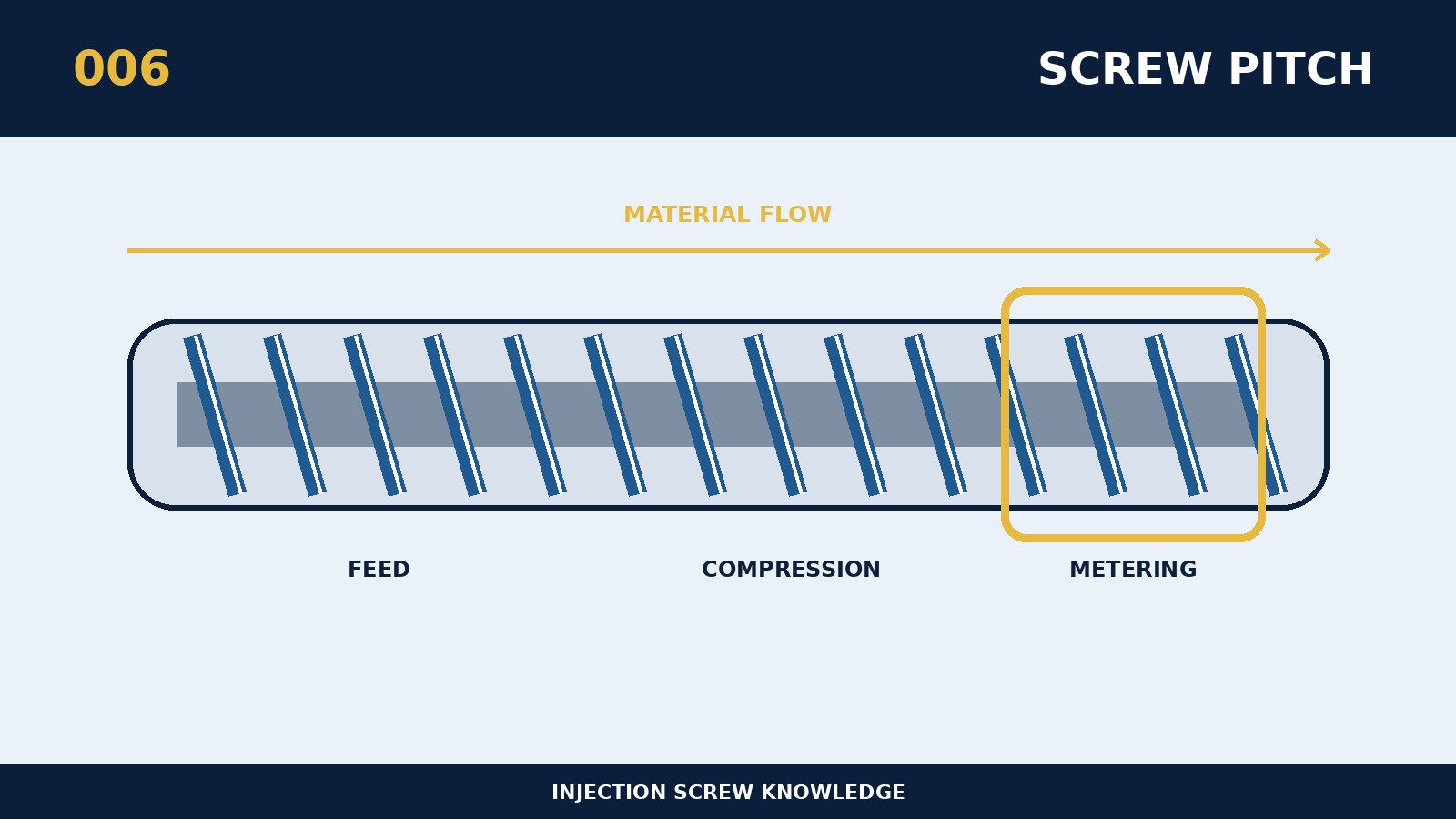
The choice between the equidistance screw and the modulation screw in the plume screw is determined by placing the structure size, material behaviour and actual production load in the same logical chain. The core is the directional transport distance of the directional direction which affects the unit rotation, and changes the way the particles roll and stay in the screws. Equivalent structures are easy to process and maintain, and the transformation process structure can redistribute the delivery rhythms to feed-pressure, exhaust or aggregate demand. Structural parameters are interconnected and any local modifications are evaluated in the complete path of transport, melting, mixing, metrology and cleaning. If the same platform is to cover a variety of resins, the three extremes that are the most difficult to melt, the most afraid of cutting and the most susceptible to degradation are applied separately. Nominal specifications are therefore only the starting point, and the final conclusions must serve the actual resin, product and volume rhythm.
When customizing around " Selection of equidistant screws and modulation screws in the plume screws " , first collects the actual dimensions of the equipment model, the original screw and the material drum, the driving power, the resin plate number and the filling system, the sum, cycle and existing defects. The specific selection principles for this topic are that stabilization of generics should give priority to mature equidistance programmes, special powders, low pile-density materials or exhaust requirements for the assessment of transformational pathways. Precision is recommended to track the mass, critical size and pressure exchange points of the product at the same time in order to distinguish between the fluctuations in plasticization and the effects of the mould or hydraulic system. The technical agreement should include quantifiable provisions for size benchmarks, key communications, material status and acceptance methods so that new, old and subsequent restorations can be compared under the same criteria.
The most needed to guard against the failure of the subject is that, in the absence of a continuous transition of course changes, it causes stress mutation, accumulation and cleaning difficulties and increases the impact of creating errors. The removed parts shall retain directional markings and record grinding marks, corrosive pits, discoloration and residues in the order in which the loading end reaches the front end, and establish a retroactivity map. For on-site processing, only one main variable is changed each time and the measurement time, twist, melting temperature, mat, injection pressure and product weight are aligned to the same pattern. If production is to be sustained by excessive temperature, turn speed or back pressure, the use of parameters to mask structures, wear or collage should be discontinued.
This replicable option can be used to validate "the choice of the equidistant screw and the modulation screw in the plume": to compare the plasticity, the twist, the vent state and the coloring time of the same screw. Both the supply and demand parties shall agree on an end-point of life prior to manufacture, such as gap, weight fluctuations, black point rate or energy consumption per unit of production, avoiding delivery and determining different calibres. Inquiries to suppliers should also be accompanied by information on resins and fillings, risk of flame retardation or corrosion, total weight of products and fluids, photographs of available screws and equipment curves. The programme is considered to have a stable engineering value when the detection data, the good product rate, the timing of the switch and the unit cost of the eligible goods are improved.