
How the melting point characteristics of crystallized plastic affect compression That's right.
Release time:2026-09-20
The viscosity and volume state changes are evident when the crystallization material approaches the melting point, and there is a need to ensure continuous advancement of the melting interface. The working principles, selection conditions, common risks and validation methods illustrate how the melting point characteristics of crystallized plastics affect compression ratios, helping to stabilize plasticization in retrofitting plants and reduce the full-life costs of screw drums.
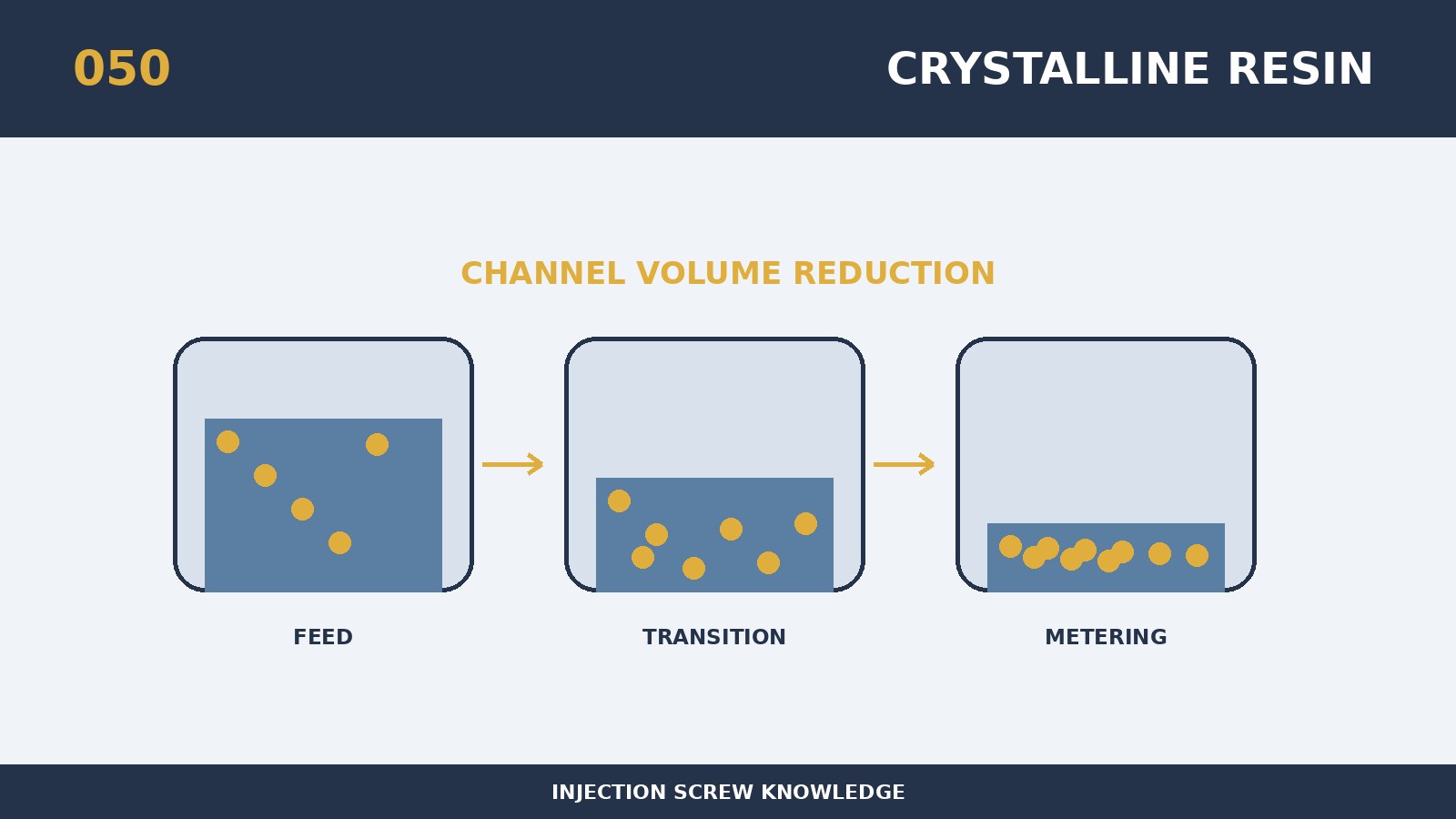
The melting point characteristics of crystallized plastics affect the compression ratio directly related to plastic quality and equipment loads, and therefore design, procurement, switch and maintenance personnel should use the same set of evaluation criteria. At its core, the crystallization material changes significantly in its viscosity and volume state as it approaches the melting point, and there is a need to ensure continuous advancement of the melting interface. Rational compression enhances exposure to solid beds and membranes, but material drying and crystallity also affect performance. Compression ratios must be understood in conjunction with the length of the compressed segment, the conductor, the depth of the tank, the back pressure and the material flow, and the individual comparison is easily miscalculated. It is recommended that the snails be expanded and the axle-sized chain compared to the material melting route, so that it can be seen which area is actually carrying the transmission, pressure or amalgamation function. Nominal specifications are therefore only the starting point, and the final conclusions must serve the actual resin, product and volume rhythm.
When customizing around “how the melting point characteristics of crystallized plastics affect compression ratios”, first the equipment models, original screws and material drums are collected for measuring sizes, driving capacity, resin number and filling systems, single mass, cycle and existing defects. Specific selection principles for this topic are: PP, PE, PA, POM, etc., should be designed on the basis of melting point, heat stability, humidity and shear sensitivity, respectively. If the device can export a curve, the original record of screw position, turn speed, twist, back pressure and time should be kept, so as to avoid only being assessed by the operator. The technical agreement should include quantifiable provisions for size benchmarks, key communications, material status and acceptance methods so that new, old and subsequent restorations can be compared under the same criteria.
The most needed to guard against the failure of the subject is that over-compression can lead to a twisting of the peak and overheating, while over-spills are left in high yield or unmelted. Three types of tests can be performed without load, steady state mass and seal, with a combination of phenomena to reduce the range of geometry, wear or temperature control problems. For on-site processing, only one main variable is changed each time and the measurement time, twist, melting temperature, mat, injection pressure and product weight are aligned to the same pattern. If production is to be sustained by excessive temperature, turn speed or back pressure, the use of parameters to mask structures, wear or collage should be discontinued.
Validation of “how the melting point characteristics of crystallized plastics affect compression ratios” can be used as a replicable option: guidance of temperature with differential data or a supplier window and observation of melting homogeneity, twist and product crystal defects. Both the supply and demand parties shall agree on an end-point of life prior to manufacture, such as gap, weight fluctuations, black point rate or energy consumption per unit of production, avoiding delivery and determining different calibres. Inquiries to suppliers should also be accompanied by information on resins and fillings, risk of flame retardation or corrosion, total weight of products and fluids, photographs of available screws and equipment curves. The programme is considered to have a stable engineering value when the detection data, the good product rate, the timing of the switch and the unit cost of the eligible goods are improved.