
Transparent material retrospect: photometric, temperature and clean plasticization
Release time:2025-08-07
Transparent materials for the screws? The core is to reduce the risks of cutting overheating and demurrage, while ensuring the polishing, measuring stability and cleaning of materials of the screws; the specific structures need to be determined in conjunction with optical indicators of materials and products such as PC, PMMA, PPSU, etc. This paper combines information on star-friend screw stations to organize selection, process and validation elements.
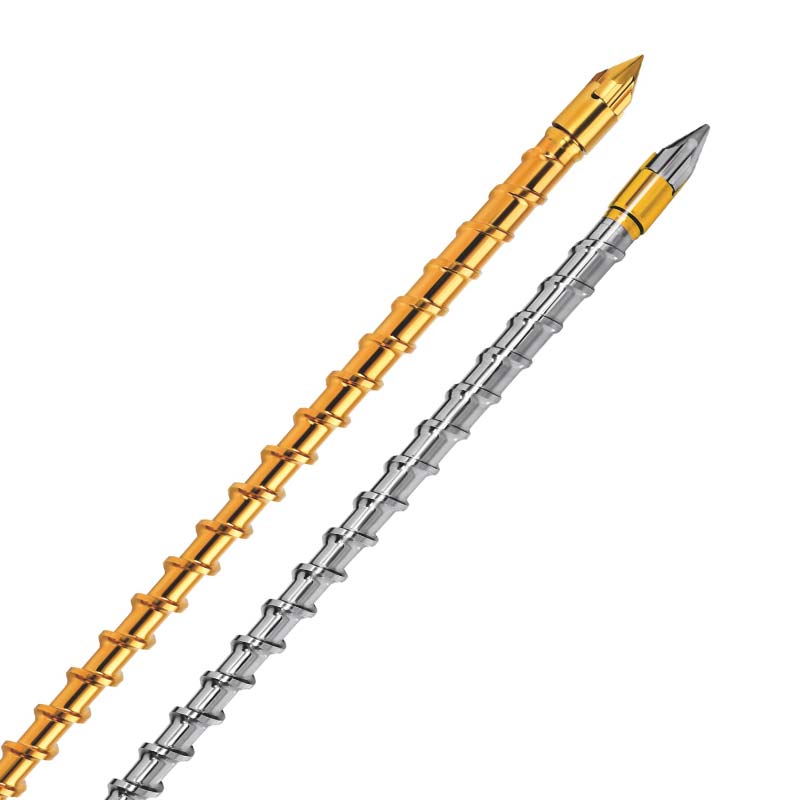
The core conclusion of transparency material for plastic screws
The core is to reduce the risks of cutting overheating and demurrage, while ensuring the polishing, measuring stability and cleaning of materials of the screws; the specific structures need to be determined in conjunction with optical indicators of materials and products such as PC, PMMA, PPSU, etc.
The key to high-transparent packaging: the programme for retrofitting screws and thermostats for transparency materials
In the area of high-transparent packaging, the apparent quality and perceivability of products such as transparent bottles and beverage cups directly determine their market competitiveness. Such products require not only over 90 per cent light penetration, but also the need to ensure that there is no surface, no internal bubbles and no mist to meet the requirements for high cleaning and beauty in the food, cosmetics and other industries. Currently, production efficiency and the value of products are severely constrained by the fact that production is often characterized by physical defects of up to 15-20 per cent due to inadequate equipment performance. This paper will analyse the process properties of transparency materials such as PETG, PC, PMMA, in the context of specific data, and describe how the transparency material is tailored to address the pain of production.
Core quality pain points and technology needs for high-quality packaging production
Quality evaluation standards for high-transparent packagings are extremely rigorous, with flow marks, bubbles, internal fogging and categorizing as three “lethal defects”. In terms of industry standards, transparent food-grade packaging requires a photometric rate of 92 per cent and a mist of 3 per cent, with no more than one bubble of 0.1 mm in diameter per square centimetre. However, when general equipment is used to process PETG bottles, the incidence of flow marks can be as high as 18 per cent, and the misty rate (>3 per cent) caused by internal fogification of the PC cup is as high as 12 per cent, which seriously affects the visualization and market recognition of the product.
Material characteristics determine the difficulty of processing: PETG is sensitive to cutting, when cutting speed exceeds 80s - At 0100, the lava is susceptible to directed crystallization, which forms a visible flow mark in the eye; the PC material fluctuates at temperatures above thorium At 1°C, degradation gases are produced by local overheating, forming bubbles, and their processing temperature windows are narrower (280-300°C), beyond which there is a change in colour or increased mist; the viscosity of PMMA smelts is extremely sensitive to temperature changes, and when the temperature difference exceeds 2°C, the flow evenity is destroyed and it is easy to form a “cool point” within the mould, as shown by the fog inside the mould. These data highlight the high level of requirements for the structure, surface state and temperature accuracy of the plume screws.
Technical parameters and performance advantages of a plastic screw dedicated to transparent materials
For the processing properties of high-transparent materials, three major breakthroughs were achieved in structural design, surface treatment and so on. Surface cleanliness, using ultra-precision electrolyte polishing technology, with rough surfaces controlled at Ra0.015 m, only 1.8 per cent of the normal plating screw (Ra0.8 m). This mirror-level surface reduces the length of stay of the molten slurry on the surface of the plume. The test showed that PETG residues were contained below 0.03 mg per time, that there was no significant accumulation of material after 300 consecutive productions and that air bubbles and impurities resulting from residual decomposition were avoided from the source.
Medium and low shearing is used for cutting and compressing control piping screws: the snail depth is 25-30% deeper than the normal piping screw, and the compression ratio is strictly between 1.5 and 1.8, which stabilizes the melting shear rate between 40-70s-1. Comparative experiments showed that the design would reduce the incidence of PETG bottle flow marks from 18 per cent to 2.3 per cent, and the mist excess rate of PMMA cups from 15 per cent to 1.1 per cent as a result of mist. At the same time, a 15% increase in the length of the pixmap scalding segment to ensure full plasticization and even mixing of the molten before entering the mold, and to avoid bubbles resulting from uneven plasticization - I don't know. The drop in the bubble deficiency rate for PC material from 10 per cent to 0.8 per cent was significant.
In material selection, the use of 316 L stainless steel matrix for retrofitting screws and their hardened treatment (hard thorium thorium thorium thorium 58) not only ensures the durability of surface photopurification, but also is resistant to high temperature and trace acid degradation products during PC processing, and is subject to a 1,000-hour saline mist experiment, with a useful life of more than twice that of the normal retrofit.
Technical indicators and synergies for thermostats
The combination of automatic temperature control devices and plastic screws for transparency materials is at the heart of the temperature sensitivity problem. The system uses the “Five Sector Temperature Control + Infrared Real-Time Monitor” model, with a temperature control accuracy of ± 0.2°C and a response speed of 20 ms, which is much higher than the control level of the normal equipment ± 1°C. In the case of PC cup production, the plume scal temperature can be stabilized at 290 ± 0.1°C to avoid degradation due to local overheating - When temperatures exceed 305 °C, the PC ' s gill index rises sharply from 0.05 to 0.6, which directly results in a 40 per cent increase in fog.
The system uses a double-ring temperature control algorithm, which can regulate heating power based on the melting pressure (equipment ± 0.1 bar) and real-time feedback dynamics of temperature. Test data show that during the 10-hour continuous production cycle, the standard temperature deviation of the PC Melting Body was controlled at 0.3°C, a 75% reduction from the traditional temperature control system. This stability has reduced the movement rate of PMMA materials (MFR) from ±5% to ±1.2%, ensuring that the temperature of the molten body entering the mould is even, and has fundamentally solved the problem of the mist in the mold - - The mist value of PMMA cups has stabilized at 1.8 per cent - 2.2 per cent, fully meeting industry standards.
Validation of effects in practical application
Data on the production of a beverage packaging enterprise show that the combination of high-transparent packagings increased from 82 per cent to 99.1 per cent, with the introduction of plastic screws and automatic temperature control devices for transparency materials. Specifically, the PETG transparency bottle-flow deficiency rate fell from 18 per cent to 2.1 per cent, the rate of bubbles dropped from 10 per cent to 0.7 per cent for PC cups and the misty rate (>3 per cent) from 12 per cent to 0.9 per cent for PMMA cups. The average permeability of products rose by 3.2 per cent to 95.3 per cent, and the fog level stabilized at 2.1 per cent, far above industry standards.
In terms of cost-effectiveness, as a result of the decline in the negative rate, the material utilization rate increased from 88 per cent to 97 per cent, resulting in annual savings of approximately $3.2 million in raw materials, based on the production of 50 million transparent bottles. At the same time, production efficiency has increased by 40 per cent and combined production costs have been reduced by 15 per cent owing to the extension of the equipment cleaning cycle from 8 to 120 hours.
The combination of plastic screws and automatic temperature control devices for the purpose of transparency materials, through extreme surface cleanness, precision cutting control and stable temperature management, successfully addresses the issues of flow marks, bubbles and fog in the production of high transparency packaging. As the consumer market upgrades its packaging appearance and quality requirements, the professional solution will become the standard configuration for high-end, transparent packaging production and drive the industry towards “zero defects” manufacturing.
Data to be recorded before implementation
- Material integrity number, filling ratio, flame-retarding system, refill ratio and dry condition.
- Note plastics brand, model, screw diameter, voltage, back pressure, turn speed and current screw structure.
- Indicators of product size, wall thickness, appearance or strength, and current adverse phenomena and frequency of occurrence.
- Continuous production cycle, refuelling frequency, machine clean-up method, wear and tear record and planned useful life.
How to validate the adjustment results
It is recommended that the current process baseline be established, followed by a single-variant test model. Each round records the measurement of time, melting temperature, product weight, formation cycle and bad rate, avoiding multiple parameters being changed at the same time to determine the cause. The parameters in the text are used to illustrate design thinking and should not replace material supplier data and on-site safety protocols.
What kind of support is a star-friend screw?
The Starfleet Mechanical Equipment Co. Ltd. (Starfing) provides a reset of materials and work evaluation, screw structure, base and surface treatment options, non-spectrum customization and trial modelling issues around transparent materials. The submission of information on raw materials, equipment and products could lead to more targeted programmes.
Ask for customized screws immediately, or check firstNote plastic screw productwithNote Plastic SolutionsI don't know.