
Industrial tool shell retrospect scheme: strength and stable plasticization
Release time:2025-08-07
Industrial tool-skinning screws? Industrial tool casings need to match both plastic properties, retrofitting specifications and product quality targets, and to confirm temperature rise, metrology, mixing and wear and tear performance through trial modelling data. This paper combines information on star-friend screw stations to organize selection, process and validation elements.
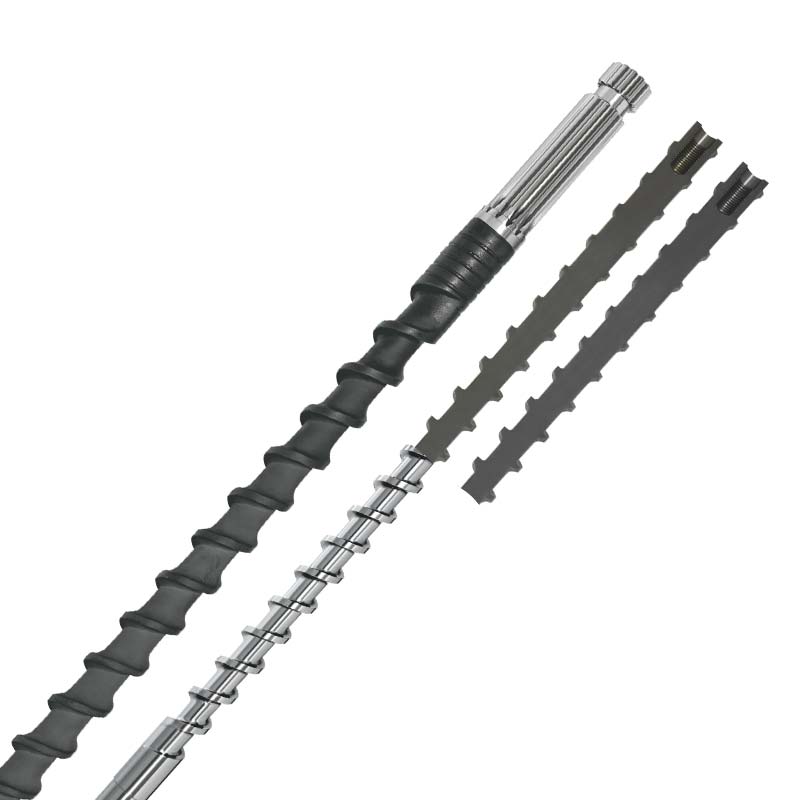
Core conclusion of the industrial tool case-in-silver screw
Industrial tool casings need to match both plastic properties, retrofitting specifications and product quality targets, and to confirm temperature rise, metrology, mixing and wear and tear performance through trial modelling data.
The strength of the industrial tool shell formation is assured: an enhanced structural segment of a plastic screw solution
In the area of industrial tools, the casings of equipment such as drilling, electrical tools and so forth not only serve to protect the barrier, but also to meet the functional requirements of shock and temperature resistance. These products need to meet the requirements of thallium 80MPa, thallium 60kJ/m2 (-30°C low-temperature) and thallium 95% (avoiding local wall thickness deviations above 0.3 mm). At present, the production of PA+GF (breathed nylon) casings for general equipment tends to be less than 70 per cent, with 35 per cent of the waste due to insufficient strength and 25 per cent due to uneven adhesive. This paper analyses the processing properties of PA+GF materials in the context of specific data, with a focus on how to improve the quality and useful life of products in the manufacture of automobile parts. Special plume screws with an enhanced structural component and applicable to PA+GF achieve high-intensity, evenly formed, and target production pain points.
Core quality pain points and technology needs for industrial tool shell production
Quality defects in industrial tool casings are closely related to material enhancement performance, formation homogeneity, etc. In terms of industry standards, professional-grade drill casings must undergo a 1.5-metre drop test (non-fissile), with a performance decline of 5 per cent in a long-term working environment ranging from -30°C to 80°C; the outer casings have a thickness deviation of 0.2 mm, which otherwise results in a fracture due to a concentration of stress.
The logic behind these pain points focuses on three aspects: first, the problem of strength. The uneven distribution of fibres in PA+GF materials (unit size > 100 mm) can result in intensity fluctuations of more than 20 per cent, with an average distribution of only 75 per cent of the fibres of the ordinary plywood screws, which is difficult to enhance; and, secondly, the problem of the platinum homogeneity. PA+GF is much more viscous, normal screw pressure transfer is inefficient (pressure loss > 15%) and is prone to remote filling (local impregnation); and third, temperature resistance to shocks. The molecular chain orientation of the normal screw processed product is uneven, resulting in a 30 per cent reduction in the cryogenic impact intensity (from 60kJ/m2 to 42kJ/m2) and failure to meet the requirements for extreme environmental use.
Enhancement of the technical advantages of structural plastic screws
For processing difficulties with PA+GF materials, the special piping screws with an enhanced structural component and applicable to PA+GF have achieved a precise structural and performance breakthrough:
Enhance hybrid structures to increase fibreglass fragmentation and intensity
The mid-heavy of the screws sets a triangle barrier mix (2.5 mm high, up 50% from the normal screw), which combines the reverse spiral design with multiple cuttings of the fibers. Test data indicate that the structure increased the split PA average of 30% of the fibre to 92% (75% of the normal screw) and reduced the size of the conglomerate from 120 m to less than 50 m; the stretching strength of the product from 70 MPa to 88 MPa increased from 50 kJ/m2 to 65 kJ/m2 and the low temperature shock strength of -30°C to 95% (70% of the normal screw processed).
Efficient pressure transfer to ensure that the acupuncture is even.
The spiral uses a high compression ratio of 4.0-4.5 (3.0-3.5) and optimizes the depth gradient of the screws (12 mm deep in the feed segment and 3 mm deep in the measure segment) with a 20% improvement in the pressure transfer efficiency of the molten body (the pressure loss is reduced to less than 5%). Production data show that the plume balance of the PA+GF case was raised from 75 per cent to 96 per cent, and the wall thickness bias was reduced from 0.4 mm to 0.15 mm; the incidence of the remote filling deficiency was reduced from 25 per cent to 3.2 per cent, and the impregnation defects were eliminated.
High-temperature and grinding design adapted to extreme conditions
The screws use dual-metal alloy material (matrix 42CrMo+WC-Co alloy coating, 0.8 mm thick) with a working temperature range of -50°C to 300°C. In a long-term working environment of 80 °C, the wear rate is only 1/5 of the normal screw (100.03 mm after 10,000 successive cycles). The product's temperature-resilient test showed that, after a 1000 hours of age at 80°C, the intensity decay rate was reduced from 8% to 3% of the normal screw, fully meeting long-term use requirements.
Validation of effects in practical application
Production data from a tool manufacturing enterprise show an increase from 68 per cent to 98.5 per cent in the success rate of PA+GF drill casings with a reinforced structural segment. In particular, the waste rate due to low intensity dropped from 35 per cent to 2.1 per cent, the bad rate due to uneven apostate fell from 25 per cent to 1.8 per cent; -30 °C low temperature shock strength stabilized at 58-62 kJ/m2, and the drop test success rate increased from 70 per cent to 99 per cent.
In terms of cost-effectiveness, the use of materials has increased from 75 per cent to 95 per cent, resulting in savings of about $6.8 million per year on raw materials in terms of annual production of 5 million shells; production efficiency has increased by 40 per cent and combined production costs have decreased by 28 per cent as a result of back-to-work and reduced performance testing time.
This enhances the stylization of the structural segment by increasing the fragmentation of the fibre, increasing the efficiency of the pressure transfer and perfecting the high-intensity demand for PA+GF material, while ensuring the homogeneity of the apostille and resistance to extreme environmental performance. As industrial instruments move in a light-quantitative and high-performance direction, the screws of this paragraph will become the core package for PA+GF shell production, and the enabling industry will move towards “high-intensity, high-reliability” manufacturing.
Data to be recorded before implementation
- Material integrity number, filling ratio, flame-retarding system, refill ratio and dry condition.
- Note plastics brand, model, screw diameter, voltage, back pressure, turn speed and current screw structure.
- Indicators of product size, wall thickness, appearance or strength, and current adverse phenomena and frequency of occurrence.
- Continuous production cycle, refuelling frequency, machine clean-up method, wear and tear record and planned useful life.
How to validate the adjustment results
It is recommended that the current process baseline be established, followed by a single-variant test model. Each round records the measurement of time, melting temperature, product weight, formation cycle and bad rate, avoiding multiple parameters being changed at the same time to determine the cause. The parameters in the text are used to illustrate design thinking and should not replace material supplier data and on-site safety protocols.
What kind of support is a star-friend screw?
The Starfleet Mechanical Equipment Co. Ltd. (Starfeng) provides materials and situational assessments, screw structure recommendations, base materials and surface treatment options, non-spectraction customizations and simulations around industrial tool casings. The submission of information on raw materials, equipment and products could lead to more targeted programmes.
Ask for customized screws immediately, or check firstNote plastic screw productwithNote Plastic SolutionsI don't know.