
Why do you have to be fully dry before the Paneylon is made?
Release time:2026-09-26
The PA molecular chain is humid, and water causes hydrolysis and lower molecular weights during high temperature plasticization. Material mechanics, plasticization parameters, risk diagnosis and validation methods explain why PANEL had to be fully dry before retrofitting, helping to stabilize the quality of the retrofitting plant and reducing waste and equipment losses.
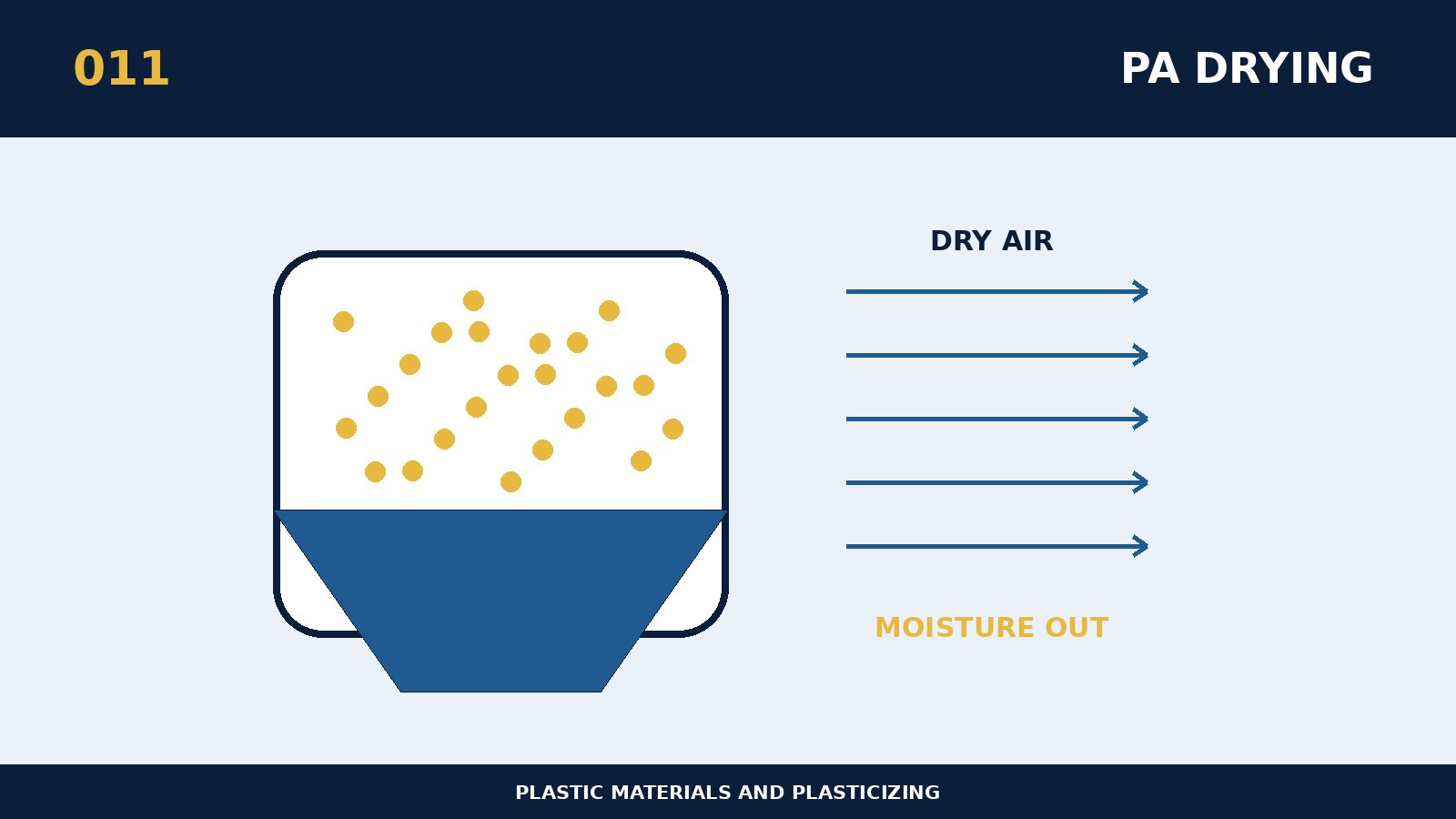
Control stability is to be controlled “why must be sufficiently dry before PANEL is retrofitted”, first of all by distinguishing between the intrinsic properties of the material, the state of the material and the thermomechanical effects imposed by the equipment. The key mechanism for this topic is the insinuation of alamide in the PA molecular chain and the hydrosis and reduction of the molecular mass during high temperature plasticization. Hydrological management encompasses drying capacity, spot, layer, transport and back-tide control, and the endpoint is the effective determination. Therefore, the name of the material and the recommended setting can only be used as a starting point, and the actual judgement is to return to the plate number, water, filling and assistor, the single total quantity, cycle, screw structure and product requirements to confirm whether the temperature, cut and stay of the material in the equipment is safe.
At the test-model or volume-import stage, an input list should be established around “why must be sufficiently dry before the PAnilong retrofit”, including feedstock suppliers and batches, technical data sheets, drying conditions, the ratio of colored mothers to retrofits, specifications of equipment to screws, product and flow weights, the temperature of moulds and existing defects. For products with multiple cavities or thin differences, the weight of the cavities should also be compared with the critical dimensions to prevent averages from covering up local problems. The main risk of the subject is that, based solely on the dryness of the particle surface, internal moisture is missing, leading to silver silk, cracks and a decrease in intensity. Parameters must be recorded in a specific pattern to distinguish material from equipment from operational changes.
Control methods should not begin with blindly increasing temperature or pressure, but should be based on "substance state - feed drying" The sequence of screw plasticization - nozzles and fluids - product results. Transparency, medical treatment or food-related products also need to be integrated into the same set of acceptance standards for cleaning, smell, analysis and traceability. The site adjusts only one main variable at a time, while observing the actual melting temperature, measuring time, screw twists, mats, injection pressure, product weight, colour, scent and critical dimensions. If production can only be sustained by extreme parameters, the use of a switch to cover the material or hardware boundary should be discontinued.
The validation of “why must be sufficiently dry before the PANilon plating” suggests a replicable approach: use of spot drying and detection of endpoint water rates to compare impact performance and appearance. The data should be validated by programme, quality and equipment personnel to avoid miscalculation of material, mould and mechanical problems. The technical agreement between the supplier and the plant shall state the material, the sampling method, the detection project, the permitted scope and the change notification requirements. The plasticization programme can only be considered to have long-term quantitative value if the product ' s probabilities, performance, cyclicality, energy consumption and maintenance costs are met in a continuous production process.