
How do you explain the end of a dedicated screw to the client?
Release time:2026-09-22
For the sales and project manager, describe the verification methods for mapping, design evaluation, material procurement, processing and thermal processing, analyse the risk that a commitment to the final date would mask the technical identification of risk, and provide a validation recommendation for the identification, manufacture and validation phase and nodal punctuality and change response.
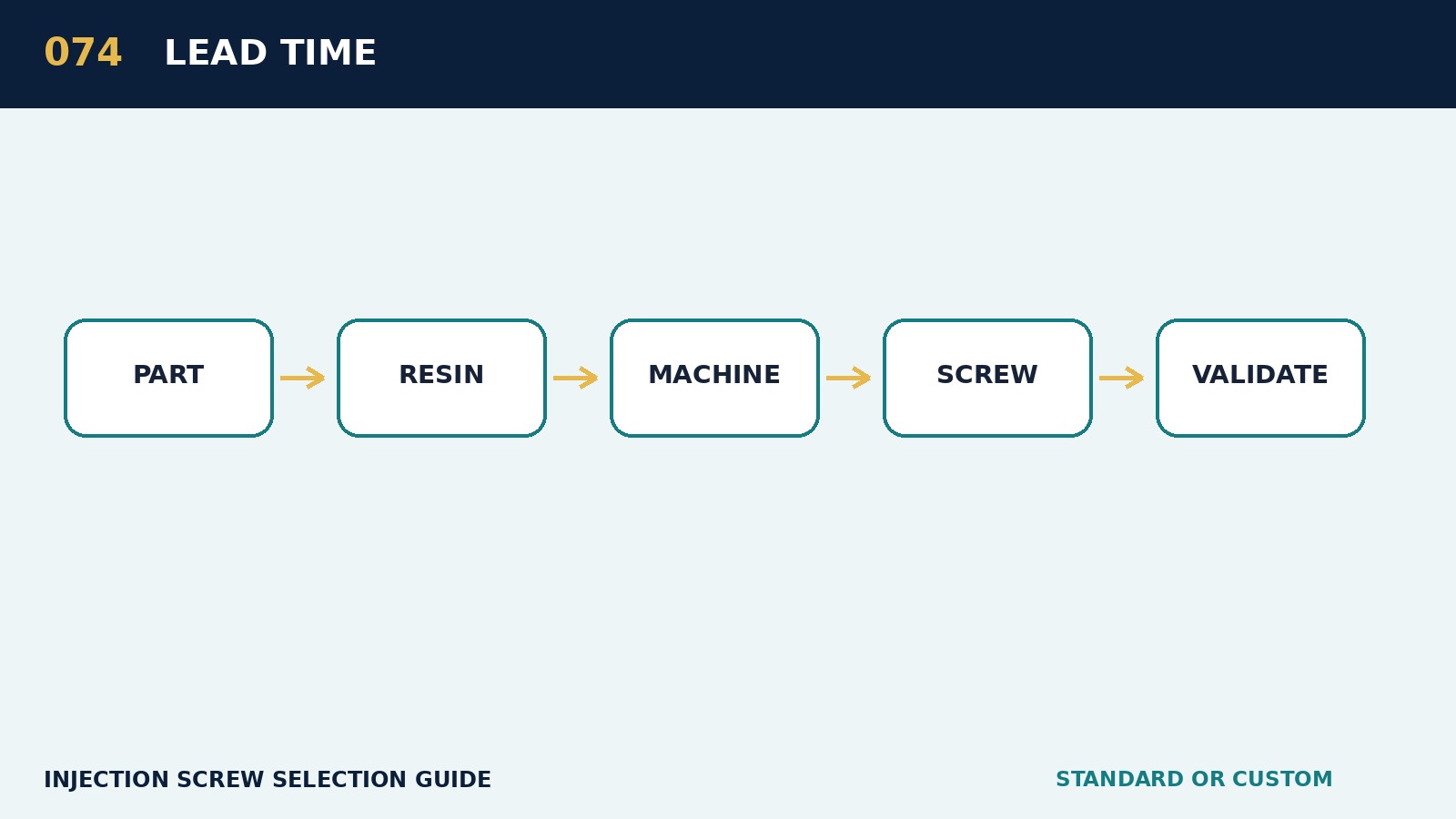
When the project involves cross-cutting communication, the screwdriver programme must start from the actual production tasks of the client. The sales and project manager is required to organize mapping, design evaluation, material procurement, processing and thermal processing into a set of verifiable, calculable and retroactive entry conditions.
The value of technology sales is to reduce the risk that customers will miss the equipment and accessories. Sales personnel need to close the demand questionnaire, technical evaluation, quotation boundaries, delivery nodes and post-sale recording, so that customers know what data each recommendation is based on, and that internal design and manufacturing teams have consistent information. Technical communication distinguishes between three types of objectives that must be met, desired improvement and acceptable. It is necessary to meet the hard boundary of the item for the determination of equipment and screws, and it is hoped that the improvement item will be used for the comparison of standards and specialized programmes, while the acceptable item will help to control costs and deadlines. This would avoid stacking all requirements on a screw and would make it easier for clients to understand the real value of each configuration.
Site information should preferably include both photographs, short videos and data sheets. Photos are used to identify machine interfaces, screw tails and front-end components, video can be observed to measure, buffer and abnormal sound, and data tables are used to calculate the rate of application, the need for plasticization per hour and the length of stay. If only partial information can be obtained, a list should be provided for confirmation, rather than a tentative condition being a definitive conclusion. The focus of the discussion here is mapping, design evaluation, material procurement, processing and thermal processing, which must correspond to the customer ' s current production conditions and not be limited to the maximum values in machine samples.
The project advance could be divided into identification, manufacturing and certification phases, with a review of sales, design, process and customer participation. The evaluation focused on the completeness of the input data, whether the assumptions were confirmed by the client, whether the mechanical interfaces were matched, how standards and specialized programmes were selected, and who provided the acceptance data.
The main risk of this scenario is that only a commitment to a final date would mask the technical recognition of risk. The issue of whether or not to be derived from a screw should first be excluded from drying, heating ring, thermal voltage, nozzles, reversible rings, wear and tearing of the material drums and changes in process parameters. The use of exclusions is more reliable than the direct replacement of components and also protects the time and cost of both the seller and the client.
Upon completion of the project, the delivery was concluded with nodal punctuality and change response, and the size test, material or thermal treatment certificate, trial modelling records and maintenance recommendations were archived. Sales teams can return after three months or a ton agreement to compare plasticization time, energy consumption, product fluctuations and wear and tear trends. For aluminum manufacturers and vendors, professionalism is reflected in the ability to translate the client language into engineering parameters and to interpret the programme into production, quality, maintenance and cost results that the client can understand. The establishment of a standard process around exchange-time communication would not only improve the accuracy of the selection but also create a reusable machine and application database.