
Why the screwdriver error caused the plastic cycle fluctuations
Release time:2026-09-20
The error of the route alters the effective volume and axle-direction rhythm of the snails and creates a cyclical disturbance of the pressure. The working principles, selection conditions, common risks and certification methods explain why screw-threading error leads to plastic cycle fluctuations, help retrofitting plants stabilize plasticization and reduce the full-life costs of screw drums.
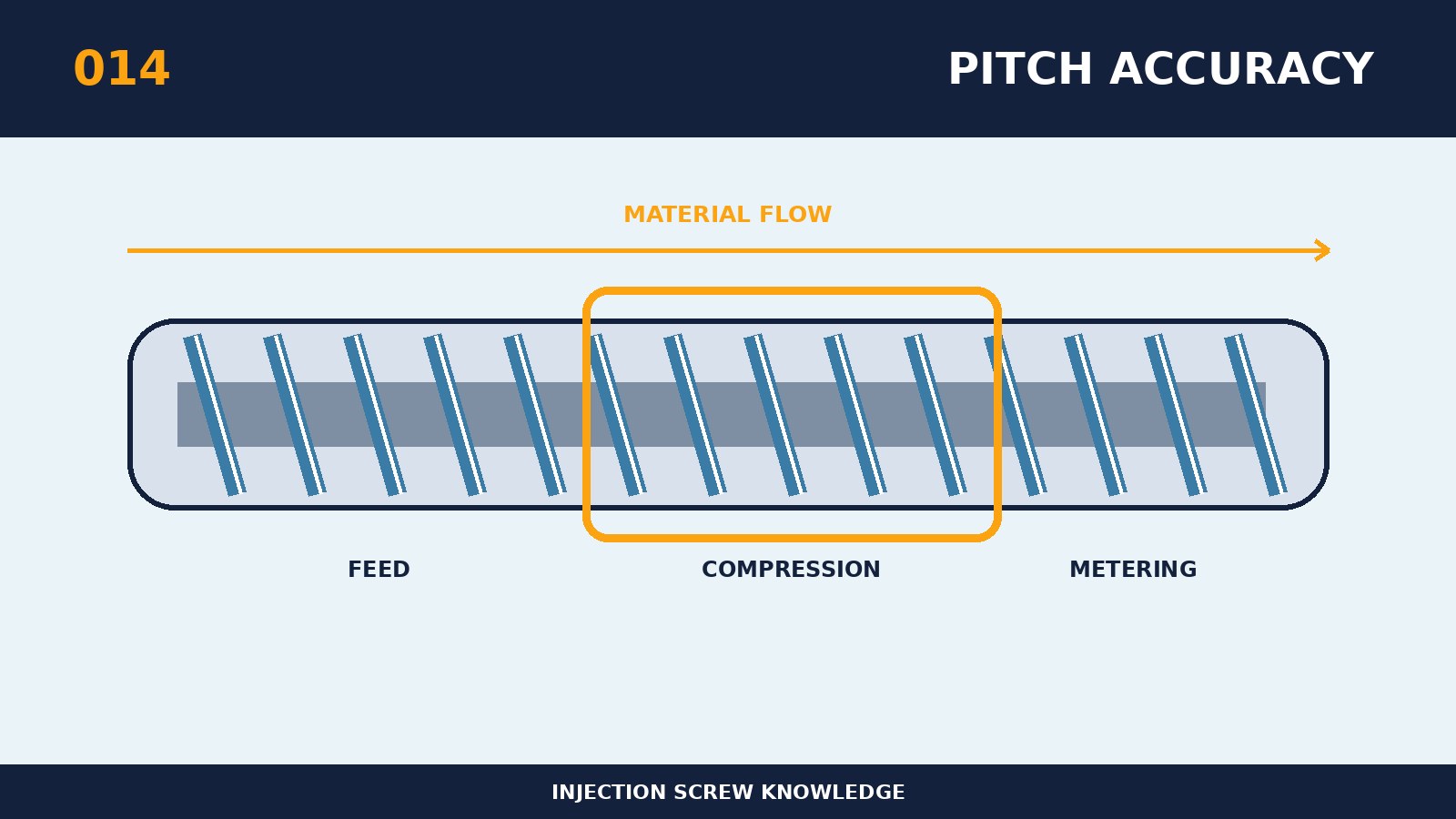
The reason why the screwdriver error causes a plastic cycle fluctuations is correct, not only by reference to the size of the old piece or to the device label, but also by understanding the true change in the material in the snail. The core is that the error of the conductor alters the effective volume and axle pacing of the snails, so that the pressure is cyclically disturbed. Even if the average conductor is correct, local accumulation errors may cause the solid bed to glaze and create abnormal friction. Structural parameters are interconnected and any local modifications are evaluated in the complete path of transport, melting, mixing, metrology and cleaning. Parameter decision-making can be based on a failure push: short-shot, black spot, product fluctuations and overloading are listed first, and then the geometrics are identified to block the failure chain. Nominal specifications are therefore only the starting point, and the final conclusions must serve the actual resin, product and volume rhythm.
When customizing around "why is the screwdriver error causing plastic cycle fluctuations" the equipment model, original screw and material drums are first collected for actual dimensions, driving capacity, resin plate numbers and filling systems, single mass, cycle and existing defects. The specific selection principles for this topic are that a precision screw should conduct a single-segregation conductor, cumulative conductor, coaxial and surface roughness test set. Precision is recommended to track the mass, critical size and pressure exchange points of the product at the same time in order to distinguish between the fluctuations in plasticization and the effects of the mould or hydraulic system. The technical agreement should include quantifiable provisions for size benchmarks, key communications, material status and acceptance methods so that new, old and subsequent restorations can be compared under the same criteria.
The most needed to guard against the failure of the subject is the fact that, when the error is too large, the rate of change is stable, but the measurement of time-cycle fluctuations, local wear and tear bands and mixing is uneven. Three types of tests can be performed without load, steady state mass and seal, with a combination of phenomena to reduce the range of geometry, wear or temperature control problems. For on-site processing, only one main variable is changed each time and the measurement time, twist, melting temperature, mat, injection pressure and product weight are aligned to the same pattern. If production is to be sustained by excessive temperature, turn speed or back pressure, the use of parameters to mask structures, wear or collage should be discontinued.
This replicable option could be used to verify "why the screwdriver error caused the plastic cycle fluctuations": The results of the tri-coordinate or special mass test are analysed in relation to the rectangular waveform, measuring curves and wear position. Material furnace numbers, heat-processing curves, surface cross-sections and terminal records can be kept for key parts to facilitate the distinction between material and use when subsequent failures occur. Inquiries to suppliers should also be accompanied by information on resins and fillings, risk of flame retardation or corrosion, total weight of products and fluids, photographs of available screws and equipment curves. The programme is considered to have a stable engineering value when the detection data, the good product rate, the timing of the switch and the unit cost of the eligible goods are improved.