
Why is the cone of the end of the spiral the focus of the crack-resistant design?
Release time:2026-09-20
The end of the screw, the end of the thread and the cross-section mutations are prone to stress concentration, which is a common starting point for reversing fatigue. The working principles, selection conditions, common risk and validation methods explain why the end of the screw is the focus of the fracture-resistant design, helping to stabilize the plasticization plant and reduce the full life cost of the screw drum.
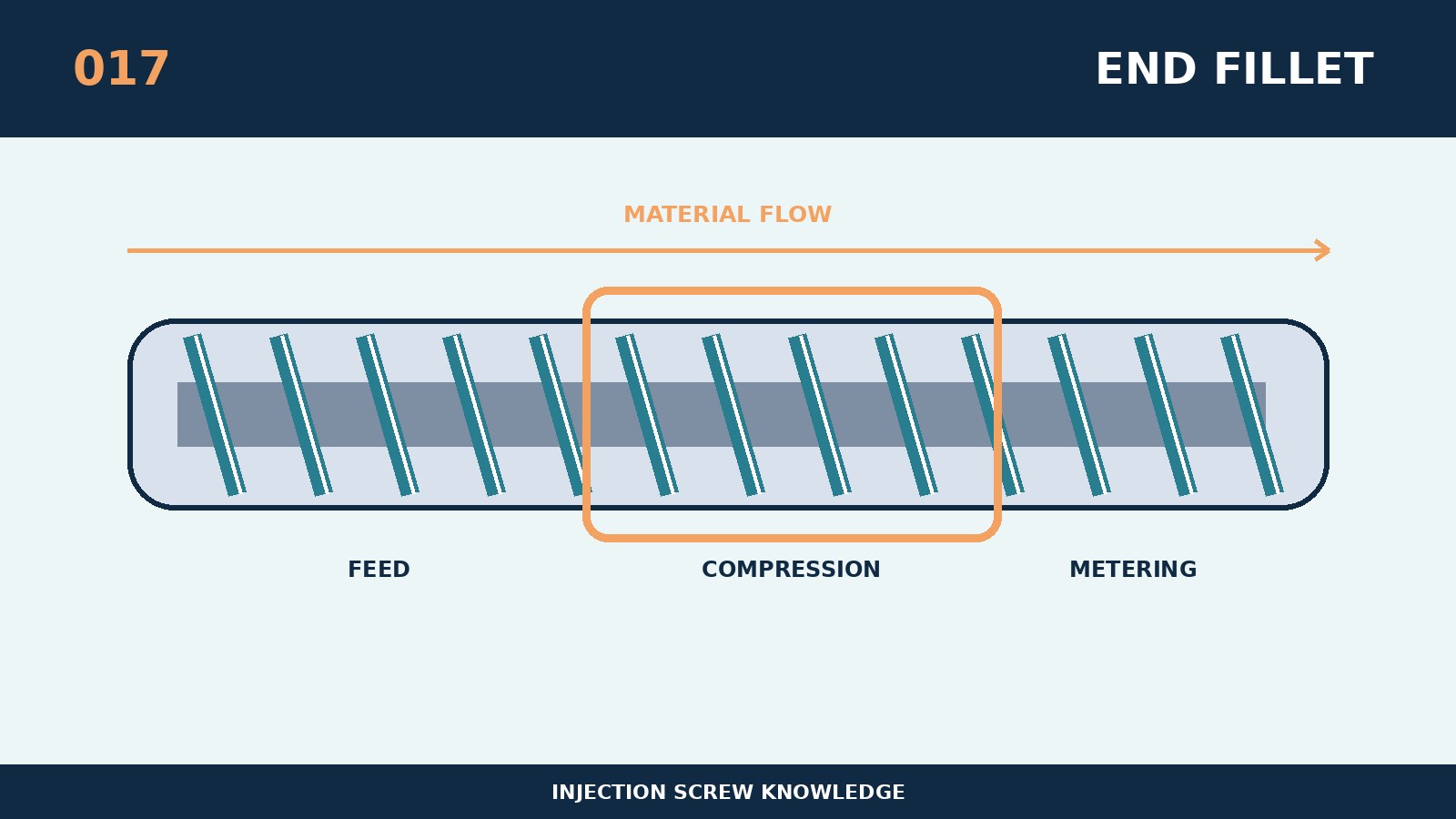
Why is the conical angle of the end of the screw being the focus of the anti-fragmentation design not an isolated parameter, but a key condition for influencing transport, temperature rise, pressure and repetition in the plasticization system? The core is the end of the screw, the end of the thread and the transect mutation, where stress is easily concentrated and is a common starting point for reversing fatigue. The right round angle allows for a smooth transition of stress along the cross-section, while reducing the gap effect of heat treatment and grinding. Structural parameters are interconnected and any local modifications are evaluated in the complete path of transport, melting, mixing, metrology and cleaning. A usable manufacturing map is not only a common name, but also a signal, a measuring transect, a surface state and a receiving and inspection belt to accompany the drum. Nominal specifications are therefore only the starting point, and the final conclusions must serve the actual resin, product and volume rhythm.
When customizing around "Why the end of the screw is the focus of the crack-resistant design", first collects the size of the equipment model, the original screw and the material drum, the driving capacity, the resin plate number and the filling system, the single mass, the cycle and existing defects. The specific selection principle for this topic is that high-twisting materials, frequent start-ups and equipment that used to be calculus should be more focused on round radiuss and surface defects. The specimen shall keep the batch of raw materials, the baking conditions and the mold cooling, and shall determine the spiral reaction by measuring the time, peak twist and actual melting temperature. The technical agreement should include quantifiable provisions for size benchmarks, key communications, material status and acceptance methods so that new, old and subsequent restorations can be compared under the same criteria.
The most important defence against the failure of the subject is that sharp horns, knife marks, burns and micro-cleavages can spread under repeated loads, resulting in a sudden break. When the size is still satisfactory and performance is abnormal, the same axiality, roughness of the surface, partial loss of coatings and thermal deformation are also examined and not only the outer diameter. For on-site processing, only one main variable is changed each time and the measurement time, twist, melting temperature, mat, injection pressure and product weight are aligned to the same pattern. If production is to be sustained by excessive temperature, turn speed or back pressure, the use of parameters to mask structures, wear or collage should be discontinued.
This replicable approach can be used to verify "why the end of the screw is the focus of the fracture-resistant design": using magnets or permeability tests, surface roughness checks and twist history discs, and calibrating the strength of the nuclear structure if necessary. Both the supply and demand parties shall agree on an end-point of life prior to manufacture, such as gap, weight fluctuations, black point rate or energy consumption per unit of production, avoiding delivery and determining different calibres. Inquiries to suppliers should also be accompanied by information on resins and fillings, risk of flame retardation or corrosion, total weight of products and fluids, photographs of available screws and equipment curves. The programme is considered to have a stable engineering value when the detection data, the good product rate, the timing of the switch and the unit cost of the eligible goods are improved.