
How the barrier screws separate the solid bed from the melt.
Release time:2026-09-20
The barrier's sub-prendering divides unmelted solids and melted bodies into different corridors, making the melting interface more manageable. The working principles, selection conditions, common risk and certification methods explain how a barrier-type screw separates a solid bed from a molten one, helping to stabilize the pyrotechnic plant and to reduce the full life cost of a screw drum.
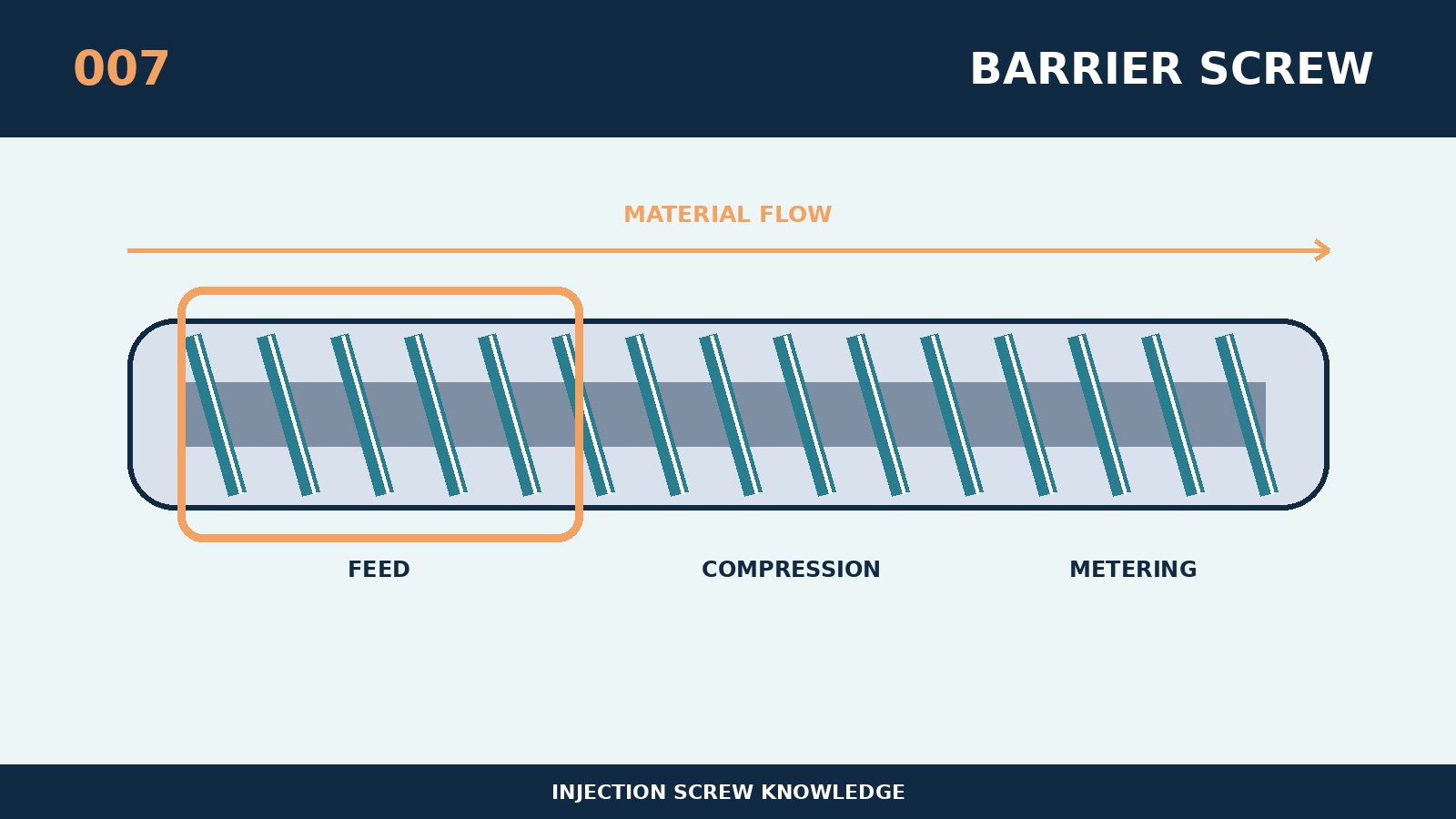
How a barrier-type screw separates a solid bed from a molten one is not an isolated parameter, but a key condition for influencing transport, temperature rise, pressure and repetition in a plasticised system. At its core is the barrier sub-prime which divides unmelted solids and melted bodies into different corridors, making the melting interface more manageable. Meltings can cross the barrier gap into the sluice, while larger solid particles continue to follow the sluice and gradually melt. Structural parameters are interconnected and any local modifications are evaluated in the complete path of transport, melting, mixing, metrology and cleaning. Parameter decision-making can be based on a failure push: short-shot, black spot, product fluctuations and overloading are listed first, and then the geometrics are identified to block the failure chain. Nominal specifications are therefore only the starting point, and the final conclusions must serve the actual resin, product and volume rhythm.
When customizing around “how to separate a solid bed from a molten one by a bolt of a barrier,” first collects the size of the equipment model, the original screw and the material drum, the driving capacity, the resin plate number and the filling system, the sum of the single simulator, the cycle and existing defects. Specific selection principles for this topic are: applications that are suitable for the narrower, more productive, or sensitive to unmelted particles of plasticized windows, provided that the structure is designed for resin flow variability. A more conservative plume approach begins with a medium back pressure and surface line velocity and expands the process window one by one after the heat balance. The technical agreement should include quantifiable provisions for size benchmarks, key communications, material status and acceptance methods so that new, old and subsequent restorations can be compared under the same criteria.
The most important defence against the failure of the subject is that too small a gap in the barrier can cause stress and cut too high, too large can lose the effect of diversion, and the dead end can make refuelling more difficult. Bad pictures are bound to the same pattern as the equipment curve and raw material records, otherwise only the defective name cannot be judged to have been caused by a screw. For on-site processing, only one main variable is changed each time and the measurement time, twist, melting temperature, mat, injection pressure and product weight are aligned to the same pattern. If production is to be sustained by excessive temperature, turn speed or back pressure, the use of parameters to mask structures, wear or collage should be discontinued.
This replicable program can be used to verify “how a barrier-type screw separates a solid bed from a molten one”: the actual sifting, actual smelting temperature, plasticization and colour exchange tests to verify whether solid separation produces real value. If the programme involves new materials or layers, it can be scaled up in stages under controlled production, and the quality of wear and tear is reviewed at each stage. Inquiries to suppliers should also be accompanied by information on resins and fillings, risk of flame retardation or corrosion, total weight of products and fluids, photographs of available screws and equipment curves. The programme is considered to have a stable engineering value when the detection data, the good product rate, the timing of the switch and the unit cost of the eligible goods are improved.