
How the high-probation formula selects the screw material and the hard layer
Release time:2026-10-02
For end-of-pipe aggregation plants, to explain how the hyperbole formula selects the screw material and the hardened layer, combining product, raw material, platform, production, life cycle and life data to reduce the cost of scrap, shutdown and life cycle.
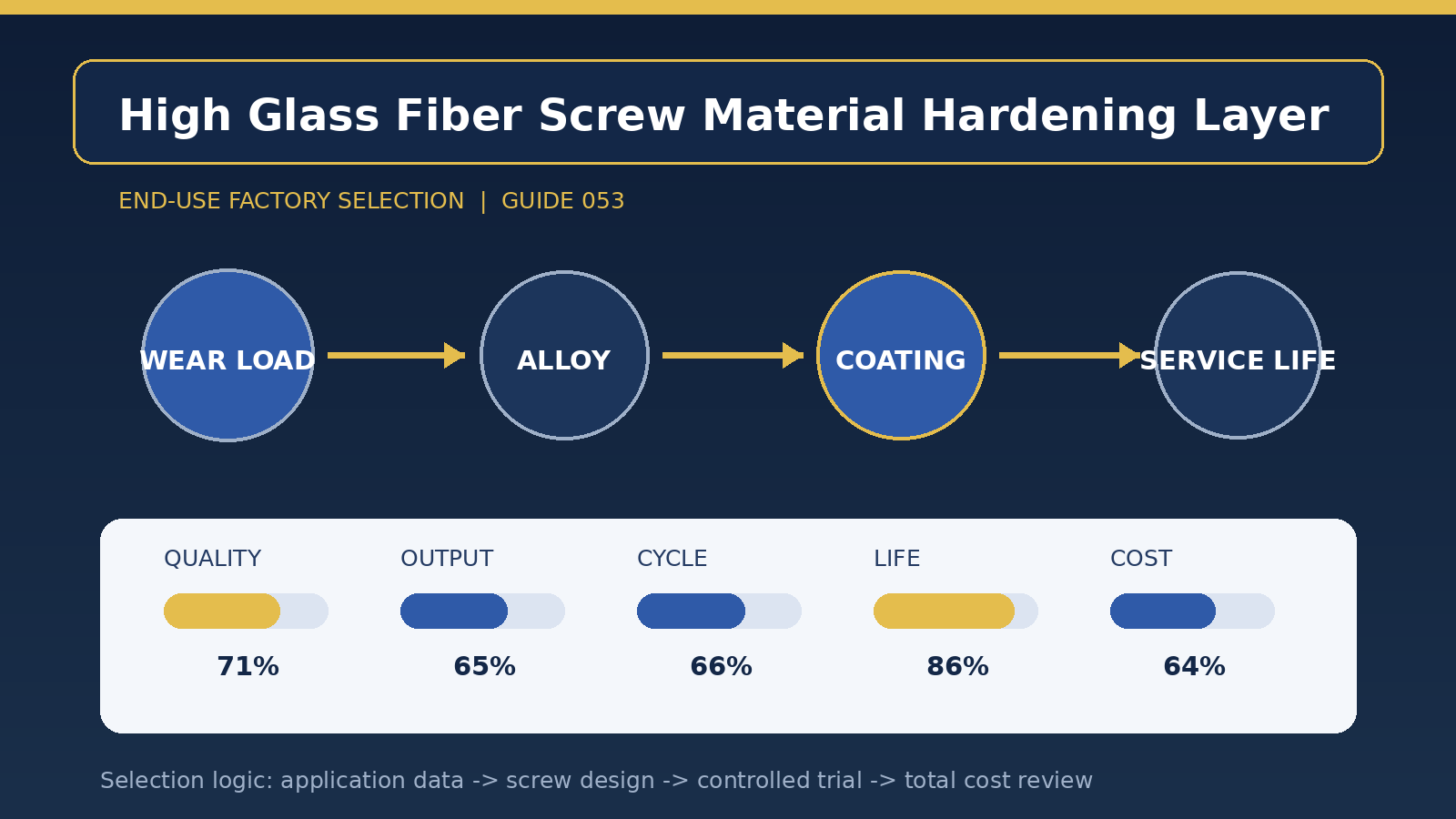
[Scene definition] How the HPV formula selects the screw material and the hardening layer is to start from the real volume scene of the plant and not just the diameter or price of the screw. It is recommended that the filling content, corrosive media, temperature and operating hours be first collated and then stratified by batch of raw materials to prevent miscalculation of formulation fluctuations as a matter of equipment. The aim of this step is to establish comparable old programme benchmarks so that subsequent screw changes can be supported by data.
The easiest to ignore is the rate of wear and tear, the growth of the gap and the sudden failure. Plants should place red lines of quality and equipment loads at the same time as key products, and indicate variable and non-variable conditions in the demand table to reduce programme recurrence. Vendors can make retroactive trade-offs between interoperability, earmarking and cost when there are clear values for product weight, daily production, customer quality caps and allowed stop times.
The main line of the case [design focus] is the selection of materials, thermal treatment and surface layer based on the wear and tear machine. In geometric and material programmes, priority should be defined between interoperability and earmarking, so as to prevent excessive earmarking from leading to conversion difficulties, and between interoperability and earmarking, so as to prevent excessive earmarking from leading to conversion difficulties. The final solution would also need to be compatible with the wear and tear of the cylinder, the drive, the physical velocity and the current cleaning process, and would not cover up co-operation or process problems with a single high-level material.
The new [comparison-valid] programme proposes to operate for at least 72 consecutive hours, extracting 50 sims per stabilization phase and recording the number of downtimes, maintenance hours and the combined cost per 10,000 items. The tests should be carried out in groups of samples, which should be easy to compare, after they have been stabilized and operated over a long period of time, and should be co-signed by production, quality and equipment, so as not to allow a single department to be independently shaped. If only the first one is checked, it is easy to miss the risks associated with heat drifting, material stoppage, reversal loop return and prolonged wear and tear.
When the [stabilized production] spiral is shaped, the only asset-numbered associated drawings are applied, repair, put on the machine and take off the record, and the cold-started temperature-preserve time and the twirl is allowed to avoid cold-temperature forced storage. The time of storage, back pressure, screw velocity, noise and mass of the product shall be recorded in a uniform manner in the shift. When the above indicators change at the same time, the mechanical gaps and the state of the raw materials should be checked before the process is adjusted to avoid the use of parameters to compensate for hardware degradation.
The cost table [comprehensive cost] could not simply be a screw price, and single-unit energy consumption should be analysed in conjunction with storage time to avoid looking only at the totals of the meters while ignoring output differences, and the procurement price would be annualized according to the expected useful life to prevent low-price options from being frequently replaced to raise costs. It is recommended that the cost per 10,000 eligible items be exported simultaneously, the cost per 1,000 operating hours and the estimated number of return months. When new programmes reduce waste, refuelling or sudden shutdowns, higher initial inputs are often offset during production.
The [Closed Ring Management] will eventually include drawing numbers, screwdriver materials, heat treatment, critical dimensions, portable tubes, process windows and acceptance data in the curriculum vitae cards. It is recommended that three consecutive shifts be followed to avoid the use of single-temporal models to represent the volume of production, while providing for screwhead components or spare parts on key platforms and periodically reviewing the availability. When there is a significant change in the feedstock formulation, retrospective ratio, product structure or target node, the applicable boundary of “how the hyperbolithic formula selects the screw material and the hardened layer” should be reassessed, rather than defaulting that the old conclusion is permanent.
Title of article: A guide to the selection of a plastic factory at the end