
Optical retrofit screws: structure, materials and selection points
Release time:2025-07-15
Optical specialized retrospect. The core is to reduce the risks of cutting overheating and demurrage while ensuring that the screws are surface smooth, measured stability and material clean; the specific structure needs to be determined in conjunction with optical indicators of materials and products such as PC, PMMA, PPSU, etc. This paper combines information on star-friend screw stations to organize selection, process and validation elements.
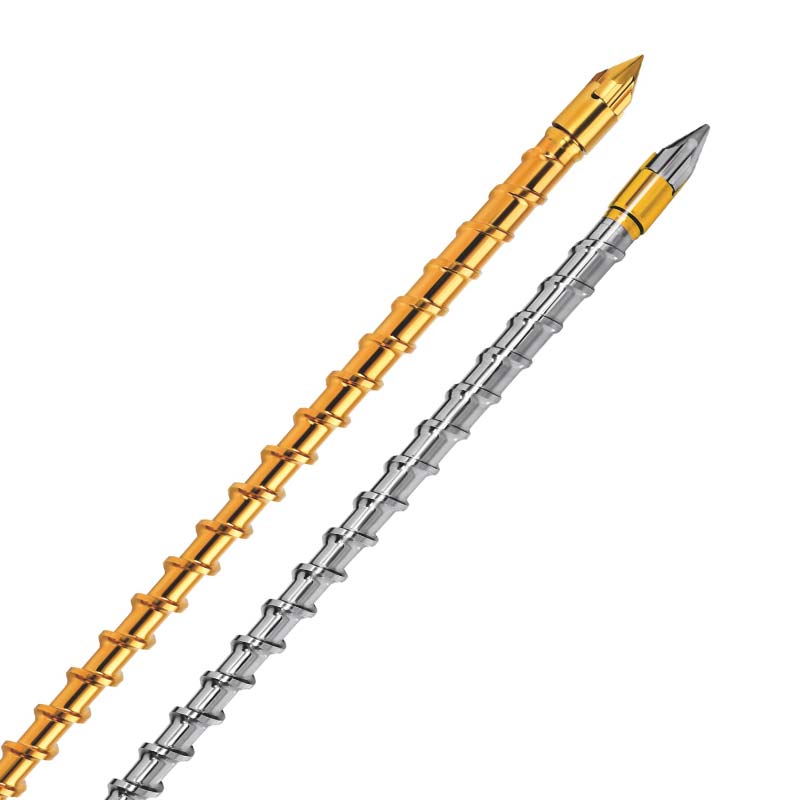
The core conclusion of the optically exclusive retrofit.
The core is to reduce the risks of cutting overheating and demurrage, while ensuring the polishing, measuring stability and cleaning of materials of the screws; the specific structures need to be determined in conjunction with optical indicators of materials and products such as PC, PMMA, PPSU, etc.
Optical retrospect: The Invisible Sculptor of the Precision World
When we use our cell phones to film the stars, the orbits in the lens are indissociable from the lenses of high perforation; when doctors explore the mysteries of the human body through an endoscope, clear imaging depends on high-precision optical catheters. Behind the birth of these optical products is a "invisible sculptor": the optics-specific sculptor. Unlike normal screws, " rough" plasticization, which, like skilled ceramic artists, uses the right strength and temperature to form plastics into optical components of micro-maritic precision.
Why can't normal screws fix optical parts?
When general plastic screws are processed for optical materials, like a hammer sculpting a stone, they leave a fatal flaw. The material PC (polycarbonate), which is often used in lenses, is extremely sensitive to the shearing heat: there is a large gap (0.3-0.5 mm) between the cortex of the normal screw and the cylinder, and local high temperatures (over 300°C) are generated during high-speed rotations, leading to a break in the PC molecular chain. It's like roasting glass into fur glass, and it's going to drop sharply from 90% to less than 70%.
More problematic is the problem of mixed and unevenness. If a 0.1 mm millimetre of unmelted particles are mixed in the optical PMMA (Accle), the lens forms a "snowflake". The three-part structure of the normal screw (the feed, compression, measurement segment) lacks a special hybrid design, and the additives are difficult to spread evenly, as is the use of chopsticks to stir honey. A mirror factory used a common screw to produce cellular lenses, with a good rate of 30 per cent and a loss of more than $100,000 per day due to uneven dispersion.
The three "excellent" of the optical screw.
Gradient compression ratio design: soft "Scratch technique"
The compression ratio of the optical screw (the ratio of the snail to the volume of the measuring segment) is designed with a gradient of 1.8-2.2, as is the process of light to a slight force during lasagna. Normal screws are compressed more than 2.5-3.5, and change is steep and prone to overheating. The depth of the optic screws is reduced from 12 mm to 4 mm, with a low-speed rotation of 50-80rpm, so that the PC smelts are plasticized in a “massure” and temperature fluctuations are within ±2°C, which is equivalent to the installation of a “heating tub” for materials.
Barrier-based mixer head: nanoscale "mixer"
At the end of the screw-measurement segment, the optical screw is equipped with a specially designed composite of barriers, with a surface of a .5 mm-wide whirlpool, like numerous mini-sceptions. When it passes, it is divided into dozens of thin membranes with a thickness of only 50 μm per layer, equivalent to half the diameter of the hair. Such a design would enable the aerosol-proofing agent to be evenly distributed in optical silicone to ensure that the diameter of the aerosol-proof particles in each cubic centimetre material is less than 50 nm. It's like sesame on bread.
Mirror surface treatment: zero-deficient “skin touch”
The surface roughness of the normal screws is mostly 1.6 m. Ra, while the optical screws can be reduced to 0.02 m, smoother than mirrors, after precise grinding and chrome plating. This means that there will be no “walling” when the melting flows within the spiral. Imagine, normal screws are like water pipes polished with sandpaper, and optical screws are like pipes with TFron in their inner walls. PC Melting Flows are outdated and leave no trace, avoiding impurities.
Practical question: How to address the “resilient line” of optical parts?
A major car light plant had encountered a difficult problem: the production of LED lenses produced with a radioactive “stress line” in the light, like cracks on glass. The technical staff found that the primary cause of the crime was pressure fluctuations in the spiral measurement segment. Pressure fluctuations in the normal spiral measurement segment can be as high as ±5 MPa, while optical materials require fluctuations of less than ±1 MPa, which otherwise results in a “freezing” of the molten in the mold.
The solution is to install a “pressure feedback system” on the optical screw: a high-precision pressure sensor (0.1 MPa) at the end of the material cylinder to monitor the melting pressure in real time. When the pressure exceeds the set value, the system automatically reduces the propeller speed, as the driver sees a light red light on the brake. The retrofit resulted in a reduction in the lens stress ratio from 25 per cent to 1.2 per cent, resulting in annual savings of $8 million in raw materials costs.
Material selection and maintenance: Let the Sculptor live forever
The optic screw's body must be strong enough. The usual 38-CrMoAlA alloy, which, after nitrogenization, can have a surface hardness of more than HV 900, which is equivalent to a layer of “diamond armor” on the screw, three times the normal screw. However, it is also “smuggling”: every time a stop has to be “cleaned” with a PE material, otherwise the remaining PC will be carbonized in the drums, like the slurry in the coffee pot, at the next production time.
There is also a small maintenance technique: a millimetre per week is used to measure the diameter of the screw and must be repaired if the wear exceeds 0.05 mm. This was ignored by one of the mirror factories, which led to an increase in the post-branding gap of the screws, the optical aberration of the VR lenses produced, and the eventual recall of thousands of equipment, resulting in heavy losses.
Future trends: screws can also “think”
With the outbreak of AR/VR equipment, the optical spiral is evolving towards “smart”. An AI optical screw developed by an enterprise can monitor the viscosity changes of the melting in real time by infrared sensors and automatically regulate the propelling and temperature of the screw. It's like an experienced cook who adjusts his face to the soft and hardness of his face. This smart screw produces an AR lens of up to ±0.001 mm in size, equivalent to 1/50 for hair silk diameter.
From 3D glasses to fibre-optic communication, a new optical application scene is created for every 0.1 micrometre increase in optical screw accuracy. It interprets the “worker spirit” with mechanical precision — the original most hard-core industrial equipment — and can also have artistic precision and precision.
Data to be recorded before implementation
- Material integrity number, filling ratio, flame-retarding system, refill ratio and dry condition.
- Note plastics brand, model, screw diameter, voltage, back pressure, turn speed and current screw structure.
- Indicators of product size, wall thickness, appearance or strength, and current adverse phenomena and frequency of occurrence.
- Continuous production cycle, refuelling frequency, machine clean-up method, wear and tear record and planned useful life.
How to validate the adjustment results
It is recommended that the current process baseline be established, followed by a single-variant test model. Each round records the measurement of time, melting temperature, product weight, formation cycle and bad rate, avoiding multiple parameters being changed at the same time to determine the cause. The parameters in the text are used to illustrate design thinking and should not replace material supplier data and on-site safety protocols.
What kind of support is a star-friend screw?
Starmate Mechanical Equipment Co. Ltd. (Starfeng) provides materials and situational assessments, screw structural recommendations, base and surface treatment options, non-spectrum customization and trial modelling issues around optically dedicated retrojective screws. The submission of information on raw materials, equipment and products could lead to more targeted programmes.
Ask for customized screws immediately, or check firstNote plastic screw productwithNote Plastic SolutionsI don't know.