
How industrial structural components are configured to enhance the material screw as required by intensity
Release time:2026-09-22
For industrial equipment suppliers, describe the method of checking for high pelicans, thick walls, embedding and long-term loads, analyse the risk that mobility will ignore fibre retention and grinding lifetimes, and give recommendations for validation of low-resisting damage plasticization and calibration of gels and strength, fibre length and size stability.
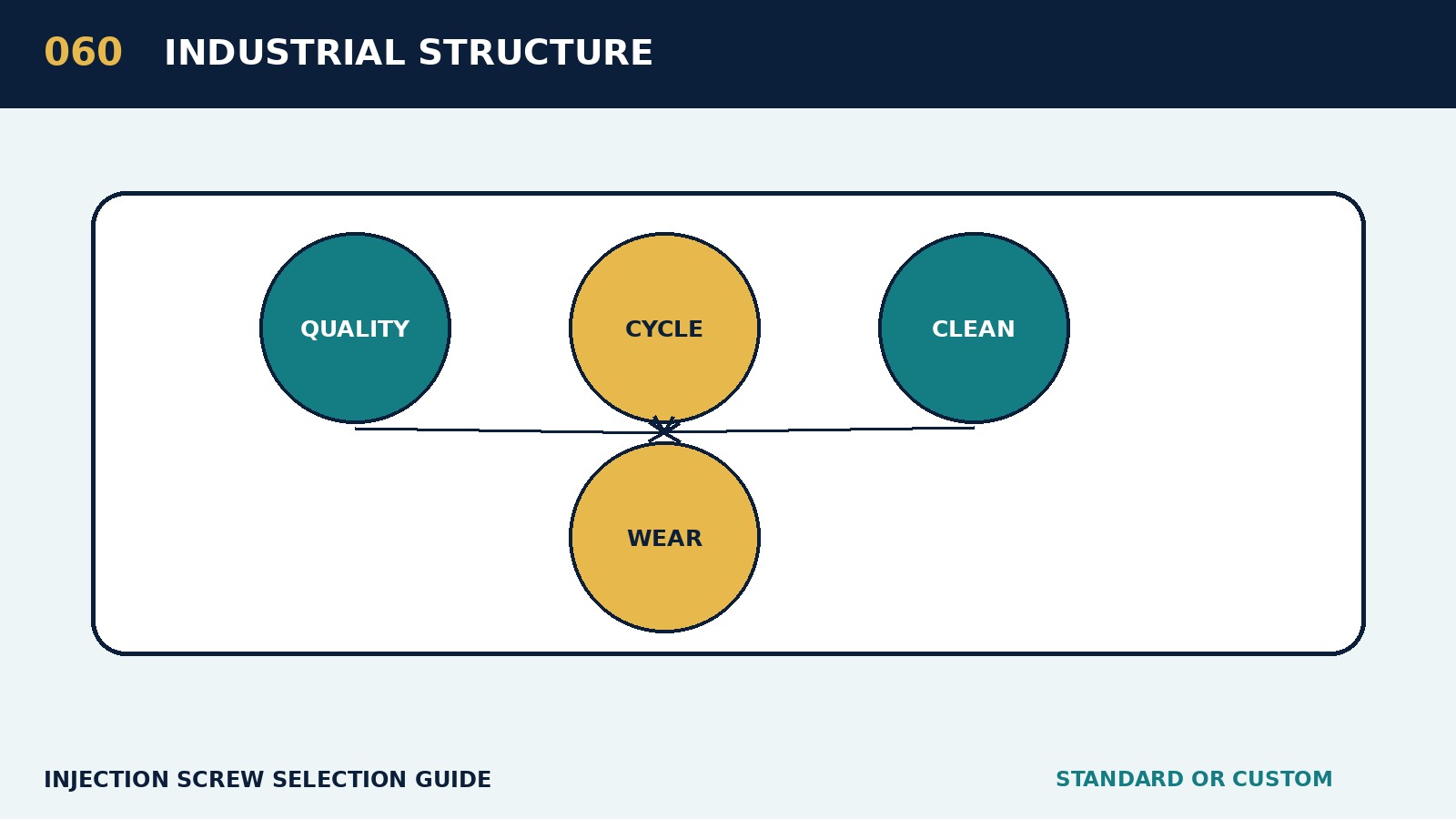
The problem with many industrial structure projects is not the lack of equipment capacity, but the omission of hyperbolic, thick, embedded and long-term loads from the selection phase. The ability of the industrial equipment supplier to complete the technical confirmation prior to the offer would significantly reduce the risk of re-engineering and complaints.
The name of the industry itself is not an optional parameter, but it points to a quality focus and production rhythm. Car projects focus on long-term stabilization and traceability, medical projects on cleanliness, packaging projects on high speed, optical items on low pollution and low stress. Plant manufacturers should translate these industry requirements into verifiable screw and process indicators. Site information should preferably include both photographs, short videos and data sheets. Photos are used to identify machine interfaces, screw tails and front-end components, video can be observed to measure, buffer and abnormal sound, and data tables are used to calculate the rate of application, the need for plasticization per hour and the length of stay. If only partial information can be obtained, a list should be provided for confirmation, rather than a tentative condition being a definitive conclusion.
Calculates the nominal value to be converted to the actual condition. The machine often uses PS as a reference for the gel weight, which should be revised by density when using other raw materials; the weight of the product should be added to the main course, traffic separation and a reasonable buffer. The larger the diameter of the screw, the greater the theoretical capacity, but the pressure of injections per unit area under the same hydraulic pressure or servo system will decline and the resolution of the measurement of the small amount of the aerosol may also be variable. The focus of this paper is on high-yielding, thick-walled, embedded and long-term loads, which must correspond to the customer ' s current production conditions and not be limited to the maximum values in machine samples.
In the context of this project, it is proposed to adopt the concept of “plasticization with low-intensity grinding and nuclei”. First, to determine whether the available data support the choice, then to calculate the volume of reductive, pressure and plasticization, and finally to discuss the geometry, front-end components and material handling of the screws. If the standard scheme is able to cover the window, priority should be given to the standard configuration; if liquidity alone ignores the risks of fibre retention and grinding life, the dedicated structure is presented and the increased costs, delivery and expected benefits are indicated.
There is a need for special vigilance only to see that mobility ignores fibre retention and grinding life. Many of the post-sale disputes arise from inconsistencies between the design input and the actual production conditions, such as the customer ' s replacement of the raw material number, the increase in the return rate or the transfer of the screw to another set of moulds, while still requiring the maintenance of the original acceptance results. The configuration of the boundary and change management should therefore be included in the technical document.
Ultimately, the programme should be judged by its strength, fibre length and size stabilization. If the result fails to meet the standard, each adjustment and result shall be recorded in five directions, by raw material, equipment, molds, process and screw, so as to avoid the loss of causal judgement by modifying multiple parameters at the same time. Therefore, the industrial structure should not follow the simple logic of “symmetrically-sized screws”. Only by accounting for products, feedstocks, tonnages, voltage, screw diameter and target cycles will the standard screws have a clear scope of application and the dedicated screws have a reasonable design basis and return on investment.